5.00
(1 Rating)

1 Month QA / Software Testing Training & Internship

Categories: Training & Internship
Wishlist Share

About Course

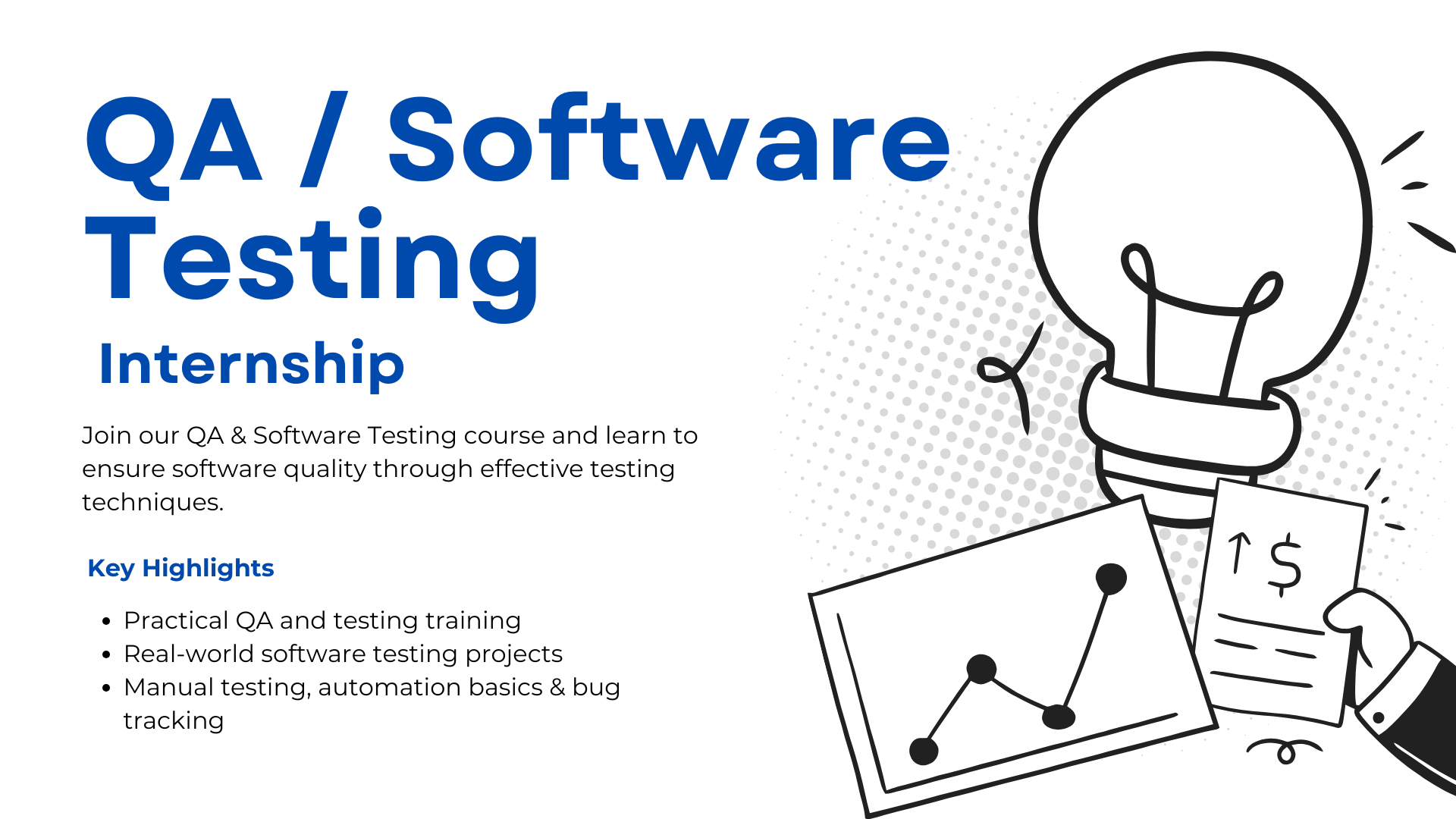
The 1-Month Q/A Software Testing Internship is an intensive beginner-to-intermediate training program focused on software quality assurance, manual testing fundamentals, bug tracking workflows, and professional testing practices.

This internship is designed to introduce participants to real-world software testing environments where quality, usability, functionality, and performance validation are critical to product success.

The program combines manual testing techniques, test documentation, debugging practices, and collaborative QA workflows into a practical hands-on learning experience.

🚀 What This Internship Covers

The internship begins with the fundamentals of Software Testing and Quality Assurance, helping learners understand the software development lifecycle and the role of QA teams in modern product engineering.

Participants learn:

  • Software Testing Fundamentals
  • SDLC & STLC concepts
  • Types of Testing
  • Functional & Non-Functional Testing
  • UI/UX validation basics

Learners then work on Manual Testing workflows including:

  • Writing test cases
  • Creating test scenarios
  • Bug identification and reporting
  • Regression testing
  • Smoke & sanity testing

The internship also introduces:

  • Bug Tracking Tools
  • Agile testing workflows
  • Test execution reporting
  • Basic API testing concepts

Participants gain practical exposure by testing real-world web applications and documenting defects using professional QA processes.

🧠 Learning Approach

This internship follows a practical execution-based learning model including:

  • Real application testing
  • Hands-on bug reporting
  • Daily QA exercises
  • Industry-oriented assignments
  • Team collaboration workflows
  • Continuous evaluations

The focus is on building strong testing fundamentals and professional QA confidence.

🏆 Skills You Will Gain

By the end of this internship, learners will be able to:

  • Understand software testing workflows
  • Write effective test cases
  • Perform manual testing professionally
  • Identify and report bugs efficiently
  • Work with QA documentation
  • Understand Agile QA processes
  • Participate in software quality validation

🎯 Who This Internship is For

This internship is ideal for:

  • Beginners in software testing
  • Computer Science students
  • Aspiring QA Engineers
  • Freshers entering IT
  • Developers wanting QA knowledge

Basic computer and software knowledge is recommended.

💼 Internship Outcome

After completing this internship, participants will have practical knowledge of software testing fundamentals and the confidence to work on QA tasks in real development environments.

Show More

Course Content

Module 1: Introduction to Software Testing & QA Fundamentals
This module builds the absolute foundation of Software Testing and Quality Assurance. You will understand what QA actually means in real-world software development and why it is critical for product success. It explains how bugs affect businesses, users, and system reliability. You will also learn basic testing principles, SDLC vs STLC, and different types of testing at a conceptual level. By the end of this module, you will be able to identify bugs, understand software behavior gaps, and think like a tester instead of a user. This mindset shift is essential before touching tools or automation. This module is used in every software company regardless of technology stack. Without this foundation, advanced testing concepts will not make sense.

  • Introduction to Software Testing
  • SDLC vs STLC
  • Types of Software Testing
  • Bug Life Cycle
  • Check what have you learnt about QA Fundamentals Check
  • Basic Bug Identification Report System

Module 2: Manual Testing Techniques & Test Case Design
This module focuses on core manual testing skills used in real QA teams before automation even starts. You will learn how to design structured test cases, execute them properly, and report defects in a professional way. You will also understand how testers think while validating software behavior, how requirements are converted into test cases, and how to ensure complete coverage without missing edge scenarios. This module is critical because almost every QA job expects strong manual testing skills first. Automation without manual understanding is useless in real-world environments. By the end, you will be able to independently test a feature like login, checkout, or signup system using proper test design techniques. 📊 Difficulty Level: Beginner → Intermediate

Module 3: Software Testing Tools, Defect Tracking & Agile QA Workflow
This module shifts you from pure manual testing concepts into real industry workflow practices. You will learn how QA teams actually operate inside companies using tools like defect trackers, test management systems, and Agile processes. You will understand how bugs are logged in professional systems, how teams collaborate in sprints, and how QA fits inside Agile development cycles. You will also get exposure to commonly used tools and how QA reporting is structured in real environments. This module is important because knowing theory is not enough—companies expect you to work inside structured tools and workflows from day one. By the end, you will understand how QA works in real product teams, not just academic testing.

Module 4: Advanced QA Concepts & Real-World Project Execution
This module focuses on real industry-level QA execution where testing is no longer theoretical but directly tied to production-grade systems. You will learn advanced QA concepts like regression strategy, test planning, release cycles, and real-world execution pipelines. You will also understand how QA teams decide release readiness, how test coverage is measured, and how testing is integrated into CI/CD pipelines in modern software companies. This module is critical because it simulates how QA engineers actually work in production teams under deadlines, pressure, and structured delivery systems. By the end, you will be capable of handling end-to-end QA responsibilities for a real application lifecycle.

Final Project – End-to-End QA System
The End-to-End QA System project is a comprehensive Quality Assurance simulation that demonstrates the complete software testing lifecycle used in real-world software development environments. The project focuses on planning, executing, tracking, and managing testing activities for an application from development to production release. Students will work as QA Engineers to create: detailed test plans, test cases, regression suites, bug reports, Agile sprint workflows, CI/CD testing integration, and QA dashboards. The project combines: Manual Testing Automation Testing concepts Defect Management Agile QA practices CI/CD quality processes Reporting and documentation The objective is to simulate how professional QA teams ensure software quality, reliability, performance, and release readiness in modern applications. By completing this project, students gain practical experience in: software testing methodologies, QA documentation, defect lifecycle management, sprint-based testing, and end-to-end quality assurance workflows.

Earn a certificate

Add this certificate to your resume to demonstrate your skills & increase your chances of getting noticed.
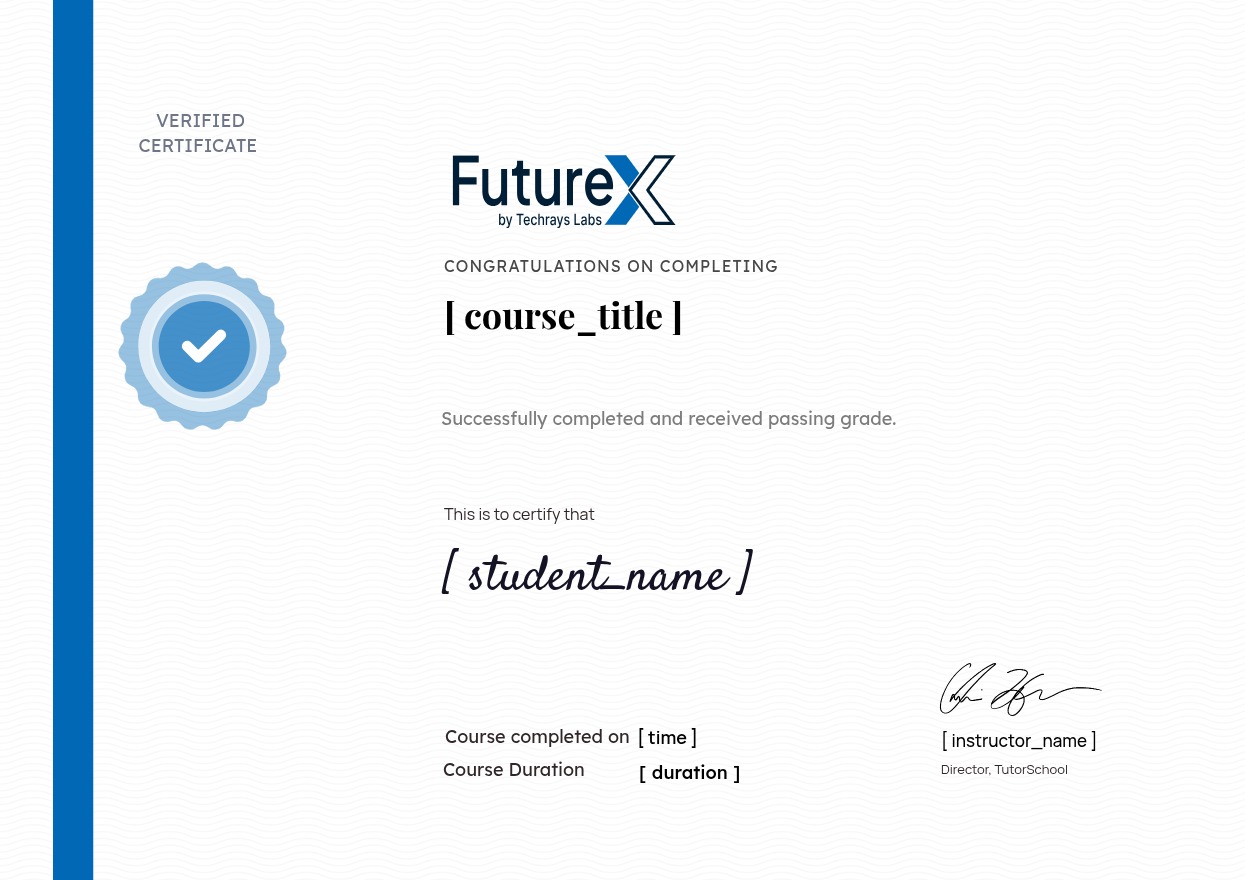

selected template

Student Ratings & Reviews

5.0
Total 1 Rating
5
1 Rating
4
0 Rating
3
0 Rating
2
0 Rating
1
0 Rating
Omm Prasad Nayak
3 weeks ago
This course help me to study about the testing platform