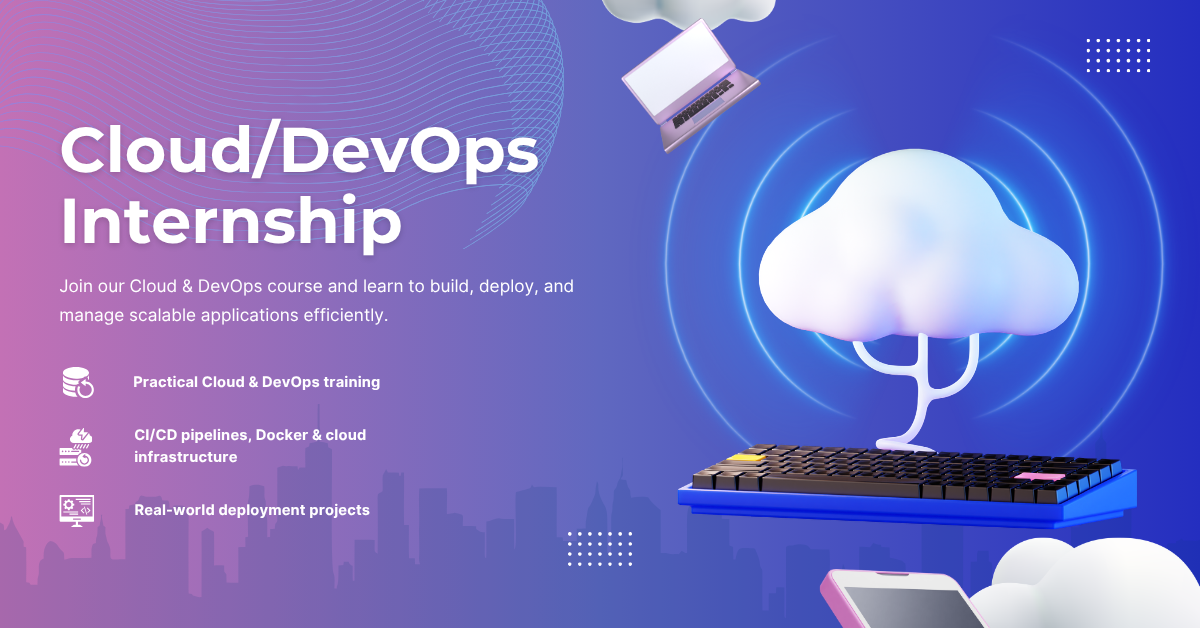
15 Days Cloud / DevOps Training & Internship

Categories: Training & Internship
Wishlist Share

About Course

Step into the world of modern software deployment and cloud infrastructure with our 15-Day Cloud/DevOps Internship. This hands-on internship is designed to introduce students and aspiring professionals to the core concepts of Cloud Computing, Linux, DevOps practices, version control, containerization, CI/CD pipelines, and cloud deployment.

Throughout the program, you’ll gain practical experience using industry-standard tools such as Linux, Git, GitHub, Docker, GitHub Actions, Terraform, and AWS EC2. Rather than focusing only on theory, you’ll work on real-world tasks and projects that simulate how DevOps teams build, automate, and deploy applications in modern organizations.

By the end of the internship, you’ll have the confidence to manage code repositories, automate deployments, containerize applications, deploy solutions on the cloud, and build a portfolio-ready DevOps project that demonstrates your practical skills.


🚀 What This Internship Covers

  • Fundamentals of Cloud Computing and cloud service models
  • Linux operating system and essential command-line skills
  • File management, permissions, and Bash shell scripting
  • DevOps culture, principles, and software development lifecycle
  • Git and GitHub for version control and team collaboration
  • Docker fundamentals, images, containers, and Dockerfiles
  • Continuous Integration and Continuous Delivery (CI/CD) concepts
  • Build automation using GitHub Actions and Jenkins
  • Infrastructure as Code (IaC) using Terraform
  • Deploying containerized applications on AWS EC2
  • Real-world DevOps workflow and deployment best practices
  • End-to-end capstone project integrating cloud and DevOps tools

🧠 Learning Approach

This internship follows a practical, project-based learning methodology where every concept is reinforced through hands-on exercises, coding demonstrations, assignments, quizzes, and real-world implementation.

You’ll begin with the fundamentals of cloud computing and Linux, gradually progress to Git, Docker, and CI/CD automation, and finally build and deploy a complete cloud application using industry-standard DevOps tools. Each module is carefully structured to provide both conceptual understanding and practical experience, ensuring you’re ready to apply your skills in real-world environments.


🏆 Skills You Will Gain

  • Cloud Computing fundamentals and architecture
  • Linux system administration and command-line proficiency
  • Shell scripting for task automation
  • Git and GitHub version control workflows
  • Docker image creation and container management
  • CI/CD pipeline implementation using GitHub Actions and Jenkins
  • Infrastructure as Code (IaC) using Terraform
  • AWS EC2 instance provisioning and application deployment
  • Secure server access using SSH
  • Cloud application deployment and monitoring
  • DevOps lifecycle understanding and automation practices
  • Troubleshooting deployment and infrastructure issues
  • Project documentation and collaboration using industry workflows

🎯 Who This Internship is For

This internship is ideal for:

  • Students pursuing Computer Science, IT, or related engineering programs
  • Fresh graduates preparing for Cloud or DevOps careers
  • Aspiring DevOps Engineers and Cloud Engineers
  • Software Developers looking to learn deployment and automation
  • System Administrators transitioning to cloud technologies
  • Anyone interested in Linux, Docker, CI/CD, and cloud infrastructure
  • Beginners seeking practical experience with modern DevOps tools and workflows

No prior experience in cloud computing or DevOps is required. A basic understanding of computers and programming fundamentals is helpful but not mandatory.


💼 Internship Outcome

By successfully completing this internship, you will be able to design, automate, and deploy cloud-based applications using modern DevOps practices. You’ll gain practical experience working with Linux, Git, Docker, CI/CD pipelines, Terraform, and AWS, while completing a portfolio-ready capstone project that showcases your technical abilities.

You’ll also earn the confidence to contribute to real-world cloud deployment and automation workflows, making you well-prepared for entry-level roles such as Junior DevOps Engineer, Cloud Support Engineer, Linux Administrator, Build & Release Engineer, Cloud Operations Associate, or Site Reliability Engineer (Junior).

Show More

Course Content

Module 1: Cloud Computing & Linux Fundamentals
Cloud computing and Linux form the foundation of modern DevOps practices. In this module, students will build a strong understanding of how cloud infrastructure works, why organizations are migrating from traditional on-premise systems to cloud platforms, and how Linux powers the majority of cloud servers around the world. Students will begin by exploring cloud computing concepts such as service models (IaaS, PaaS, SaaS), deployment models, virtualization, and scalability. They will then move into Linux fundamentals, learning how to navigate the Linux operating system using terminal commands, manage files and directories, work with permissions, monitor system resources, and automate routine tasks using shell scripting. By the end of this module, learners will be comfortable using a Linux terminal, understanding cloud architecture basics, and preparing cloud-based virtual machines for application deployment. These foundational skills are essential for becoming a DevOps Engineer, Cloud Engineer, Site Reliability Engineer (SRE), or Infrastructure Engineer. Students will also gain confidence in working with command-line interfaces, an indispensable skill in almost every cloud and DevOps environment. Real-world examples and practical exercises will ensure learners understand not only the theory but also how these concepts are applied in enterprise environments.

  • Lesson 1: Introduction to Cloud Computing
  • Lesson 2: Linux Operating System Fundamentals
  • Lesson 3: Essential Linux Commands & File Management
  • Lesson 4: Linux Permissions & Basic Shell Scripting
  • Cloud Computing & Linux Fundamentals Assessment
  • Set Up and Manage a Linux Development Environment

Module 2: DevOps Essentials, Git & Containerization
This module introduces learners to the core principles and tools that make DevOps one of the most sought-after practices in modern software development. Students will understand how DevOps bridges the gap between software development and IT operations, enabling teams to build, test, and deploy software faster with greater reliability. The module begins with the DevOps culture, principles, and lifecycle, helping students understand why organizations have shifted from traditional development models to DevOps methodologies. Learners will then explore Git, the industry's most widely used version control system, to manage source code, collaborate with teams, and maintain project history. Students will also learn GitHub for hosting repositories and collaborating using pull requests, issues, and branches. Finally, they will dive into Docker, the leading containerization platform, to package applications and their dependencies into lightweight, portable containers that run consistently across different environments. By the end of this module, students will be able to manage code repositories using Git and GitHub, understand collaborative development workflows, create Docker images, run containers, and prepare applications for deployment in cloud environments. These are essential skills expected from every entry-level DevOps Engineer, Cloud Engineer, and Platform Engineer.

Module 3: CI/CD, Infrastructure Automation & Cloud Deployment
In this module, students will learn how modern organizations automate software delivery using Continuous Integration (CI), Continuous Delivery (CD), and Infrastructure as Code (IaC). These practices enable development teams to release software rapidly, consistently, and with minimal manual intervention. Learners will begin by understanding CI/CD concepts and how tools like Jenkins automate building, testing, and deploying applications. They will then explore Infrastructure as Code using Terraform to provision cloud resources through code instead of manual configuration. Finally, students will learn how to deploy Dockerized applications to a cloud platform (AWS EC2 as the reference platform), configure networking, and monitor deployments. By completing this module, students will understand how automated pipelines work, provision infrastructure using code, and deploy applications to cloud environments. These skills are fundamental for DevOps Engineers, Cloud Engineers, and Site Reliability Engineers.

Module 4: Final Real-World Project – Cloud/DevOps Internship
The Final Module is a comprehensive capstone project that brings together all the concepts and practical skills learned throughout the Cloud/DevOps Internship. Students will design, build, automate, and deploy a real-world cloud application by applying Linux administration, Git & GitHub version control, Docker containerization, CI/CD automation, and AWS cloud deployment in a single end-to-end workflow. This project simulates a professional DevOps environment where learners work through the complete software delivery lifecycle—from writing and managing code to building Docker images, automating deployments, provisioning cloud infrastructure, and hosting the application on a live cloud server. Students will gain hands-on experience with industry-standard tools and workflows used by modern software companies. Throughout the project, learners will strengthen their problem-solving, debugging, and deployment skills while understanding how automation improves software quality, reliability, and release speed. They will also learn to troubleshoot deployment issues, monitor application health, and follow best practices for secure and efficient cloud deployments. By the end of this module, students will have developed a portfolio-ready DevOps project that demonstrates their ability to implement a complete CI/CD pipeline and deploy a containerized application to the cloud. This practical experience will prepare them for entry-level roles such as Junior DevOps Engineer, Cloud Engineer, Build & Release Engineer, and Cloud Operations Associate, while showcasing their readiness to work with modern cloud infrastructure and DevOps practices.

Earn a certificate

Add this certificate to your resume to demonstrate your skills & increase your chances of getting noticed.
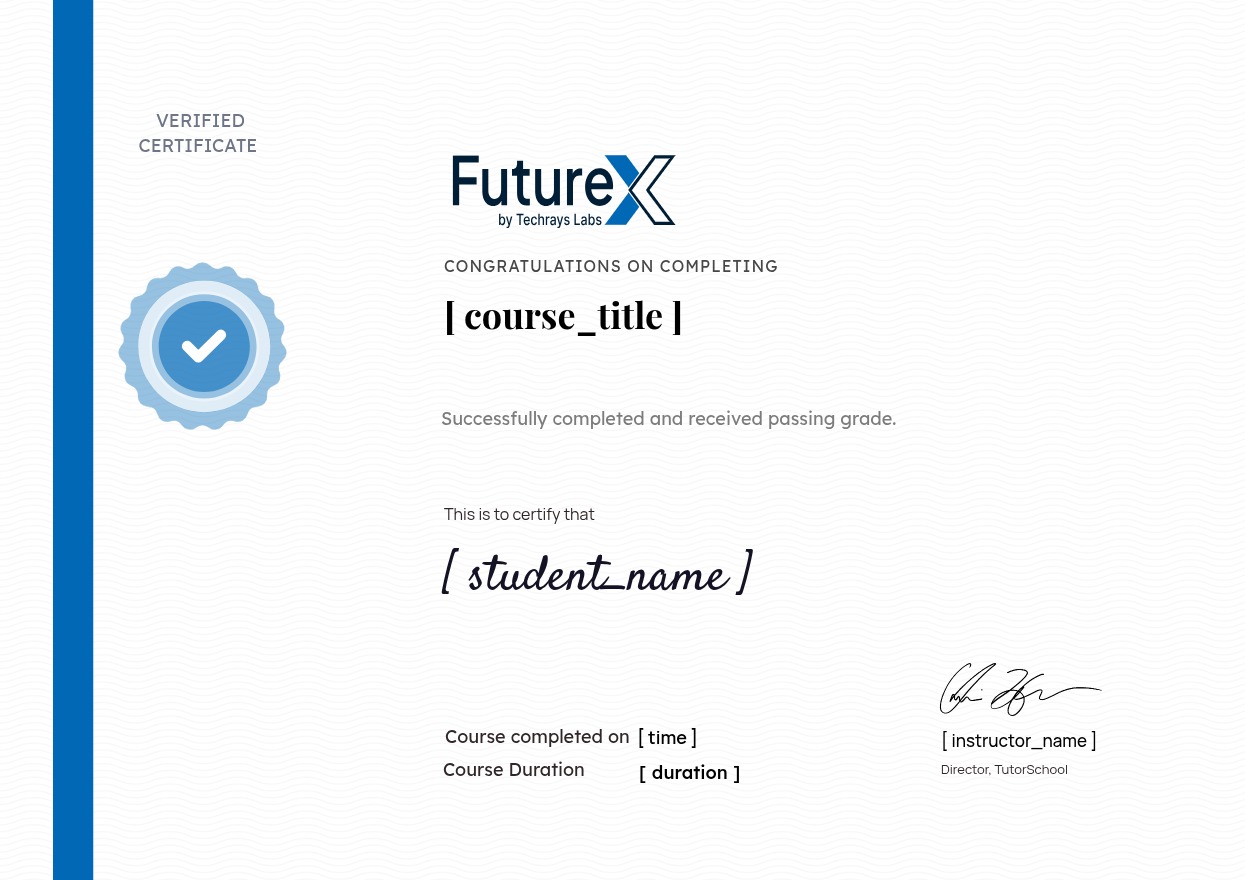
selected template

Student Ratings & Reviews

No Review Yet
No Review Yet