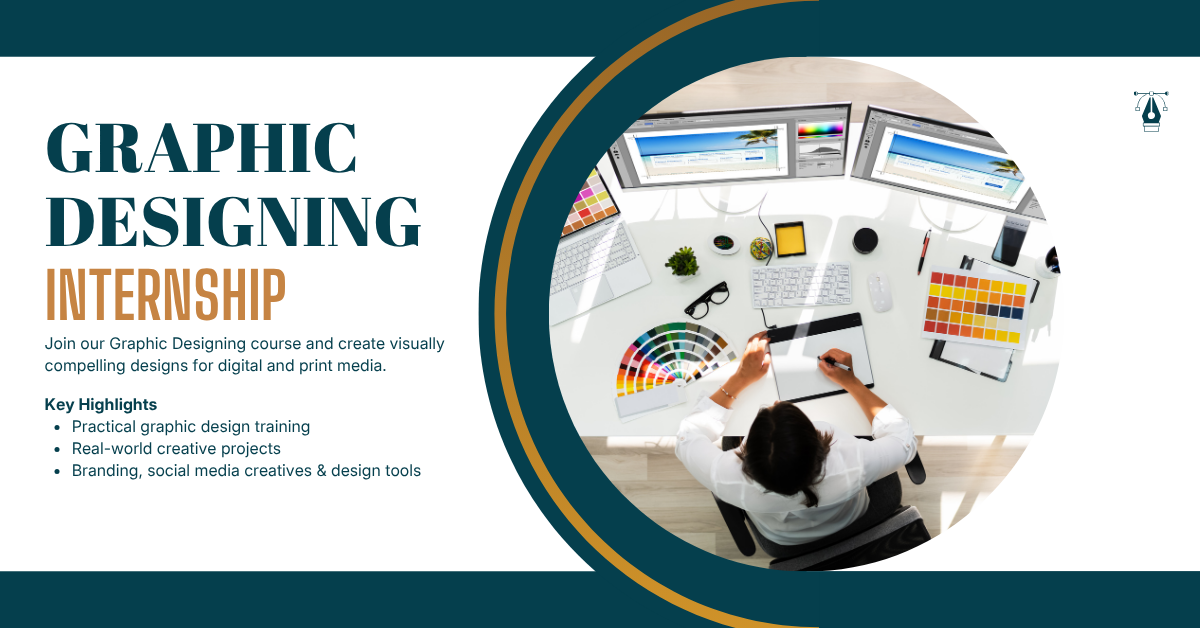
15 Days Graphic Designing Training & Internship

Categories: Training & Internship
Wishlist Share

About Course

Kickstart your creative journey with our 15 Days Graphic Designing Training & Internship, designed for beginners who want to build strong design fundamentals and gain practical experience using industry-standard tools. This internship introduces you to the complete graphic design workflow, from understanding design principles to creating professional branding materials, social media creatives, marketing assets, and portfolio-ready projects.

Throughout the program, you’ll learn how to communicate ideas visually using typography, color theory, composition, and layout techniques. You’ll also gain hands-on experience with popular design tools such as Adobe Photoshop, Adobe Illustrator, and Canva, while working on real-world assignments that simulate professional design projects. By the end of the internship, you’ll have developed a strong portfolio showcasing your creativity and technical skills.


🚀 What This Internship Covers

  • Introduction to Graphic Design and visual communication
  • Principles of design, composition, balance, and visual hierarchy
  • Color theory, typography, and branding fundamentals
  • Adobe Photoshop for image editing and digital artwork
  • Adobe Illustrator for vector graphics, logo, and icon design
  • Canva for creating quick and engaging marketing creatives
  • Raster vs. vector graphics and industry-standard file formats
  • Layer management, shapes, masks, and image manipulation techniques
  • Designing logos, posters, flyers, brochures, banners, and business stationery
  • Creating social media posts, advertisements, and promotional graphics
  • Preparing designs for web and print with proper export settings
  • Building brand identity systems and brand guidelines
  • Portfolio development and presentation best practices
  • Real-world graphic design workflow and client project execution
  • Final capstone project based on a complete branding and marketing campaign

🧠 Learning Approach

Our internship follows a practical, project-based learning methodology that combines design theory with hands-on implementation. Each module includes detailed lessons, guided demonstrations, practical assignments, quizzes, and mini-projects that help reinforce every concept.

Students will gradually progress from learning the fundamentals of graphic design to creating complete branding solutions and marketing campaigns. Real-world case studies, design challenges, and portfolio-building exercises ensure that every learner gains industry-relevant experience while developing creative confidence and problem-solving skills.


🏆 Skills You Will Gain

By completing this internship, you will develop the ability to:

  • Understand the fundamentals of graphic design and visual communication
  • Apply design principles to create aesthetically pleasing layouts
  • Use typography and color psychology effectively
  • Create professional logos and brand identities
  • Design marketing materials for print and digital platforms
  • Edit and enhance images using Adobe Photoshop
  • Create scalable vector graphics using Adobe Illustrator
  • Design engaging social media creatives and promotional campaigns
  • Prepare print-ready and web-optimized design files
  • Develop consistent brand guidelines and visual identity systems
  • Organize design projects using professional workflows
  • Build a high-quality graphic design portfolio for job and freelance opportunities

🎯 Who This Internship is For

This internship is ideal for:

  • Students interested in graphic design and creative careers
  • Beginners with little or no prior design experience
  • College graduates looking to develop job-ready creative skills
  • Marketing and social media enthusiasts who want to create professional visuals
  • Entrepreneurs and business owners who want to design their own branding materials
  • Freelancers looking to offer graphic design services
  • Content creators, bloggers, and influencers seeking to improve their visual content
  • Anyone passionate about creativity, branding, and digital design

💼 Internship Outcome

Upon successful completion of the 15 Days Graphic Designing Training & Internship, you will have a solid understanding of professional graphic design concepts, tools, and workflows. You will complete a portfolio-worthy capstone project featuring a complete brand identity and marketing campaign, demonstrating your ability to work on real-world design assignments.

With practical experience in branding, advertising, digital design, and print media, you’ll be well-prepared to pursue internships, entry-level graphic design roles, freelance opportunities, or further specialize in areas such as UI/UX design, brand identity design, digital marketing design, or visual communication.

Show More

Course Content

Module 1: Fundamentals of Graphic Design & Design Principles
Graphic design is much more than creating attractive visuals—it is the art of communicating ideas effectively through images, typography, colors, layouts, and visual hierarchy. In this module, students will build a strong foundation by learning the core concepts that every professional graphic designer must understand before using advanced design software. Students will explore the history and importance of graphic design, understand how design influences businesses and consumers, and learn the fundamental principles that make designs visually appealing and effective. They will also gain knowledge about color psychology, typography, composition, branding basics, and various graphic design formats used across print and digital media. Throughout the module, learners will study real-world examples from advertisements, websites, social media campaigns, product packaging, and branding materials. These lessons will help students develop the ability to analyze good and poor designs while improving their own creative thinking. By the end of this module, students will confidently understand the language of design, recognize industry-standard practices, and prepare themselves for creating professional-quality graphics using modern design software in later modules.

  • Lesson 1: Introduction to Graphic Design
  • Lesson 2: Principles of Good Design
  • Lesson 3: Color Theory & Typography
  • Lesson 4: Types of Graphic Design & Career Opportunities
  • Graphic Design Fundamentals & Design Principles Assessment
  • Analyze and Recreate a Brand Visual Identity

Module 2: Professional Graphic Design Tools & Digital Design Techniques
In this module, students will transition from understanding graphic design principles to creating professional digital designs using industry-standard tools and workflows. A successful graphic designer must not only possess creativity but also know how to effectively use modern design software to transform ideas into polished visual assets. This module focuses on developing practical skills that are directly applicable in professional environments. Students will become familiar with the complete graphic design workflow, from setting up documents correctly to exporting high-quality designs for both digital and print platforms. They will learn about raster and vector graphics, understand different file formats, use layers efficiently, edit images, create illustrations, and design visually engaging marketing materials. The module also introduces students to widely used tools such as Adobe Photoshop, Adobe Illustrator, and Canva, highlighting their strengths, use cases, and best practices. Through guided exercises and practical examples, learners will understand when to use each tool and how professionals combine them in real-world projects. By the end of this module, students will be able to confidently create digital graphics, edit images, design social media creatives, prepare print-ready files, and follow a structured design workflow used in agencies, startups, and freelance projects.

Module 3: Branding, Marketing Creatives & Portfolio Design
In this module, students will learn how graphic design is applied in branding, advertising, digital marketing, and business communication. While understanding design principles and software is important, professional designers are expected to create visuals that solve business problems, strengthen brand identity, and engage target audiences. This module bridges the gap between technical design skills and real-world commercial design projects. Students will learn the complete branding process, from understanding a client's requirements to creating a consistent visual identity. They will design logos, brand guidelines, social media campaigns, print materials, advertising creatives, presentations, and promotional assets that align with business objectives. The module also focuses on developing a professional design portfolio—an essential requirement for securing internships, freelance projects, or full-time jobs. Students will learn how to present their work effectively, document their design process, receive constructive feedback, and continuously improve their creative skills. By the end of this module, learners will be able to confidently design cohesive brand identities, create marketing materials for various platforms, and build an impressive portfolio showcasing their best work.

Module 4: Final Real-World Project – Complete Brand Identity & Marketing Campaign
The final module is designed to simulate a real-world client project that combines all the concepts learned throughout the internship. Students will work as professional graphic designers and complete an end-to-end branding and marketing project for a fictional business. This capstone project emphasizes planning, creativity, technical execution, and presentation skills. Throughout this project, learners will conduct research, understand client requirements, create a visual identity, design multiple marketing assets, prepare print-ready and digital deliverables, and present their work as a professional case study. They will apply design principles, typography, color theory, branding strategies, software proficiency, and export techniques learned in previous modules. The project also introduces students to professional workflows such as creating mood boards, documenting the design process, maintaining file organization, and delivering editable source files along with final outputs. Students will gain experience similar to working in a design agency or freelance environment. By completing this capstone project, learners will develop a portfolio-ready project that demonstrates their ability to solve real business problems through effective visual communication. This project can be showcased during internship interviews, job applications, freelance proposals, and portfolio presentations.

Earn a certificate

Add this certificate to your resume to demonstrate your skills & increase your chances of getting noticed.
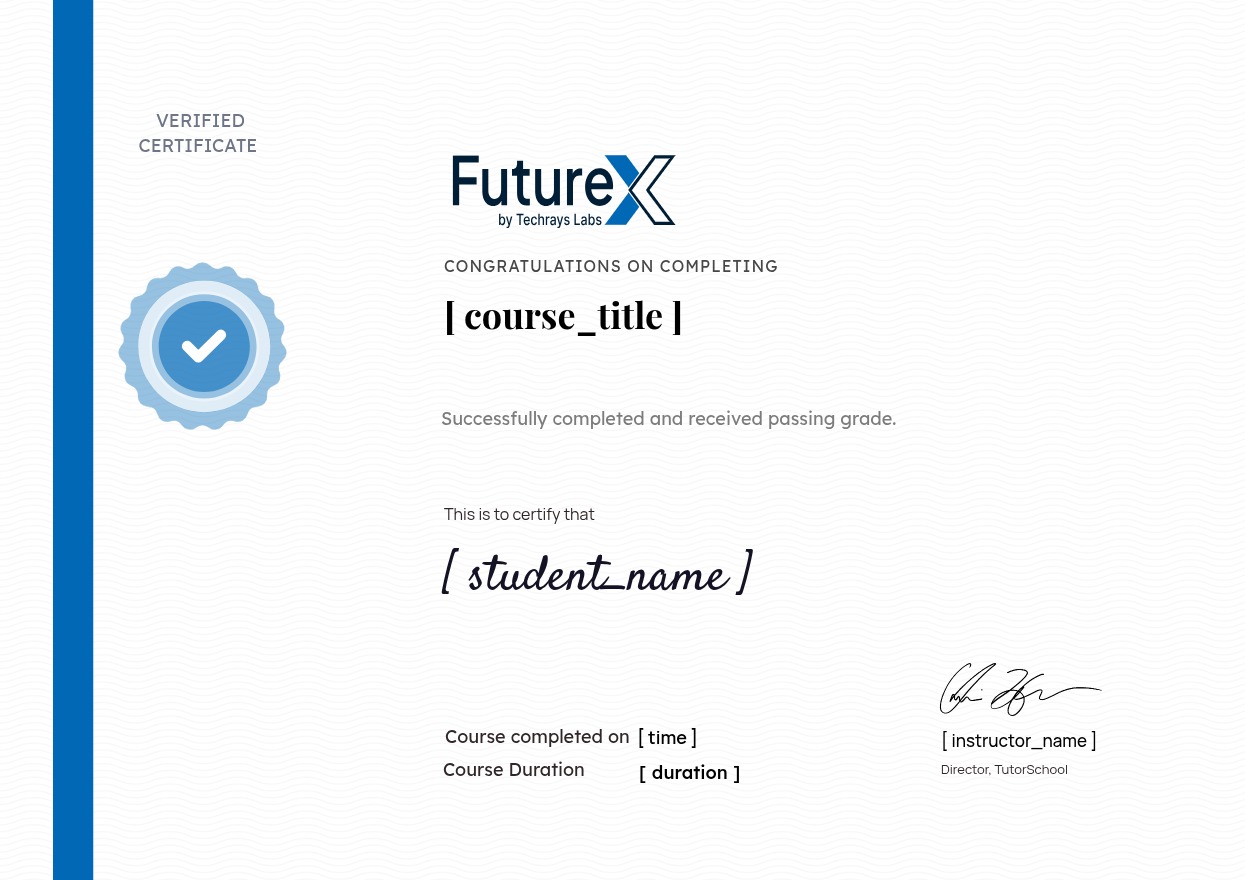
selected template

Student Ratings & Reviews

No Review Yet
No Review Yet