About Course
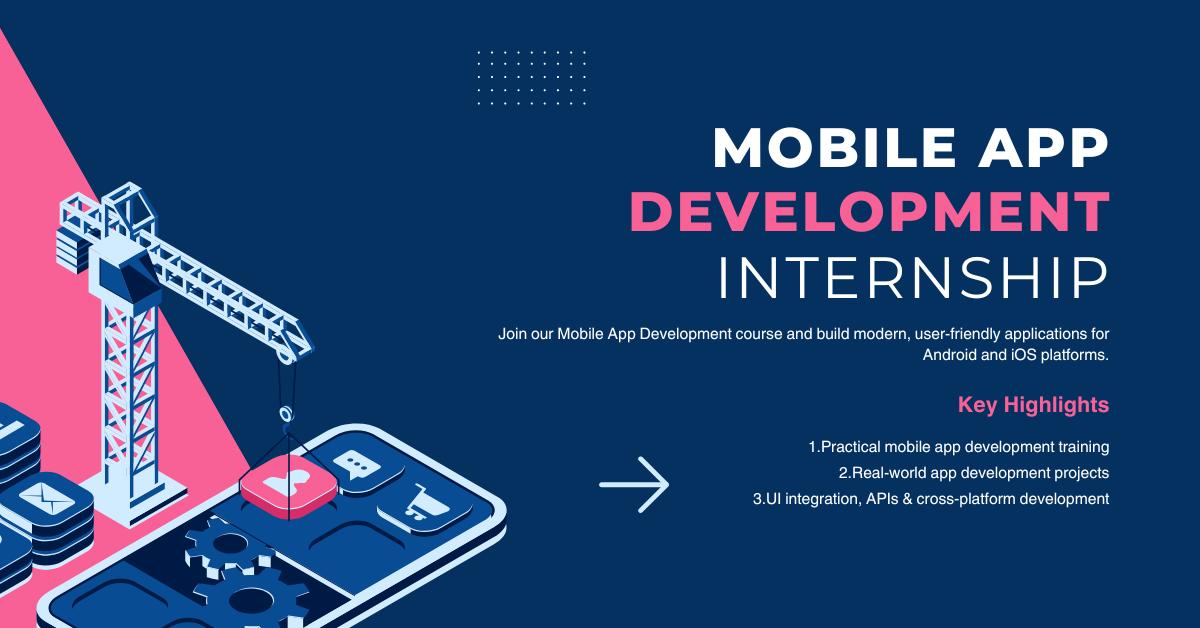
This 3-month Mobile App Development Internship is a structured, practical training program designed to help beginners build strong mobile application development skills using modern cross-platform technologies and real-world development practices.
The program follows a progressive learning approach, starting from programming fundamentals and gradually advancing toward responsive UI development, backend integration, and real-world mobile app creation. It is designed to provide both conceptual understanding and hands-on coding experience through practical exercises, assignments, quizzes, and project-based learning.
🚀 What This Internship Covers
The internship begins with the fundamentals of programming and mobile app development, where learners understand core concepts such as variables, data types, conditions, loops, functions, and basic programming logic. This foundation helps beginners comfortably start their journey into mobile application development even without prior coding experience.
Once the basics are established, the program moves into Dart programming and Object-Oriented Programming (OOP) concepts, which form the backbone of Flutter development. Learners gain practical understanding of classes, objects, inheritance, encapsulation, abstraction, and reusable code structures through hands-on coding examples and exercises.
Next, students are introduced to Flutter framework fundamentals and UI development. They learn how to create responsive and interactive mobile interfaces using widgets, layouts, navigation, forms, reusable components, and state management basics. Students also learn how to build applications that work across Android and iOS platforms efficiently.
The internship then transitions into backend integration and database handling for mobile applications. Students learn how to consume REST APIs, handle JSON data, implement authentication basics, use local storage, and integrate backend services such as Firebase for real-world app functionality.
The program also covers app optimization, debugging, version control basics, deployment concepts, and mobile app architecture practices commonly used in professional development environments.
In the final phase, learners apply everything they have learned by building a real-world Mobile App Project, such as a Food Delivery App, Task Management App, Driver Booking App, E-commerce App, or Expense Tracker Application. This project simulates real industry workflows involving UI development, API integration, authentication, and structured app architecture.
🧠 Learning Approach
This internship is focused on practical implementation, hands-on coding, and continuous evaluation. Each module includes:
-
Structured video/text lessons
-
Practical coding exercises
-
Real-world app-building examples
-
Module-wise quizzes and assessments
-
UI design and development assignments
-
Mini-projects for hands-on learning
-
A final capstone mobile application project
The learning process is sequential, ensuring learners build strong understanding of each concept before moving toward advanced mobile development topics.
🏆 Skills You Will Gain
By the end of this internship, participants will be able to:
-
Understand mobile app development fundamentals
-
Write clean and structured Dart code
-
Apply Object-Oriented Programming concepts
-
Build responsive mobile interfaces using Flutter
-
Develop Android and iOS applications
-
Integrate REST APIs and backend services
-
Work with Firebase and local storage
-
Manage application state effectively
-
Debug and optimize mobile applications
-
Build real-world cross-platform mobile apps
-
Understand professional app development workflows
🎯 Who This Internship is For
This program is ideal for:
-
Beginners interested in mobile app development
-
Students pursuing computer science, IT, or related fields
-
Developers looking to learn Flutter and cross-platform development
-
Individuals interested in Android and iOS app creation
-
Anyone aiming for Mobile App Developer or Flutter Developer roles
No prior mobile development experience is required, but consistency, logical thinking, and regular practice are important for successful completion.
💼 Internship Outcome
Upon completion of this internship, learners will have practical experience in mobile application development and will be capable of building functional cross-platform mobile apps using Flutter and backend integration techniques.
Participants will also complete a portfolio-ready mobile application project that can be showcased to potential employers or clients, improving their opportunities for Mobile App Developer, Flutter Developer, or Junior App Developer roles in the software industry.
Course Content
Module 1: Programming Fundamentals & Dart Basics for Mobile Development
-
Introduction to Programming for Mobile Apps
-
Dart Variables, Data Types & Operators
-
Control Flow (If-Else & Loops in Dart)
-
Functions & Code Reusability in Dart
-
Check what have you learnt about Dart Programming Basics
-
Basic User Management Console App
Module 2: Flutter UI Development & Widget Mastery
Module 3: State Management, Navigation & API Integration Basics
Module 4: Backend Integration, Local Storage & Advanced Flutter Concepts
Module 5: Firebase Integration, Deployment & Industry-Level Mobile Development
Final Module: Final Capstone Project – Mobile App (Real-World Production Simulation)
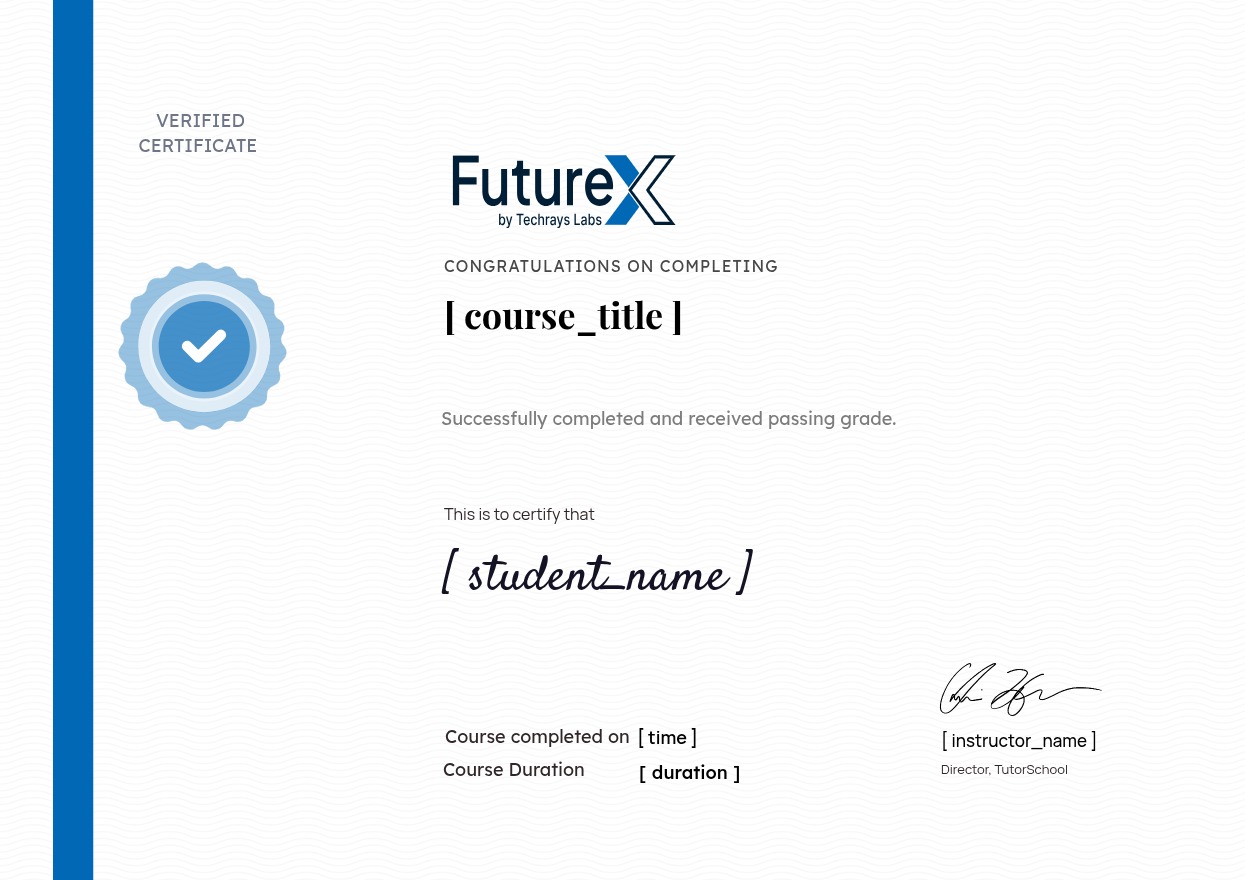
Earn a certificate
Add this certificate to your resume to demonstrate your skills & increase your chances of getting noticed.
Student Ratings & Reviews