6 Months Cloud / DevOps Training & Internship

Categories: Training & Internship
Wishlist Share

About Course

This 6-month Cloud / DevOps Internship is a comprehensive, structured training program designed to transform beginners into job-ready Cloud and DevOps engineers with strong practical skills in infrastructure management, automation, deployment pipelines, and modern cloud-native technologies.

The program follows a progressive learning approach, starting from Linux and networking fundamentals and gradually advancing toward enterprise-level DevOps workflows, cloud infrastructure, containerization, CI/CD automation, monitoring, and deployment strategies. It is designed to provide both conceptual understanding and real-world implementation experience through hands-on projects, assignments, quizzes, and production-style environments.

🚀 What This Internship Covers

The internship begins with the fundamentals of Linux, networking, and cloud computing, where learners understand how servers, operating systems, IP addressing, domains, DNS, and internet infrastructure work. This phase builds the technical foundation required for modern cloud and DevOps engineering roles.

Once the basics are established, learners move into version control and development workflows using Git and GitHub. Students learn how professional teams manage source code, collaborate using branches, handle pull requests, resolve merge conflicts, and maintain structured development pipelines.

The program then transitions into cloud computing platforms and infrastructure management. Learners gain hands-on experience with cloud services such as virtual machines, storage systems, networking configurations, security groups, and scalable infrastructure deployment. Concepts like Infrastructure as a Service (IaaS), scalability, load balancing, and cloud architecture are covered in depth.

Next, students are introduced to containerization and orchestration using Docker and Kubernetes. They learn how to package applications into containers, manage isolated environments, create Docker images, use Docker Compose, and deploy scalable containerized applications using Kubernetes clusters, pods, services, deployments, and ingress configurations.

The internship also focuses heavily on DevOps automation and CI/CD pipelines. Learners work with tools like Jenkins and GitHub Actions to automate testing, building, and deployment workflows. They understand how modern software delivery pipelines operate in real production environments and how automation improves scalability and reliability.

In the advanced phase, learners work with Infrastructure as Code (IaC) and server automation tools. They gain practical exposure to Terraform, shell scripting, and configuration management concepts for automating infrastructure provisioning and deployment tasks.

Monitoring, logging, and system reliability are also covered in detail. Students learn how to monitor servers, applications, and infrastructure using modern monitoring tools, track system performance, analyze logs, and identify deployment or server-related issues in production systems.

In the final phase, participants build a complete real-world DevOps project that simulates enterprise infrastructure and deployment architecture. This may include:

  • CI/CD pipeline implementation

  • Cloud server deployment

  • Dockerized application setup

  • Kubernetes deployment

  • Automated infrastructure provisioning

  • Monitoring and logging integration

  • Production-style deployment workflow

This capstone project helps learners understand how real companies manage scalable applications and cloud infrastructure.

🧠 Learning Approach

This internship is designed around practical implementation rather than only theoretical concepts. Every module focuses on real-world workflows and industry practices.

Each module includes:

  • Structured video/text lessons

  • Practical implementation exercises

  • Hands-on cloud and DevOps tasks

  • Module-wise quizzes

  • Assignments and mini-projects

  • Real deployment practice

  • Final enterprise-level capstone project

The learning flow is sequential, meaning learners must complete quizzes and assessments before unlocking advanced modules. This ensures strong understanding before progressing into production-level DevOps concepts.

🏆 Skills You Will Gain

By the end of this internship, participants will be able to:

  • Work confidently with Linux servers and command-line tools

  • Understand networking and cloud infrastructure concepts

  • Use Git and GitHub for professional development workflows

  • Deploy and manage cloud-based applications

  • Create and manage Docker containers

  • Deploy scalable applications using Kubernetes

  • Build automated CI/CD pipelines

  • Automate infrastructure using scripting and IaC tools

  • Monitor applications and servers in production environments

  • Understand enterprise DevOps workflows and deployment architecture

  • Work on real-world cloud infrastructure and automation projects

🎯 Who This Internship is For

This program is ideal for:

  • Beginners who want to start a career in Cloud or DevOps

  • Students pursuing computer science, IT, or related fields

  • Developers who want to learn deployment and infrastructure automation

  • System administrators looking to modernize their skills

  • Anyone aiming for Cloud Engineer, DevOps Engineer, or Site Reliability Engineer (SRE) roles

No prior cloud or DevOps experience is required, but consistency, practice, and problem-solving mindset are essential for successful completion.

💼 Internship Outcome

Upon completion of this internship, learners will have strong practical knowledge of cloud computing and DevOps engineering workflows. They will be capable of deploying, automating, monitoring, and managing production-level applications and infrastructure using modern industry tools and practices.

Participants will also complete a real-world capstone project that can be added to their portfolio and showcased during interviews, significantly improving their readiness for Cloud Engineer, DevOps Engineer, Infrastructure Engineer, and related technical roles.

Show More

Course Content

Module 1: Introduction to Cloud Computing & DevOps Foundations
This module introduces students to the core foundations of Cloud Computing and DevOps, which are essential before working with infrastructure, automation, deployment pipelines, and scalable systems. Students will begin by understanding how modern software is built, deployed, and maintained in real-world companies. The module explains the shift from traditional infrastructure to cloud-based systems and why businesses rely on DevOps practices for speed, reliability, and automation. Students will learn what cloud computing actually means, how it differs from traditional hosting, and why it has become the default standard for startups and enterprises. Alongside cloud, students will also understand the DevOps culture, which combines development and operations to improve collaboration, automation, and delivery speed. This module is important because every modern backend system, SaaS platform, e-commerce website, and enterprise application relies on cloud infrastructure and DevOps workflows. Without these basics, students will struggle with tools like Docker, Kubernetes, CI/CD, Terraform, or AWS in later modules. By the end of this module, students will understand the cloud service model, DevOps lifecycle, deployment flow, infrastructure basics, and how software moves from developer machines to production systems. This module creates the mental model required for the rest of the internship. Students completing this module will be able to explain cloud concepts clearly, understand DevOps pipelines conceptually, identify infrastructure components, and speak the language used in modern cloud engineering teams.

  • What is Cloud Computing?
  • What is DevOps?
  • Cloud Service Models (IaaS, PaaS, SaaS)
  • Check what have you learnt about Cloud & DevOps Foundations Quiz
  • Cloud & DevOps Fundamentals Blueprint for a Startup

Module 2: Linux Fundamentals for Cloud & DevOps Engineers
Linux is the backbone of modern cloud infrastructure and one of the most important skills for any Cloud or DevOps engineer. Most servers in production environments run Linux because it is stable, secure, lightweight, and highly customizable. Whether an engineer is deploying web applications, configuring servers, running containers, automating tasks, or managing cloud infrastructure, Linux is almost always involved. This module introduces students to Linux from a DevOps perspective. Instead of treating Linux as just another operating system, students will learn how Linux behaves in server environments, how it is used in production, and why it dominates cloud infrastructure. They will understand how to navigate Linux systems, manage files and directories, control users and permissions, inspect processes, and execute administrative tasks directly from the terminal. This module is critical because nearly every DevOps tool—Docker, Kubernetes, Jenkins, Nginx, Ansible, Terraform, and cloud virtual machines—runs on Linux or interacts with Linux-based systems. A weak Linux foundation creates operational failures, security issues, and debugging problems later. Students will learn the Linux command line, shell basics, file system structure, permissions model, process management, package installation, and system monitoring. They will also understand how Linux is used in cloud servers and why command-line efficiency matters in production operations. By the end of this module, students will be able to confidently work inside Linux environments, navigate and manage servers, inspect and troubleshoot running systems, and perform the core Linux tasks expected from junior DevOps engineers.

Module 3: Networking Fundamentals for Cloud & DevOps
Networking is one of the most critical foundations in Cloud and DevOps because every server, container, API, database, load balancer, and cloud service communicates through networks. A DevOps engineer who does not understand networking will fail at debugging deployments, securing systems, exposing services, or troubleshooting production outages. This module teaches networking from a practical DevOps perspective. Students will learn how systems communicate, how IP addressing works, how DNS resolves domains, how ports expose services, and how protocols like HTTP, HTTPS, SSH, and TCP operate in real-world infrastructure. The goal is not to turn students into network engineers, but to make them operationally competent enough to understand how cloud systems communicate and how to diagnose connectivity issues quickly. Every cloud platform—AWS, Azure, GCP—depends on networking concepts such as subnets, routing, firewalls, NAT, DNS, and public/private access. Students will understand how traffic moves from a user’s browser to a cloud server, how applications communicate internally, and how network-level issues cause outages. They will also learn the command-line tools used to inspect network behavior and diagnose failures. This module is essential because later topics like Docker networking, Kubernetes services, reverse proxies, cloud VPCs, security groups, and load balancers all depend directly on these concepts. By the end of this module, students will be able to explain network flow clearly, understand IPs and ports, troubleshoot connectivity issues, inspect DNS resolution, and reason about how systems communicate in production.

Module 4: Version Control with Git & GitHub for DevOps
Version control is a mandatory skill in DevOps because every infrastructure file, deployment script, configuration, Dockerfile, Kubernetes manifest, CI/CD pipeline, and automation workflow must be tracked, reviewed, and managed properly. In real production environments, infrastructure is treated like software, and Git is the system used to manage it. This module teaches Git and GitHub from a DevOps perspective. Students will learn how source control is used not only for application code but also for infrastructure, deployment workflows, automation scripts, and collaborative operations. Git allows engineers to track changes, revert mistakes, collaborate safely, and maintain a reliable history of infrastructure and code changes. GitHub adds collaboration through remote repositories, pull requests, reviews, and team workflows. This module is critical because modern DevOps is built around Git-driven workflows. CI/CD pipelines trigger from Git commits, Infrastructure as Code is stored in Git, Kubernetes deployments are versioned in Git, and rollback strategies often depend on Git history. Students will learn local Git workflows, commits, branching, merging, rebasing, remote repositories, pull requests, and GitHub collaboration. They will also understand how Git is used operationally in real DevOps teams. By the end of this module, students will be able to manage repositories confidently, collaborate using GitHub, maintain clean commit history, resolve conflicts, and use Git as the foundation for infrastructure and deployment workflows.

Module 5: Shell Scripting for DevOps Automation
Shell scripting is one of the most practical and frequently used skills in DevOps because automation is the core of DevOps, and shell scripts are one of the fastest ways to automate repetitive operational tasks. In real infrastructure environments, engineers constantly automate server setup, deployments, health checks, backups, log cleanup, monitoring tasks, and service operations using shell scripts. This module teaches shell scripting from a practical DevOps perspective. Students will learn how to write Bash scripts that automate real server operations instead of manually repeating commands. They will understand variables, conditions, loops, functions, user input, file operations, and script execution flow. Shell scripting is critical because DevOps engineers do not scale by doing repetitive manual work. They scale by automating it. Any repeated operational action should eventually become a script. Students will learn how to create reusable Bash scripts, automate Linux tasks, validate system state, process files, and write maintainable scripts used in production environments. They will also understand how shell scripts are used inside CI/CD pipelines, cron jobs, container entrypoints, and infrastructure automation. By the end of this module, students will be able to write production-relevant Bash scripts, automate common Linux and DevOps tasks, debug script failures, and reduce manual operational effort significantly.

Module 6: Virtualization, Containers & Docker Fundamentals
Modern cloud infrastructure depends heavily on virtualization and containers. Before containers became standard, applications were deployed directly on physical or virtual servers, which created dependency conflicts, scaling issues, and inconsistent environments. Containers solved this by packaging applications with everything they need to run in a predictable and portable format. This module teaches the operational foundations of virtualization, containerization, and Docker from a DevOps perspective. Students will understand the difference between virtual machines and containers, why containers became dominant in modern infrastructure, and how Docker is used to build, package, run, and distribute applications. Docker is one of the most important DevOps tools because it standardizes environments. An application that runs inside Docker on a developer laptop can run the same way in staging, CI/CD, and production. This consistency removes “works on my machine” failures. Students will learn how containers work internally, how Docker images are built, how containers are run, how ports are exposed, how volumes persist data, and how Docker is used in real deployment workflows. This module is critical because Docker is foundational for CI/CD pipelines, cloud-native applications, Kubernetes, microservices, and modern deployment strategies. By the end of this module, students will understand containerization deeply, build Docker images, run containers confidently, debug common Docker issues, and package applications for deployment.

Module 7: CI/CD Pipelines with Jenkins & GitHub Actions
CI/CD is one of the most important practices in DevOps because it automates how software is built, tested, and delivered. Without CI/CD, software delivery becomes manual, slow, error-prone, and difficult to scale. Modern engineering teams rely on CI/CD pipelines to move code from commit to production in a repeatable and reliable way. CI stands for Continuous Integration. It ensures code changes are integrated, tested, and validated continuously. CD stands for Continuous Delivery or Continuous Deployment. It automates packaging, release, and deployment workflows. This module teaches CI/CD from a practical DevOps perspective using Jenkins and GitHub Actions, two widely used automation tools. Students will understand how pipelines work, how builds are triggered, how automation stages are structured, and how code moves from Git to deployment. This module is critical because CI/CD is the operational backbone of modern DevOps. Infrastructure changes, application builds, tests, Docker images, and deployments all move through pipelines. Students will learn CI/CD concepts, pipeline stages, Jenkins jobs, GitHub Actions workflows, automated builds, testing, and deployment flow. They will also understand how pipelines reduce human error and improve delivery speed. By the end of this module, students will be able to design CI/CD pipelines, automate code validation, run builds, and implement simple deployment workflows using Jenkins and GitHub Actions.

Module 8: Infrastructure as Code (IaC) with Terraform
Infrastructure as Code (IaC) is a core DevOps practice where infrastructure is defined, managed, and provisioned using code instead of manual processes. Instead of clicking in cloud dashboards to create servers, networks, and databases, engineers write declarative configuration files that describe the desired infrastructure state. This module focuses on Terraform, one of the most widely used IaC tools in the industry. Terraform allows engineers to define cloud infrastructure in a reproducible, version-controlled, and automated way. IaC is critical because manual infrastructure management does not scale. It introduces human errors, inconsistencies, and undocumented changes. In contrast, IaC ensures repeatability, auditability, and automation. Students will learn how Terraform works, its core concepts, how to define infrastructure using HCL (HashiCorp Configuration Language), and how to provision real cloud resources such as servers, networks, and storage. This module is essential because modern DevOps pipelines, Kubernetes clusters, cloud environments, and production systems are all built using Infrastructure as Code. By the end of this module, students will be able to write Terraform configurations, initialize infrastructure, plan deployments, apply changes, and manage cloud resources in a structured and automated way.

Module 9: Kubernetes & Container Orchestration
Containers solve the problem of packaging applications, but they introduce a new problem at scale: managing hundreds or thousands of running containers across multiple machines. Manually starting, stopping, scaling, and monitoring containers is not feasible in production environments. Kubernetes is the industry standard solution for container orchestration. It automates deployment, scaling, networking, and management of containerized applications across clusters of machines. This module focuses on Kubernetes from a DevOps perspective. Students will learn how Kubernetes organizes infrastructure using clusters, nodes, pods, services, deployments, and controllers. Kubernetes is essential because almost every cloud-native system today runs on it or a similar orchestration platform. It enables high availability, self-healing systems, automatic scaling, and rolling updates. Students will understand how Kubernetes schedules containers, manages workloads, handles failures, and maintains desired system state. They will also learn YAML-based configuration for deployments and services. By the end of this module, students will be able to deploy applications on Kubernetes, manage pods and services, scale workloads, and understand cluster architecture.

Module 10 : Complete Cloud DevOps Production System (Capstone Project Module)
This final module is a consolidation of everything learned across the entire Cloud / DevOps internship. It is not just a project module, but a full advanced integration module where all concepts come together into a real production-like system. Students will design and implement a complete end-to-end DevOps pipeline that includes infrastructure provisioning, containerization, CI/CD automation, and Kubernetes-based deployment. This module simulates a real-world enterprise system where multiple DevOps tools work together as a single ecosystem. It focuses on integration rather than isolated concepts. By the end of this module, students will understand how real production systems are built and how different DevOps tools interact in a unified architecture.

Earn a certificate

Add this certificate to your resume to demonstrate your skills & increase your chances of getting noticed.
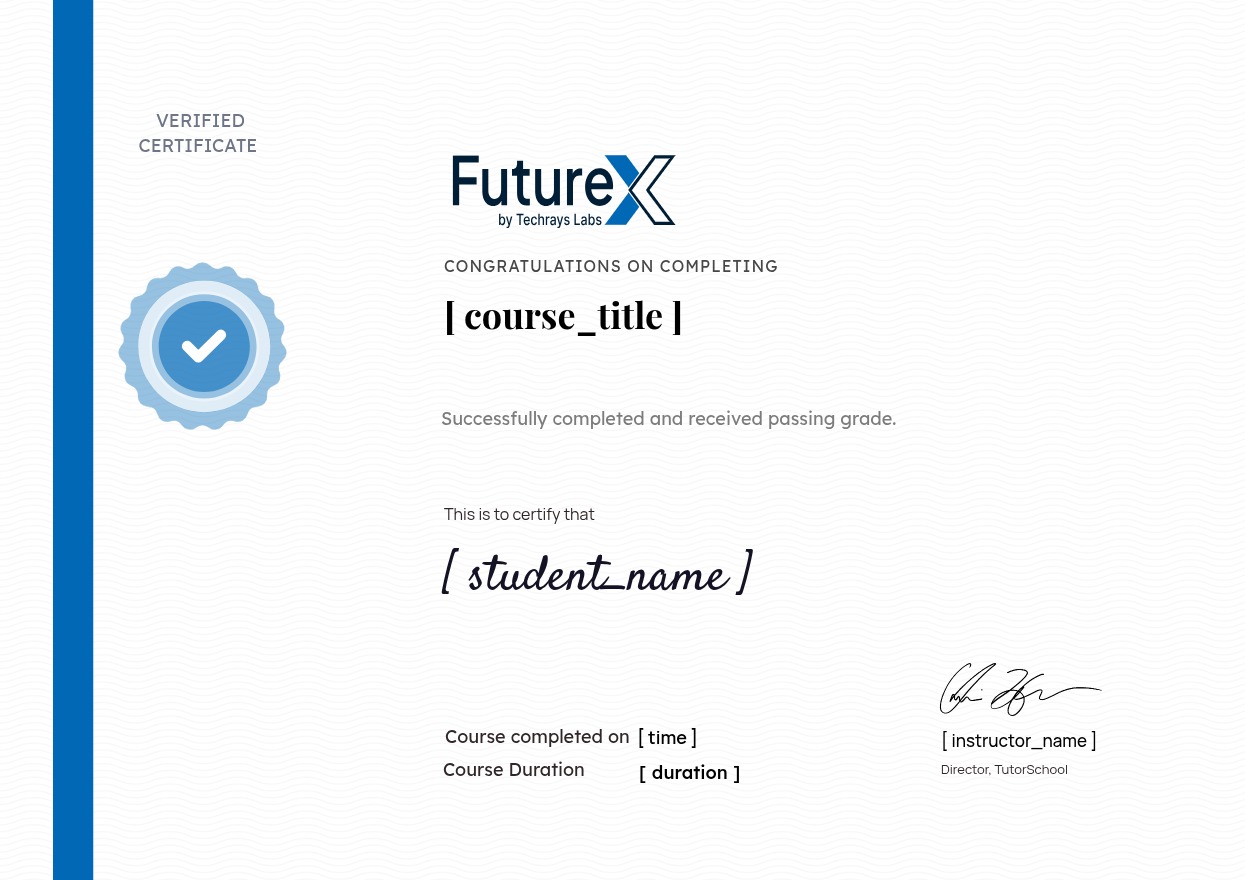
selected template

Student Ratings & Reviews

No Review Yet
No Review Yet