6 Months HR / Operations Training & Internship

Categories: Training & Internship
Wishlist Share

About Course

This 6-month HR / Operations Internship is a comprehensive, industry-oriented training program designed to transform beginners into job-ready HR and Operations professionals with strong organizational, communication, recruitment, employee management, and business operations skills.

The program follows a structured and progressive learning approach, starting from the fundamentals of Human Resources and Operations Management and gradually advancing toward real-world HR processes, workforce coordination, employee lifecycle management, and operational workflow handling. It is designed to provide both conceptual understanding and practical hands-on experience through real-world case studies, assignments, quizzes, and project-based learning.

🚀 What This Internship Covers

The internship begins with the fundamentals of Human Resources and Operations Management, where learners understand the role of HR and operations in building efficient organizations. Students learn core concepts such as organizational structure, workplace communication, HR processes, operational workflows, employee coordination, and business administration fundamentals.

Once the basics are established, the program moves into recruitment and talent acquisition processes. Learners gain hands-on understanding of job analysis, job descriptions, sourcing candidates, resume screening, interview coordination, onboarding processes, and recruitment documentation. Practical exercises help students understand real-world hiring workflows used by organizations.

Next, students are introduced to employee lifecycle management and HR operations, where they learn how organizations manage employees from onboarding to exit. Topics include attendance management, leave management, employee engagement, HR documentation, payroll coordination basics, compliance awareness, and workplace policies.

The internship then transitions into business operations and process management, where learners understand how operational teams manage workflows, reporting, task coordination, process optimization, vendor coordination, and internal communication. Students learn how operational efficiency contributes to overall business performance.

The program also covers workplace tools and professional communication skills, including Microsoft Excel, reporting basics, email communication, documentation handling, meeting coordination, and productivity tools commonly used in HR and operations departments.

In the final phase, learners apply everything they have learned by working on a real-world HR / Operations Project, such as Recruitment Workflow Management, Employee Database System, HR Reporting Dashboard, or Operational Process Tracking System. This project simulates real organizational workflows and administrative responsibilities.

🧠 Learning Approach

This internship is designed around practical implementation, real-world organizational workflows, and continuous evaluation. Each module includes:

  • Structured video/text lessons

  • Real-world HR and operations case studies

  • Practical assignments and exercises

  • Recruitment and workflow simulations

  • Module-wise quizzes and assessments

  • Mini-projects for hands-on learning

  • A final capstone project

Progression is sequential, ensuring learners build strong understanding of each concept before advancing to more practical HR and operational responsibilities.

🏆 Skills You Will Gain

By the end of this internship, participants will be able to:

  • Understand HR and operations management fundamentals

  • Handle recruitment and onboarding processes

  • Coordinate employee lifecycle management activities

  • Manage HR documentation and reporting

  • Use Microsoft Excel for operational reporting

  • Understand attendance, leave, and payroll coordination basics

  • Improve workplace communication and coordination skills

  • Support operational workflow management

  • Perform administrative and organizational tasks efficiently

  • Work on real-world HR and operations projects

🎯 Who This Internship is For

This program is ideal for:

  • Beginners interested in HR or Operations careers

  • Students pursuing BBA, MBA, BCom, Management, or related fields

  • Individuals looking to build organizational and communication skills

  • Professionals planning to enter HR or administrative roles

  • Anyone interested in recruitment, employee management, or business operations

No prior HR or operations experience is required, but communication skills, consistency, and willingness to learn are essential for successful completion.

💼 Internship Outcome

Upon completion of this internship, learners will have practical exposure to HR processes, recruitment workflows, employee management practices, and business operations handling. They will be capable of supporting HR departments, managing operational tasks, and contributing to organizational efficiency in professional environments.

Participants will also complete a portfolio-ready HR / Operations project that can be showcased to potential employers, significantly improving their opportunities for HR Executive, HR Coordinator, Operations Executive, Recruitment Associate, Administrative Assistant, and related entry-level roles.

Show More

Course Content

Module 1: Introduction to HR & Operations + Workplace Fundamentals
This foundational module introduces learners to the core world of Human Resources and Operations management. Students will understand what HR and Operations actually do inside a company and how both functions directly impact organizational success. It builds the base for all future modules by focusing on workplace structure, employee lifecycle, and operational workflows. Learners will explore how companies hire, manage, and retain employees while also understanding how internal processes are designed and optimized. This module is essential because HR and Operations form the backbone of every organization, regardless of industry. By the end of this module, learners will be able to understand organizational structures, basic HR functions, and operational workflows used in real companies. They will also gain clarity on how departments interact in a professional environment. This module is highly practical and prepares students for real-world HR assistant or operations coordinator roles.

  • Introduction to Human Resources (HR)
  • Introduction to Operations Management
  • Organizational Structure & Reporting Lines
  • Employee Lifecycle Basics
  • Check what have you learnt about HR & Operations Basics Check
  • HR & Operations Workflow Design for Startup

Module 2: Recruitment, Job Analysis & Talent Acquisition Process
This module builds the core HR skill of hiring and talent acquisition, which is one of the most critical responsibilities in any HR or Operations role. Students will learn how companies identify hiring needs, create structured job descriptions, source candidates, and conduct selection processes. You will understand how HR teams convert business needs into job roles and how candidates are filtered in real-world hiring pipelines. This includes job analysis, writing professional job descriptions, using recruitment channels, and understanding interview workflows. This module is extremely practical because almost every organization relies on structured hiring systems to scale effectively. You will also learn how modern HR teams use tools like ATS (Applicant Tracking Systems) and digital hiring platforms. By the end of this module, learners will be able to independently design a recruitment workflow from requirement gathering to candidate selection.

Module 3: HR Documentation, Employee Records & HRMS Systems
This module focuses on one of the most critical operational responsibilities in HR: maintaining accurate employee records and managing HR documentation systems. Students will learn how companies store, manage, and secure employee data throughout the employee lifecycle. You will understand different types of HR documents such as offer letters, appointment letters, contracts, policy documents, and performance records. You will also explore how modern organizations use HRMS (Human Resource Management Systems) to digitize and automate record-keeping. This module is important because improper documentation can lead to legal issues, payroll errors, and compliance risks. HR documentation is the backbone of audits, payroll processing, and employee verification processes. By the end of this module, learners will be able to manage employee records, design HR documents, and understand HR software workflows used in real organizations.

Module 4: Employee Onboarding, Induction & Workplace Integration
This module focuses on one of the most important stages in the employee lifecycle: onboarding and induction. Students will learn how organizations welcome new employees, integrate them into company culture, and ensure they become productive as quickly as possible. You will understand structured onboarding programs, induction processes, document verification steps, and training schedules. This module also covers how HR ensures that new hires feel comfortable, informed, and aligned with company expectations. Onboarding is critical because a poor onboarding experience leads to early employee attrition, confusion, and reduced productivity. A strong onboarding process improves retention, engagement, and performance. By the end of this module, learners will be able to design a complete onboarding workflow and manage new employee integration like a real HR professional.

Module 5: Payroll Management, Compensation & Benefits
compensation management. Students will learn how employee salaries are structured, calculated, processed, and disbursed in real organizations. You will understand salary components such as basic pay, allowances, deductions, and bonuses. The module also covers payroll cycles, statutory compliance (PF, ESI, taxes), and employee benefits systems. Payroll is critical because it directly affects employee satisfaction and legal compliance. Even small errors in payroll can lead to employee dissatisfaction, penalties, and legal issues. By the end of this module, learners will be able to understand payroll structure, calculate salaries, and manage compensation systems like a real HR professional.

Module 6: Employee Performance Management & Appraisal Systems
This module focuses on how organizations measure, evaluate, and improve employee performance over time. Students will learn how performance management systems are designed, how KPIs (Key Performance Indicators) are set, and how appraisals are conducted in real companies. You will understand performance tracking cycles, feedback systems, goal setting frameworks, and appraisal methods used in HR departments. This is a critical HR function because it directly impacts promotions, salary hikes, bonuses, and employee development. Performance management ensures employees stay aligned with company goals while continuously improving their skills and productivity. Without it, organizations lose direction and accountability. By the end of this module, learners will be able to design performance frameworks, conduct appraisals, and evaluate employees using structured systems.

Module 7: Employee Relations, Conflict Management & Workplace Culture
This module focuses on managing relationships between employees and the organization, ensuring a healthy work environment, and resolving workplace conflicts effectively. Students will learn how HR handles disputes, builds trust, and maintains positive workplace culture. You will understand grievance handling systems, conflict resolution techniques, disciplinary procedures, and the role of HR in maintaining employee satisfaction. Employee relations is a critical HR function because poor workplace relationships can lead to low productivity, high attrition, and legal issues. Strong employee relations create a stable, productive, and positive work environment. By the end of this module, learners will be able to handle workplace conflicts, design grievance systems, and contribute to a strong organizational culture.

Module 8: HR Analytics, Reporting & Data-Driven Decision Making
This module introduces the modern, data-driven side of HR where decisions are made using analytics rather than assumptions. Students will learn how HR collects, analyzes, and interprets workforce data to improve hiring, retention, productivity, and organizational efficiency. You will understand HR metrics, dashboards, reporting tools, and how data is used to predict trends like employee attrition, hiring success rates, and performance distribution. HR Analytics is one of the fastest-growing areas in HR because companies increasingly rely on data to make strategic workforce decisions. It connects HR with business intelligence. By the end of this module, learners will be able to interpret HR data, build reports, and make data-driven HR decisions like a modern HR analyst.

Module 9: HR Compliance, Labour Laws & Legal Framework
This module focuses on the legal and compliance side of Human Resources, which is essential for every organization operating in any industry. Students will learn about labour laws, statutory regulations, employee rights, and employer obligations. You will understand key compliance areas such as minimum wages, working hours, PF/ESI regulations, workplace safety laws, and anti-harassment policies. This module also explains how HR ensures companies follow government rules and avoid legal penalties. Compliance is critical because even a small violation can lead to fines, legal disputes, or reputational damage. HR professionals act as guardians of legal and ethical workplace practices. By the end of this module, learners will be able to understand labour laws, implement compliance systems, and ensure legal safety in HR operations.

Final Module: Real-World HR & Operations Capstone Project
This final module is a complete real-world simulation project where students apply everything learned across the internship program into a single integrated HR and Operations system. It is designed to simulate how a real company HR department functions from hiring to compliance to payroll to performance management. Students will build a full HR ecosystem covering recruitment, onboarding, payroll, performance tracking, employee relations, compliance, and HR analytics. This module tests both conceptual understanding and practical application of HR operations. The goal is to prepare learners for real HR roles such as HR Executive, HR Generalist, or Operations Coordinator by simulating industry-level workflows. By completing this module, learners will have a portfolio-ready HR project that demonstrates end-to-end HR system understanding.

Earn a certificate

Add this certificate to your resume to demonstrate your skills & increase your chances of getting noticed.
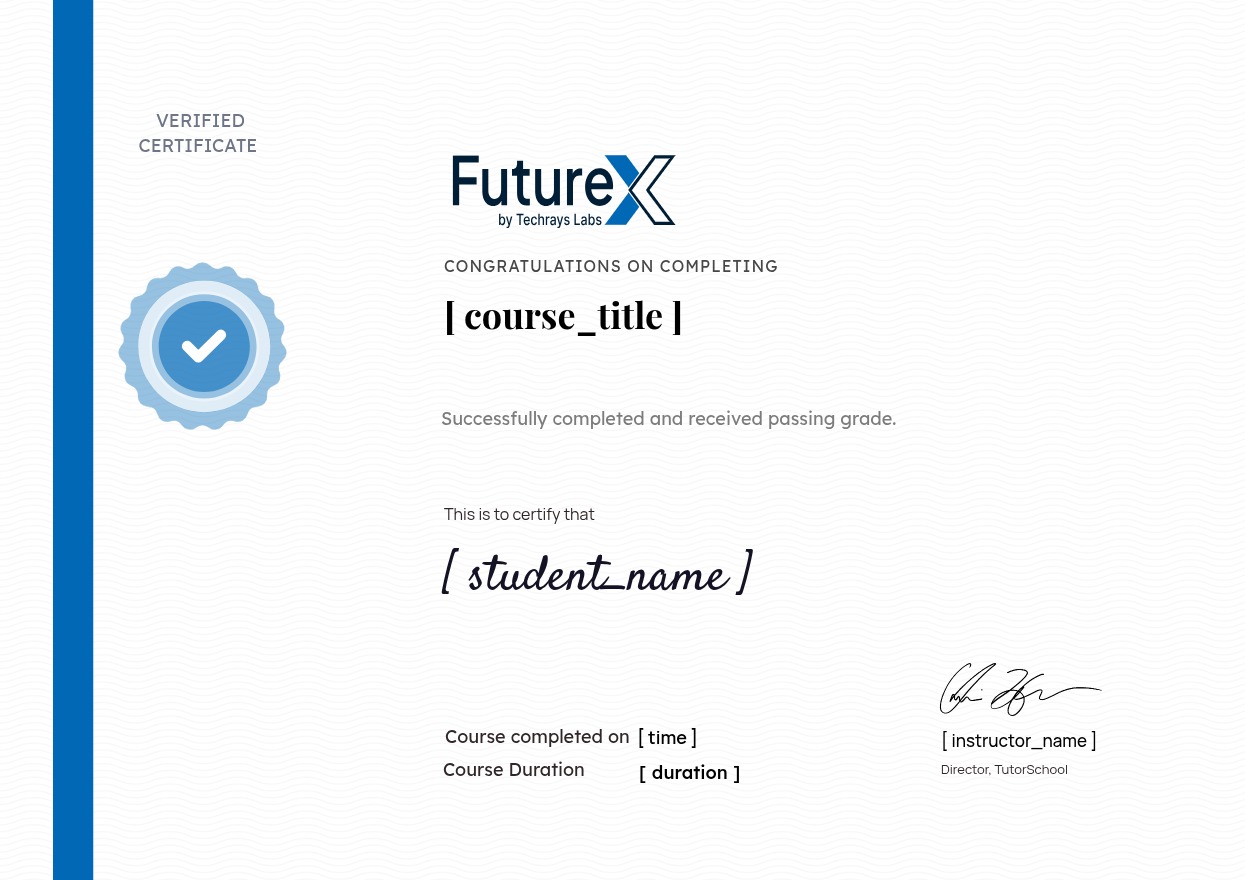
selected template

Student Ratings & Reviews

No Review Yet
No Review Yet