About Course
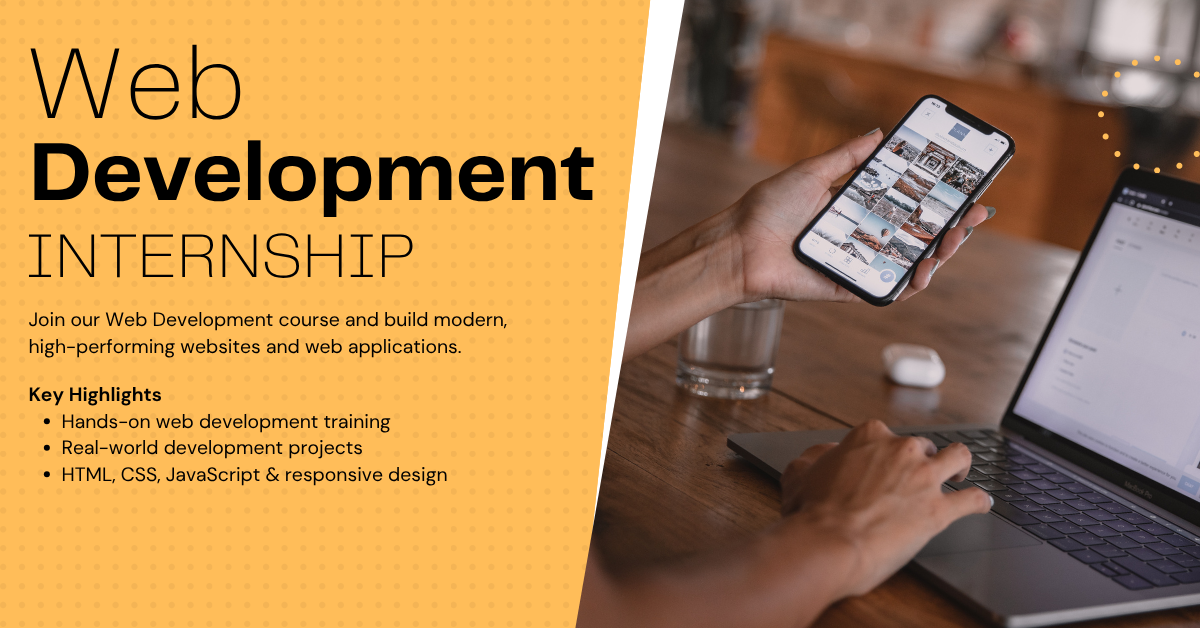
This 1-month Web Development Internship is an intensive, beginner-friendly training program designed to help learners quickly build foundational web development skills and understand how modern websites and web applications are created.
The program follows a practical and structured learning approach, starting from the basics of web technologies and progressing toward building responsive and interactive web pages. It is designed to provide conceptual understanding along with hands-on implementation through coding exercises, assignments, quizzes, mini-projects, and a final capstone project.
Despite its shorter duration, the internship focuses heavily on practical learning and real-world implementation, ensuring that learners gain industry-relevant exposure and confidence in building modern websites.
🚀 What This Internship Covers
The internship begins with the fundamentals of web development, where learners understand how websites work and how web pages are structured using HTML. Students learn essential concepts such as headings, paragraphs, links, images, forms, tables, and semantic HTML elements that form the backbone of every website.
Once the structure of webpages is understood, learners move into CSS (Cascading Style Sheets), where they learn how to style web pages, work with colors, typography, spacing, layouts, Flexbox, and responsive design techniques. This helps students create visually appealing and mobile-friendly websites.
The program then introduces JavaScript fundamentals, enabling learners to add interactivity and logic to websites. Students understand variables, conditions, loops, functions, events, and DOM manipulation to build dynamic web experiences.
As the internship progresses, learners are introduced to modern web development practices such as responsive layouts, API basics, form validation, and simple project structuring. They also gain exposure to real-world development workflows and debugging techniques.
In the final phase, participants apply all the concepts they have learned by building a complete mini web development project, such as a portfolio website, landing page, or task management application. This project helps learners experience practical frontend development and strengthens their portfolio.
🧠 Learning Approach
This internship is designed around practical implementation rather than theoretical learning alone. Each module focuses on building concepts through coding practice and real-world examples.
Each module includes:
- Structured video/text lessons
- Hands-on coding examples
- Practice exercises and assignments
- Module-wise quizzes for evaluation
- Mini-projects for practical implementation
- A final capstone project
The internship follows a sequential progression system, meaning learners must complete quizzes and assessments successfully before unlocking the next module. This ensures proper understanding of foundational concepts before moving ahead.
🏆 Skills You Will Gain
By the end of this internship, participants will be able to:
- Build structured web pages using HTML
- Design responsive interfaces using CSS
- Create interactive web pages using JavaScript
- Understand frontend web development workflows
- Work with forms, events, and DOM manipulation
- Develop responsive layouts for different devices
- Debug and test web pages effectively
- Build complete beginner-level web projects
- Create portfolio-ready websites
🎯 Who This Internship is For
This program is ideal for:
- Beginners who want to start learning web development
- Students pursuing computer science or IT-related studies
- Individuals interested in frontend development
- Freelancers wanting to build websites
- Anyone looking to understand modern website creation
No prior coding experience is required, but regular practice and consistency are important for successful completion.
💼 Internship Outcome
Upon completion of this internship, learners will have practical experience in frontend web development and will be capable of building responsive and interactive websites using HTML, CSS, and JavaScript.
Participants will also complete a real-world mini project that can be added to their portfolio, resume, or GitHub profile, helping them demonstrate practical skills and improving their opportunities for internships, freelance work, or beginner-level web development roles.
Course Content
Module 1: HTML & Web Foundations
-
Introduction to HTML & Web Structure
-
HTML Tags, Elements & Attributes
-
Lists, Tables & Hyperlinks
-
HTML Forms & Input Elements
-
Check what have you learnt about HTML Fundamentals Assessment
-
Student Registration Webpage
Module 2: CSS & Responsive Web Design
Module 3: JavaScript & Interactive Frontend Development
Final Module: Full Website Project & Deployment
Earn a certificate
Add this certificate to your resume to demonstrate your skills & increase your chances of getting noticed.