5.00
(1 Rating)

3 Months Cloud / DevOps Training & Internship

Categories: Training & Internship
Wishlist Share

About Course

This 3-month Cloud / DevOps Internship is a fast-paced, practical training program designed to help beginners and aspiring IT professionals build strong foundations in cloud computing, DevOps practices, automation, deployment pipelines, and modern infrastructure management.

The program follows a hands-on learning approach that starts with the fundamentals of cloud and DevOps concepts and gradually moves toward real-world deployment workflows used in modern software companies. It is designed to provide both conceptual understanding and implementation-focused experience through guided exercises, assignments, quizzes, and project-based learning.

🚀 What This Internship Covers

The internship begins with the fundamentals of Cloud Computing and DevOps, where learners understand how modern applications are hosted, managed, and deployed at scale. Students learn core concepts such as cloud infrastructure, virtualization, deployment models, Linux basics, networking fundamentals, and the DevOps lifecycle.

Once the foundational concepts are clear, the program moves into Linux System Administration and Networking, which are essential skills for every DevOps engineer. Learners gain hands-on experience with Linux commands, file systems, user management, permissions, process handling, package management, SSH, server configuration, and networking concepts like IP addressing, DNS, ports, and firewalls.

The next phase introduces Version Control and Automation Tools using Git and GitHub. Students learn how to manage source code, work with repositories, handle branching strategies, collaborate on projects, and maintain proper deployment workflows used in professional development environments.

After this, learners dive into Continuous Integration and Continuous Deployment (CI/CD), where they understand how modern deployment pipelines work. They learn how to automate builds, testing, and deployments using tools like Jenkins and GitHub Actions. Concepts such as pipeline creation, automation workflows, build triggers, and deployment strategies are covered through practical implementation.

The internship then transitions into Containerization and Cloud Deployment using Docker and cloud platforms. Students learn how to create containers, manage Docker images, work with Docker Compose, and deploy applications in isolated environments. They are also introduced to cloud services such as AWS fundamentals, including EC2, S3, IAM, and basic server deployment practices.

In the final stage, participants build and deploy a complete DevOps project where they configure repositories, automate deployments, containerize applications, and host them on cloud infrastructure. This project simulates real-world DevOps workflows followed in modern software companies.

🧠 Learning Approach

This internship focuses heavily on practical implementation rather than only theoretical concepts. Every module is designed to strengthen real-world problem-solving and infrastructure management skills through continuous practice.

Each module includes:

  • Structured learning materials
  • Practical command-line exercises
  • Real-world deployment examples
  • Module-wise quizzes and assessments
  • Assignments and mini-projects
  • A final cloud deployment project

The learning flow is sequential, ensuring students understand foundational concepts before progressing into advanced DevOps workflows and cloud deployment practices.

🏆 Skills You Will Gain

By the end of this internship, participants will be able to:

  • Understand Cloud Computing and DevOps workflows
  • Work confidently with Linux systems and server environments
  • Use Git and GitHub for version control and collaboration
  • Build and manage CI/CD pipelines
  • Containerize applications using Docker
  • Deploy applications on cloud platforms
  • Understand deployment automation and infrastructure management
  • Work with real-world DevOps tools and workflows
    Manage production-style deployment environments

🎯 Who This Internship is For

This program is ideal for:

  • Beginners interested in Cloud and DevOps careers
  • Students pursuing computer science or IT-related fields
  • Developers who want deployment and infrastructure skills
  • System administrators looking to modernize their workflows
  • Anyone aiming for DevOps Engineer or Cloud Engineer roles

No prior cloud or DevOps experience is required, but regular practice and consistency are necessary to successfully complete the program.

💼 Internship Outcome

Upon completion of this internship, learners will have practical experience working with modern DevOps tools, deployment pipelines, cloud infrastructure, and containerized environments. They will also complete a real-world deployment project that can be added to their portfolio, helping them prepare for entry-level Cloud and DevOps roles in the software industry.

Show More

Course Content

Module 1: Introduction to Cloud Computing & DevOps Foundations
This module introduces students to the core concepts of Cloud Computing and DevOps, which form the backbone of modern software delivery and infrastructure management. Students will begin by understanding how traditional IT infrastructure evolved into cloud-based systems and why organizations now rely heavily on cloud platforms for scalability, speed, and reliability. The module explains the shift from manual server management to automated infrastructure and continuous software delivery. Students will learn what cloud computing is, how it works, and why it has become the standard in modern application deployment. They will explore cloud service models such as IaaS, PaaS, and SaaS, and understand how companies use them in practical environments. Alongside this, students will gain a strong foundation in DevOps principles, including collaboration, automation, monitoring, and continuous delivery. This module is important because every cloud engineer or DevOps engineer must first understand the ecosystem before using tools like Docker, Jenkins, Kubernetes, or Terraform. Without these foundational concepts, advanced tools become difficult to understand and apply effectively. By the end of this module, students will understand the complete high-level lifecycle of modern cloud infrastructure and DevOps workflows. They will be able to explain how applications move from development to deployment, how cloud platforms support scalability, and how DevOps improves speed and stability in software delivery. This module builds the conceptual base for all upcoming modules and ensures students develop a practical mindset before working with real infrastructure tools.

  • Introduction to Cloud Computing
  • Cloud Service Models (IaaS, PaaS, SaaS)
  • Introduction to DevOps
  • DevOps Lifecycle
  • Check what have you learnt about Cloud Computing & DevOps Foundations Quiz
  • Cloud & DevOps Fundamentals Research Portfolio

Module 2: Linux Fundamentals for Cloud & DevOps Engineers
This module builds the operating system foundation required for every Cloud and DevOps engineer. Linux is the default OS used in cloud servers, containers, CI/CD pipelines, and production environments. Without strong Linux skills, working with AWS, Azure, Docker, Kubernetes, or Terraform becomes inefficient and error-prone. Students will learn how Linux systems work internally, how to navigate the terminal, manage files, handle permissions, control processes, and manage software packages. The module also focuses on real server-level tasks that engineers perform daily in production environments. Linux is important because almost every cloud server runs on a Linux distribution like Ubuntu, CentOS, or Amazon Linux. DevOps pipelines also execute scripts and deployments on Linux machines. This makes Linux a non-negotiable skill for backend infrastructure roles. By the end of this module, students will be able to confidently use the Linux command line, manage servers, troubleshoot system issues, and perform basic system administration tasks required in real-world DevOps environments. This module transforms beginners into system-aware engineers capable of working on actual cloud servers.

Module 3: Networking Fundamentals for Cloud & DevOps Engineers
This module builds the core networking foundation required for cloud computing and DevOps engineering. Networking is how systems communicate with each other over the internet or private infrastructure, and every cloud service depends on it. Without understanding networking, debugging deployments, load balancers, Kubernetes clusters, or CI/CD pipelines becomes guesswork. Students will learn how data moves across networks, how IP addressing works, how DNS resolves domain names, and how HTTP/HTTPS enables web communication. The module also introduces ports, protocols, firewalls, and basic troubleshooting techniques used in real cloud environments. Networking is critical because every cloud application is accessed over a network. Whether deploying a website, connecting microservices, or accessing databases, everything depends on correct network configuration. By the end of this module, students will understand how systems communicate, how to troubleshoot connectivity issues, and how networking supports scalable cloud architecture. This module converts beginners into engineers capable of diagnosing real-world connectivity and deployment issues.

Module 4: Version Control with Git & GitHub for DevOps
This module introduces one of the most critical tools in modern software engineering: Version Control using Git and GitHub. Every DevOps pipeline, CI/CD system, and collaborative software project depends on version control to track changes, manage code history, and enable team collaboration without conflicts. Students will learn how Git works internally, how repositories are structured, and how to manage branches, commits, merges, and remote repositories. GitHub is introduced as a platform for hosting Git repositories and enabling collaboration, automation, and DevOps workflows. Version control is essential because software systems evolve constantly. Without Git, teams cannot safely collaborate, roll back changes, or maintain production stability. By the end of this module, students will be able to manage real-world projects using Git workflows, collaborate using GitHub, and integrate version control into CI/CD pipelines. This module is a direct entry point into professional DevOps engineering practices.

Module 5: Shell Scripting for DevOps Automation
This module introduces Shell Scripting, one of the most practical automation skills in DevOps and Cloud engineering. Shell scripts allow engineers to automate repetitive tasks like server setup, backups, deployments, monitoring, and system maintenance. Students will learn how to write Bash scripts, use variables, loops, conditions, functions, and automate real Linux operations. This module bridges manual Linux command usage with real-world automation workflows used in production systems. Shell scripting is critical because DevOps is fundamentally about automation. Without scripting, engineers would need to manually execute repetitive tasks, which is slow, error-prone, and not scalable. By the end of this module, students will be able to write automation scripts for server tasks, system monitoring, and deployment workflows, making them capable of handling real production environments.

Module 6: Virtualization, Containers & Docker Fundamentals
This module introduces how modern cloud systems isolate, package, and run applications efficiently using virtualization and containerization. These concepts are the backbone of cloud platforms, microservices architecture, and DevOps pipelines. Students will learn the difference between virtual machines and containers, how Docker works internally, and how containers help deploy applications consistently across environments. The module also covers Docker images, containers, volumes, networks, and Docker Hub. Virtualization allows multiple operating systems to run on a single physical machine, while containers allow applications to run in isolated environments without full operating systems. This drastically improves resource efficiency and deployment speed. By the end of this module, students will be able to build, run, and manage Docker containers and understand how containerized systems are used in production cloud environments.

Module 7: CI/CD Pipelines with Jenkins & GitHub Actions
This module introduces Continuous Integration and Continuous Deployment (CI/CD), which is the backbone of modern DevOps workflows. CI/CD automates the process of building, testing, and deploying applications so that software can be delivered faster, safer, and more reliably. Students will learn how code changes automatically trigger build pipelines, how testing is integrated into workflows, and how deployments are automated using tools like Jenkins and GitHub Actions. This removes manual intervention and reduces human errors in production deployments. CI/CD is essential because modern software is updated frequently. Without automation, deployments become slow, risky, and inconsistent. By the end of this module, students will be able to create automated pipelines, integrate GitHub with CI tools, and deploy applications automatically to servers or containers.

Module 8: Kubernetes & Container Orchestration + Capstone Project
This module completes the DevOps pipeline by introducing Kubernetes, the industry-standard container orchestration system. At this stage, students already understand Linux, networking, Git, Docker, and CI/CD. Kubernetes is what ties all of it together in real production-scale systems. Kubernetes solves a simple but critical problem: managing hundreds or thousands of containers reliably across multiple machines. Without orchestration, container-based systems collapse under scale, failures, and traffic spikes. Students will learn how Kubernetes schedules containers, maintains uptime, manages scaling, and handles service discovery. They will also understand how deployments are managed in real cloud environments like AWS EKS, Azure AKS, and Google GKE. This module also includes the final capstone project, where all concepts from previous modules are combined into a real production-grade system. By the end, students will not be beginners anymore—they will understand how real cloud systems are built and operated.

Earn a certificate

Add this certificate to your resume to demonstrate your skills & increase your chances of getting noticed.
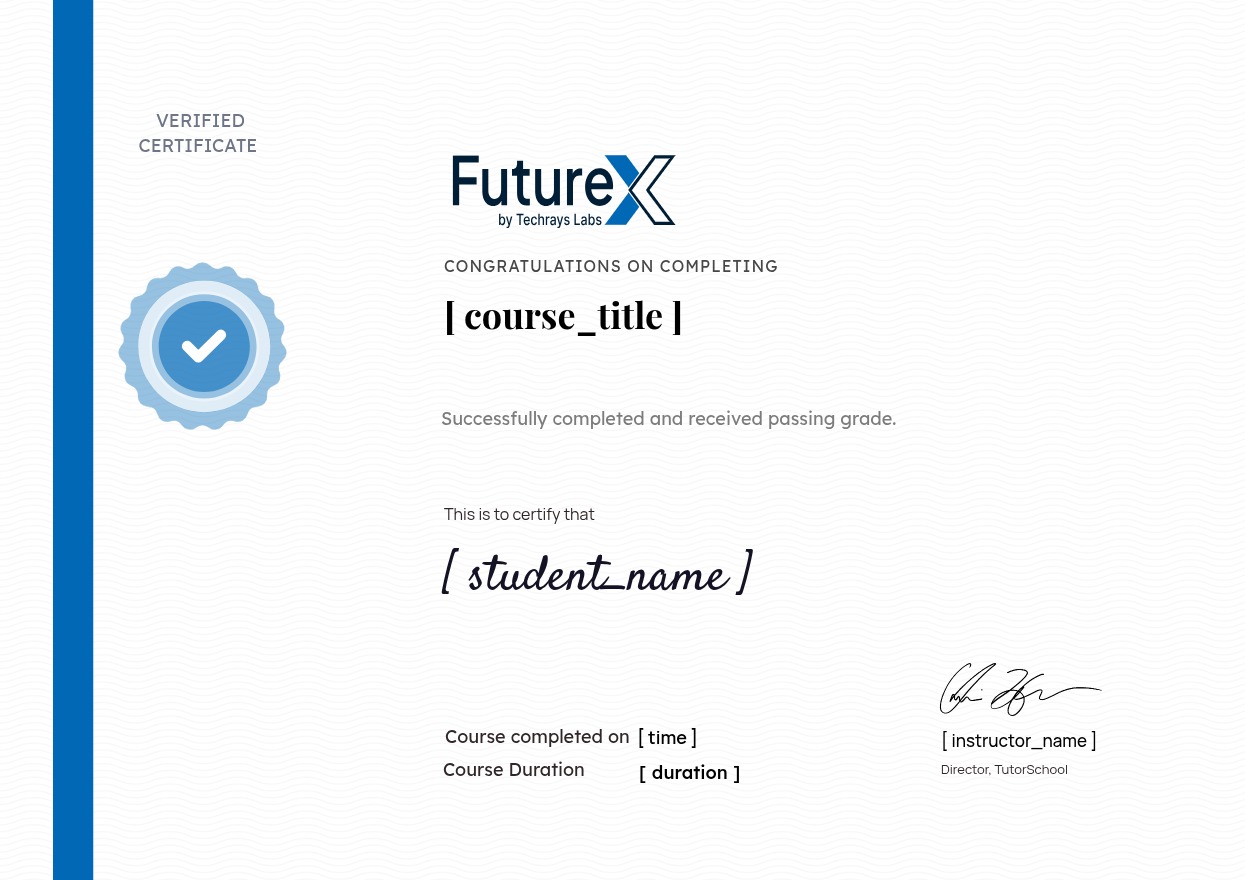
selected template

Student Ratings & Reviews

5.0
Total 1 Rating
5
1 Rating
4
0 Rating
3
0 Rating
2
0 Rating
1
0 Rating
S
1 week ago
Good