
3 Months Digital Marketing Training & Internship

Categories: Training & Internship
Wishlist Share

About Course

This 3-month Digital Marketing Internship is a structured, practical training program designed to help beginners develop industry-ready marketing skills across social media, SEO, content marketing, paid advertising, branding, and online campaign management.

The program follows a hands-on learning approach, starting from the fundamentals of digital marketing and gradually advancing toward real-world campaign execution and performance optimization. It is designed to provide both conceptual understanding and practical implementation experience through live projects, assignments, case studies, and marketing tools used by modern businesses.

🚀 What This Internship Covers

The internship begins with the fundamentals of digital marketing, where learners understand how businesses build an online presence, attract audiences, and generate leads using digital platforms. Students learn core concepts such as branding, target audience analysis, customer journey, digital channels, and marketing strategy basics.

Once the foundation is established, the program moves into Social Media Marketing (SMM), where learners gain practical experience creating and managing content for platforms like Instagram, Facebook, LinkedIn, and YouTube. They learn content planning, audience engagement, hashtag strategies, reel/post optimization, and social media growth techniques.

The internship then introduces Search Engine Optimization (SEO), helping students understand how websites rank on search engines like Google. Learners work with keyword research, on-page SEO, technical SEO basics, backlink strategies, content optimization, and SEO tools used for website analysis and ranking improvement.

Next, students explore Content Marketing and Copywriting, where they learn how to create engaging digital content that attracts and converts audiences. This includes blog writing, ad copy creation, captions, email marketing basics, storytelling, and content strategy planning for different platforms and audiences.

The program also covers Paid Advertising and Performance Marketing, where learners understand how online ads work across Google Ads and Meta Ads platforms. Students learn campaign creation, targeting, budgeting, ad creatives, lead generation strategies, and campaign performance tracking using analytics and insights.

In the final phase, learners apply all concepts through a real-world digital marketing project. This may include creating a complete social media campaign, SEO optimization strategy, brand marketing plan, or paid ad campaign for a business or product. The project simulates actual industry workflows and helps learners build practical marketing experience.

🧠 Learning Approach

This internship is designed around implementation, consistency, and real-world application. Each module includes:

  • Structured video/text lessons

  • Practical marketing exercises

  • Real-world campaign examples

  • Assignments and mini-projects

  • Platform-based implementation tasks

  • Quizzes and assessments

  • A final capstone project

The program follows a step-by-step progression model, ensuring learners build strong foundational knowledge before moving into advanced marketing concepts and campaign execution.

🏆 Skills You Will Gain

By the end of this internship, participants will be able to:

  • Understand core digital marketing concepts and strategies

  • Manage social media pages and content calendars

  • Perform keyword research and basic SEO optimization

  • Create engaging marketing content and ad copies

  • Run and analyze digital advertising campaigns

  • Use marketing tools for analytics and performance tracking

  • Build brand awareness and audience engagement strategies

  • Plan and execute real-world digital marketing campaigns

🎯 Who This Internship is For

This program is ideal for:

  • Beginners who want to start a career in digital marketing

  • Students interested in marketing, branding, and online business

  • Freelancers looking to offer digital marketing services

  • Business owners wanting to grow their online presence

  • Anyone interested in social media, advertising, and content creation

No prior marketing experience is required, but active participation and practical implementation are important for successful completion.

💼 Internship Outcome

Upon completion of this internship, learners will have practical experience in digital marketing and will be capable of planning and executing online marketing campaigns across multiple platforms. They will also have hands-on project experience and a portfolio that can be showcased to clients, companies, or employers, improving their opportunities in digital marketing, social media management, SEO, and performance marketing roles.

Show More

Course Content

Module 1: Introduction to Digital Marketing & Online Business Foundations
This module establishes the core foundation of digital marketing and how modern online businesses operate in real-world environments. Students will understand how digital ecosystems function, how brands grow online, and how marketing channels integrate together. You will learn the difference between traditional and digital marketing, how customer journeys work, and how online businesses generate revenue using structured funnels. This module is critical because without understanding the ecosystem, all advanced marketing techniques (SEO, Ads, Content, Social Media) become disconnected and ineffective. By the end of this module, students will be able to: Understand full digital marketing structure Identify major marketing channels Map customer journey stages Analyze basic online business models

  • What is Digital Marketing?
  • Search Engine Optimization (SEO) Basics
  • Customer Journey & Marketing Funnel
  • Digital Marketing Channels Overview
  • Check what have you learnt about Digital Marketing Basics Check
  • Brand Awareness Strategy Plan

Module 2 : Website Fundamentals, Landing Pages & Conversion Foundations
This module focuses on how websites actually work and how digital marketing depends on well-structured landing pages. Students will understand how websites are hosted, how pages are built using HTML/CSS, and how users interact with them. A major focus is conversion—turning visitors into leads or customers. You will learn how landing pages are designed strategically, not just visually. This module is critical because even the best ads and SEO fail if the website does not convert traffic into action. By the end of this module, students will be able to: Understand website architecture and hosting basics Build structured landing pages Design conversion-focused pages Apply basic UX principles for marketing Create simple functional web pages

Module 3: Search Engine Optimization (SEO) Fundamentals
This module introduces how websites rank on search engines like Google and why some pages get traffic while others don’t. Students will learn how search engines work, how keywords influence rankings, and how on-page SEO is structured. SEO is the backbone of organic digital marketing. Without it, websites depend only on paid ads, which increases cost and reduces long-term scalability. You will also learn how content, structure, and technical elements work together to improve visibility. By the end of this module, students will be able to: Understand how search engines rank pages Perform basic keyword research Optimize web pages for SEO Structure content for ranking Apply on-page SEO techniques

Module 4: Content Marketing Strategy & Execution
This module explains how content drives every digital marketing channel. Without content, SEO fails, ads fail, and social media becomes noise. You will learn how to plan, create, and distribute content strategically for different platforms like blogs, websites, social media, and email. Focus is not just writing—it is structured communication that influences user behavior and builds trust. By the end of this module, students will be able to: Build content strategies for brands Create structured blog and social content Understand content funnels Plan editorial calendars Align content with marketing goals

Module 5: Social Media Marketing (SMM) Strategy & Execution
This module explains how businesses use social media platforms to build awareness, engage audiences, and generate conversions. It focuses on structured marketing rather than random posting. You will learn how platforms differ, how algorithms work at a basic level, and how content is adapted for each channel. Social media is not optional—it is a distribution engine that amplifies content, SEO, and brand identity. By the end of this module, students will be able to: Understand major social media platforms Build platform-specific strategies Create engagement-driven content Plan posting schedules Analyze basic performance metrics

Module 6: Paid Advertising (Google Ads & Social Media Ads)
This module covers how businesses pay for visibility using digital ads. Unlike SEO and content marketing, paid advertising delivers instant traffic by placing ads in front of targeted users. You will learn how Google Ads and social media ads work, how bidding systems function, how targeting is defined, and how campaigns are structured for performance. This module is critical because paid ads are the fastest way to generate leads, but also the fastest way to waste money if not executed properly. By the end of this module, students will be able to: Understand ad auction systems Create basic campaign structures Define audience targeting Design ad creatives and copy Analyze ad performance metrics

Module 7: Email Marketing & Marketing Automation
This module focuses on building direct communication systems with users using email and automation tools. Unlike social media or ads, email marketing gives full control over audience communication without platform dependency. You will learn how email lists are built, how campaigns are structured, how automation workflows operate, and how businesses use email to generate consistent revenue. This is one of the highest ROI channels in digital marketing, but only if segmentation and automation are implemented correctly. By the end of this module, students will be able to: Build and manage email lists Create email campaigns and sequences Design automated workflows Understand segmentation strategies Analyze email performance metrics

Module 8: Capstone Project – Complete Digital Marketing Campaign
This is the execution module where everything learned across SEO, content, social media, ads, and email marketing is combined into a single working system. You are not learning concepts here anymore—you are building a full digital marketing machine for a real or simulated business. This module tests whether you can connect strategy, execution, and analytics without breaking flow between channels. By the end of this module, students will be able to: Build a complete multi-channel marketing system Integrate SEO, content, ads, social media, and email Design conversion-focused funnels Track performance using KPIs Present a full marketing campaign like a real agency

Earn a certificate

Add this certificate to your resume to demonstrate your skills & increase your chances of getting noticed.
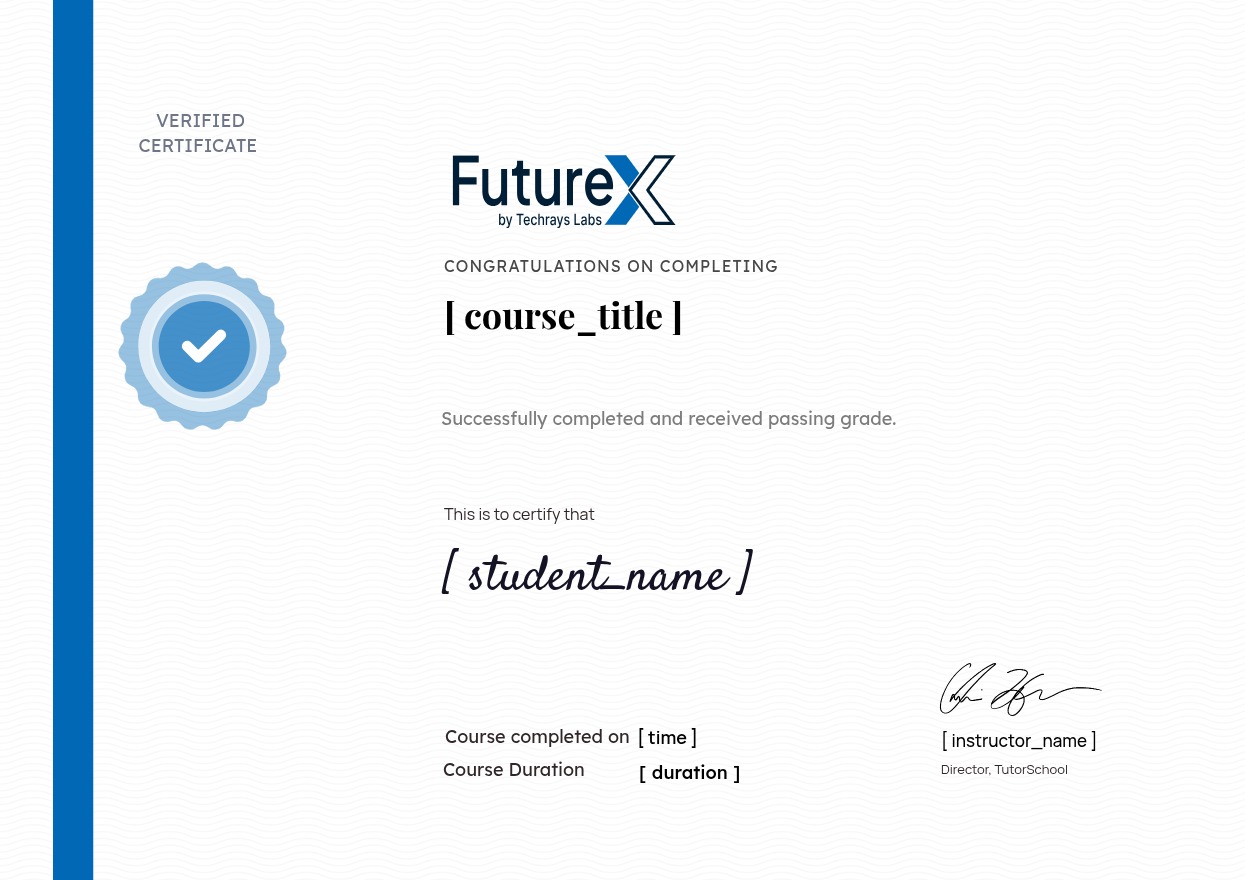
selected template

Student Ratings & Reviews

No Review Yet
No Review Yet