About Course
This 2-month Laravel Developer Internship is a comprehensive and practical training program designed to transform beginners into capable backend and full-stack web developers using Laravel, one of the most powerful and widely used PHP frameworks in modern web development.
The program follows a structured and progressive learning approach, starting from the fundamentals of web development and PHP programming and gradually advancing toward building dynamic, secure, and database-driven web applications using Laravel. It is designed to provide both conceptual understanding and hands-on coding experience through real-world examples, assignments, quizzes, mini-projects, and project-based learning.
The internship focuses heavily on practical implementation and industry-relevant workflows, helping learners gain real-world development experience and confidence in modern Laravel application development.
🚀 What This Internship Covers
The internship begins with the fundamentals of web development and PHP programming, where learners understand how websites and backend systems function. Students build foundational knowledge in HTML, CSS, basic JavaScript, PHP syntax, variables, loops, conditions, functions, arrays, and form handling before transitioning into Laravel development.
Once the basics are established, learners are introduced to Laravel, a modern PHP framework widely used for scalable and secure web application development. Students understand Laravel installation, project structure, routing, controllers, Blade templating, middleware, and MVC architecture, which form the foundation of professional Laravel applications.
The program then focuses on database-driven development using MySQL and Laravel’s Eloquent ORM. Learners gain hands-on experience with migrations, models, database relationships, CRUD operations, form validation, authentication systems, session handling, and dynamic data management.
As the internship progresses, students learn how to build complete web application workflows including:
- User authentication and authorization
- CRUD management systems
- File upload handling
- Search and filtering
- Pagination
- Form validations
- Error handling and debugging
- Secure application structure
Learners also gain practical understanding of RESTful routing, reusable Blade components, middleware protection, and application organization techniques used in real-world Laravel projects.
In the final phase, students apply everything they have learned by building a complete real-world Laravel project such as:
- Employee Management System
- Blog Management Platform
- Inventory Management System
- Student Management Portal
- Task Management Application
The project includes authentication, CRUD operations, database integration, validations, responsive UI integration, and structured backend architecture similar to professional development environments.
🧠 Learning Approach
This internship is not just theory-based; it is designed around practical implementation, real-world coding practice, and continuous evaluation.
Each module includes:
- Structured video/text lessons
- Real-world coding examples
- Hands-on coding exercises
- Assignments and mini-projects
- Module-wise quizzes to test understanding
- Debugging and implementation tasks
- A final capstone project
The learning progression is strictly sequential, meaning learners must successfully complete quizzes and assessments before unlocking the next module. This ensures strong understanding of foundational concepts before progressing toward advanced Laravel development.
The internship also introduces learners to modern development practices such as:
- MVC architecture
- Clean code principles
- Database normalization
- Reusable Blade components
- Secure authentication systems
- Error handling and debugging
- Real-world Laravel development workflows
🏆 Skills You Will Gain
By the end of this internship, participants will be able to:
- Understand Laravel MVC architecture deeply
- Build dynamic database-driven web applications
- Work with routing, controllers, middleware, and Blade templates
- Implement CRUD operations using Eloquent ORM
- Manage relational databases using MySQL
- Build authentication and authorization systems
- Validate forms and manage sessions securely
- Handle file uploads and user input processing
- Debug and optimize Laravel applications
- Develop real-world Laravel projects for portfolios
- Understand professional backend development workflows
🎯 Who This Internship is For
This program is ideal for:
- Beginners who want to start a career in backend or full-stack development
- Students pursuing computer science or IT-related fields
- PHP developers wanting to master Laravel
- Freelancers building dynamic websites and admin panels
- Developers interested in modern PHP framework development
- Anyone aiming for Laravel developer roles in IT companies
Basic understanding of HTML, CSS, and programming concepts can be helpful, but no prior Laravel experience is required. Consistent practice and hands-on implementation are essential for successful completion.
💼 Internship Outcome
Upon completion of this internship, learners will have practical experience in backend and full-stack Laravel development and will be capable of building secure, dynamic, and database-driven web applications using Laravel and MySQL.
Participants will also complete a real-world capstone project that can be showcased in portfolios, resumes, or GitHub profiles, significantly improving their chances of securing internships, freelance projects, or junior Laravel developer roles in professional software development environments.
Course Content
Module 1: PHP & Web Development Fundamentals for Laravel
-
Introduction to PHP & Server-Side Programming
-
Variables, Data Types & Operators in PHP
-
PHP Functions & Code Reusability
-
PHP Forms & User Input Handling
-
Introduction to Web Requests (HTTP Basics)
-
Check what have you learnt about PHP Fundamentals
-
Simple Contact Form Processor
Module 2: Object-Oriented PHP (OOP) – Foundation for Laravel
Module 3: Laravel Basics – Installation, Structure & Request Lifecycle
Module 4: Routing, Controllers & Views in Laravel
Module 5: Database with Laravel (Migrations, Eloquent ORM & CRUD Operations)
Module 6: Laravel APIs, Authentication & Final Real-World Project (Capstone)
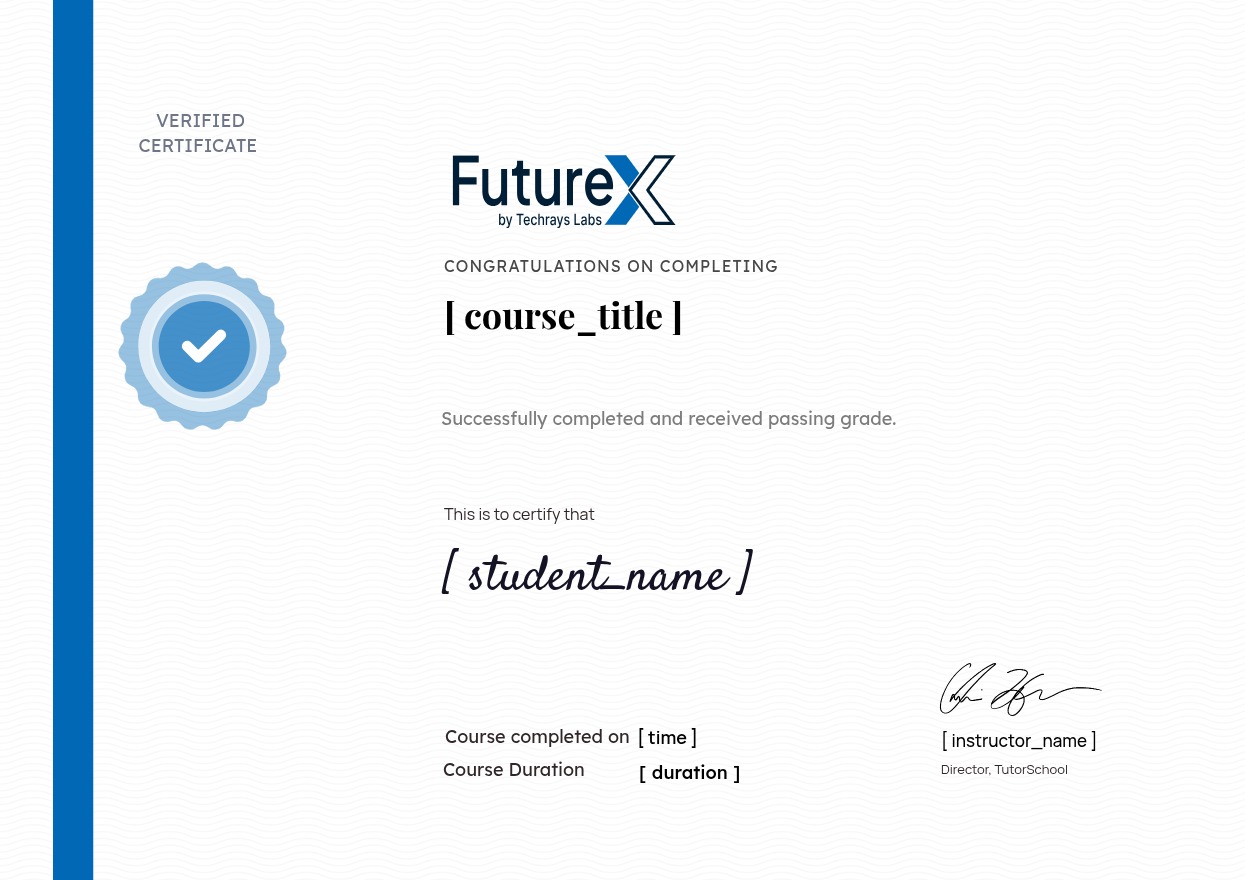
Earn a certificate
Add this certificate to your resume to demonstrate your skills & increase your chances of getting noticed.
Student Ratings & Reviews