4.00
(1 Rating)

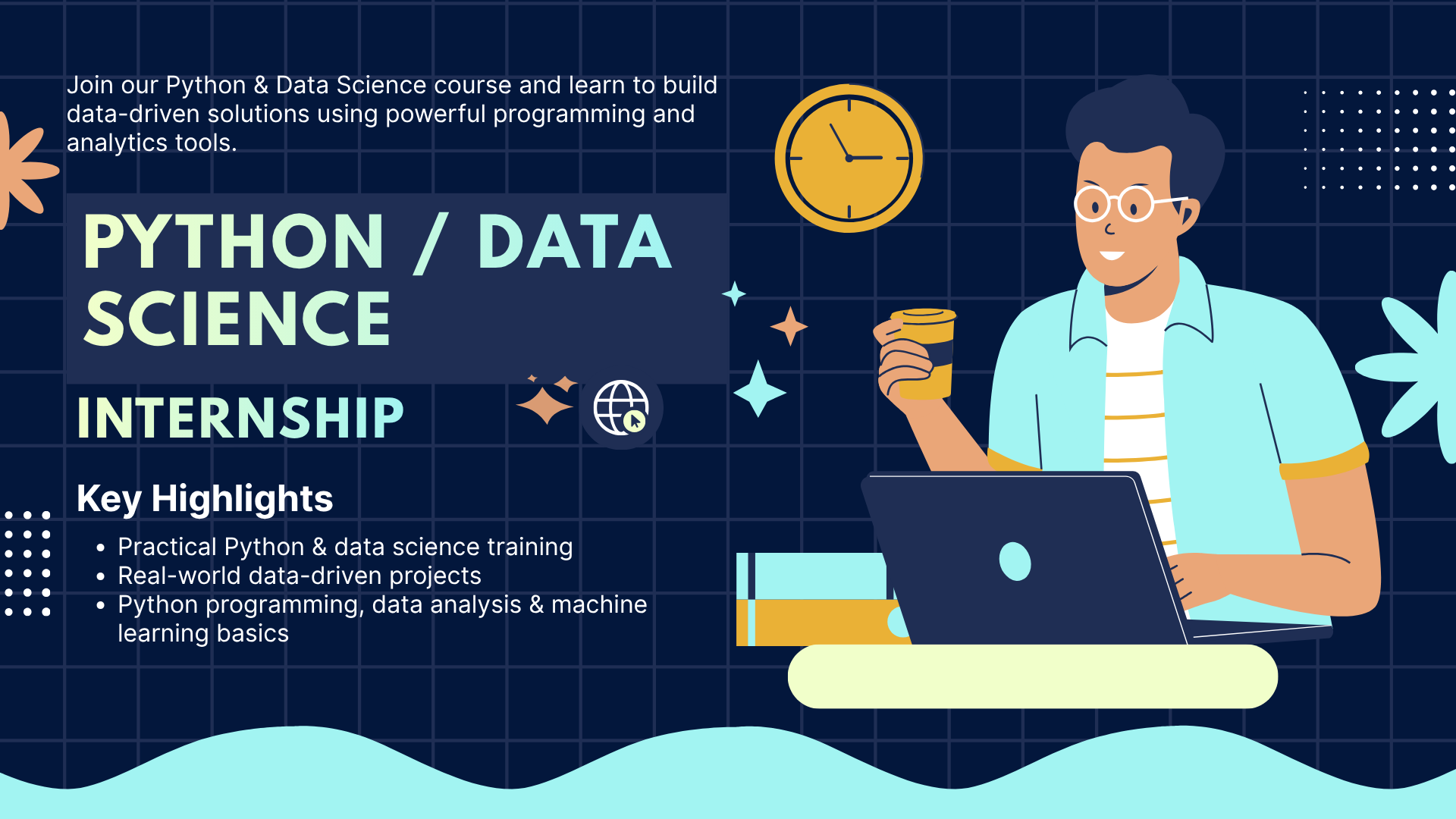
1 Month Python / Data Science Training & Internship

Categories: Training & Internship
Wishlist Share

About Course

This 1-month Python / Data Science Internship is an intensive, practical training program designed to help beginners build strong foundations in Python programming, data analysis, and introductory machine learning concepts used in real-world data science workflows.

The program follows a hands-on learning approach, starting with the fundamentals of Python and gradually moving toward data handling, visualization, analysis, and predictive modeling. It is carefully structured to provide conceptual understanding along with practical implementation through coding exercises, assignments, quizzes, and mini-projects.

🚀 What This Internship Covers

The internship begins with the fundamentals of Python programming, where learners understand essential concepts such as variables, data types, operators, conditional statements, loops, functions, and basic problem-solving techniques. This phase ensures that even students with no prior coding experience can confidently begin their journey in programming and data science.

Once the basics are established, learners move into Python libraries commonly used in data science. Students gain practical experience with libraries like NumPy and Pandas for working with numerical data, data manipulation, filtering, cleaning, and structured data processing.

The next phase focuses on Data Analysis and Visualization, where learners understand how to extract insights from datasets using charts, graphs, and statistical summaries. Students work with tools such as Matplotlib and Seaborn to create visual reports and understand trends, patterns, and relationships in data.

The internship then introduces core Data Science and Machine Learning concepts. Learners understand the basics of supervised learning, model training, prediction, and evaluation using beginner-friendly machine learning algorithms. Students gain hands-on exposure to Scikit-learn and learn how machine learning models are applied in real-world scenarios.

In the final stage, participants work on a mini real-world data science project, such as Sales Prediction, Student Performance Analysis, or Customer Data Analysis. This project helps learners apply programming, analysis, visualization, and machine learning concepts in a practical environment similar to industry workflows.

🧠 Learning Approach

This internship is designed around practical implementation and continuous skill development rather than only theoretical learning. Each module includes:

  • Structured video/text lessons

  • Hands-on coding exercises

  • Real-world dataset practice

  • Module-wise quizzes and assessments

  • Assignments and mini-projects

  • A final capstone project

The learning flow is sequential, meaning learners must complete assessments and activities before progressing to advanced modules. This ensures strong conceptual understanding and practical confidence throughout the internship.

🏆 Skills You Will Gain

By the end of this internship, participants will be able to:

  • Write clean and efficient Python programs

  • Work with real-world datasets using Pandas and NumPy

  • Perform data cleaning and preprocessing

  • Create meaningful data visualizations and reports

  • Understand basic statistical analysis techniques

  • Build beginner-level machine learning models

  • Analyze and interpret data for decision-making

  • Work on practical data science projects

🎯 Who This Internship is For

This program is ideal for:

  • Beginners interested in Data Science or AI

  • Students pursuing computer science, IT, statistics, or related fields

  • Individuals wanting to learn Python for analytics and automation

  • Aspiring data analysts and junior data scientists

  • Anyone looking to start a career in the data science domain

No prior programming or data science experience is required. Basic computer knowledge, consistency, and regular practice are sufficient to successfully complete the program.

💼 Internship Outcome

Upon successful completion of this internship, learners will have practical exposure to Python programming and fundamental data science workflows. Participants will gain hands-on experience working with datasets, creating visualizations, and building basic machine learning models.

They will also complete a portfolio-ready project that can be showcased during job or internship applications, significantly improving their readiness for entry-level roles in Data Science, Data Analytics, and Python development.

Show More

Course Content

Module 1: Python Programming Fundamentals
This module builds the programming foundation required for data science using Python. Before working with data, analysis, or machine learning, students must first understand how Python works as a programming language. Python is one of the most widely used languages in the world for automation, analytics, backend systems, artificial intelligence, and scientific computing. In data science, Python is the standard language because of its readability, simplicity, and massive ecosystem of data-focused libraries. This module introduces Python syntax, variables, data types, operators, conditional logic, loops, and functions. These concepts form the core programming base required before working with data analysis libraries such as NumPy, Pandas, and Matplotlib. The goal of this module is not just to teach syntax, but to build programming logic. Students will learn how Python executes code, how data is stored in memory, how decisions are made in code, and how reusable logic is written. By the end of this module, students will be able to write structured Python programs, solve basic logic problems, and build small utility scripts using core Python concepts.

  • Introduction to Python
  • Variables, Data Types & Operators
  • Conditions, Loops & Functions
  • Check what have you learnt about Python Fundamentals: Functions, Data Types & Operators Quiz
  • Student Score Analyzer

Module 2: Data Analysis with NumPy & Pandas
This module shifts Python from general programming into practical data work. In real data science, writing Python syntax alone is not useful unless data can be stored, cleaned, transformed, and analyzed efficiently. That is where NumPy and Pandas become essential. NumPy is the numerical computation foundation of data science in Python. It provides high-performance array operations and mathematical processing used in analytics, statistics, and machine learning. Pandas is the core data analysis library used to work with structured datasets such as CSV files, Excel sheets, SQL exports, and API records. It is the standard tool used by analysts and data professionals to clean messy data, inspect patterns, and prepare information for reporting or modeling. This module teaches how data is represented in memory, how tabular datasets are handled, how missing values are processed, and how real-world raw data is transformed into usable analytical output. Students will learn how to load datasets, inspect rows and columns, clean incorrect values, perform filtering, create summaries, and extract insights using practical workflows used in real analytics teams. By the end of this module, students will be able to load real datasets, clean them, manipulate them, and generate structured analytical outputs using NumPy and Pandas.

Module 3: Data Visualization with Matplotlib & Exploratory Analysis
This module focuses on one of the most critical parts of data science: turning raw numbers into understandable visual insights. Data in table form is useful for storage and computation, but decision-making rarely happens from raw rows alone. Businesses, analysts, and stakeholders understand patterns faster through visual representation. Data visualization is the process of converting numerical and categorical data into charts, plots, and graphical summaries. It helps identify trends, anomalies, distributions, and relationships that are difficult to detect from raw tables. This module teaches how to use Matplotlib to build professional charts and how to perform basic exploratory data analysis (EDA), which is the first analytical stage in real-world data science workflows. Students will learn how to create charts, choose the correct visual for a problem, interpret trends, and communicate findings clearly. By the end of this module, students will be able to create meaningful visualizations, analyze patterns in data, and present insights using industry-standard charting workflows.

Module 4: APIs, Data Automation & Final Data Science Project
This final module brings together everything learned in the internship and shifts students from isolated practice into real-world data workflows. Up to this point, students have learned Python programming, numerical processing, structured analysis, and visualization. This module connects those skills to live systems and practical automation. In real data science work, data is rarely typed manually. It is fetched from APIs, downloaded from systems, pulled from databases, updated in intervals, transformed automatically, and then used for analysis or reporting. This is where data science becomes operational rather than academic. This module teaches how Python communicates with external systems using APIs, how JSON data is processed, how automated scripts reduce repetitive work, and how real-world data pipelines are structured. Students will learn how to fetch live data, process JSON responses, automate repeated analysis, handle exceptions, and build a complete real-world final project that simulates an actual data analyst workflow. By the end of this module, students will be able to fetch live external data, process it into structured form, automate reporting workflows, and build a complete end-to-end Python data project.

Earn a certificate

Add this certificate to your resume to demonstrate your skills & increase your chances of getting noticed.
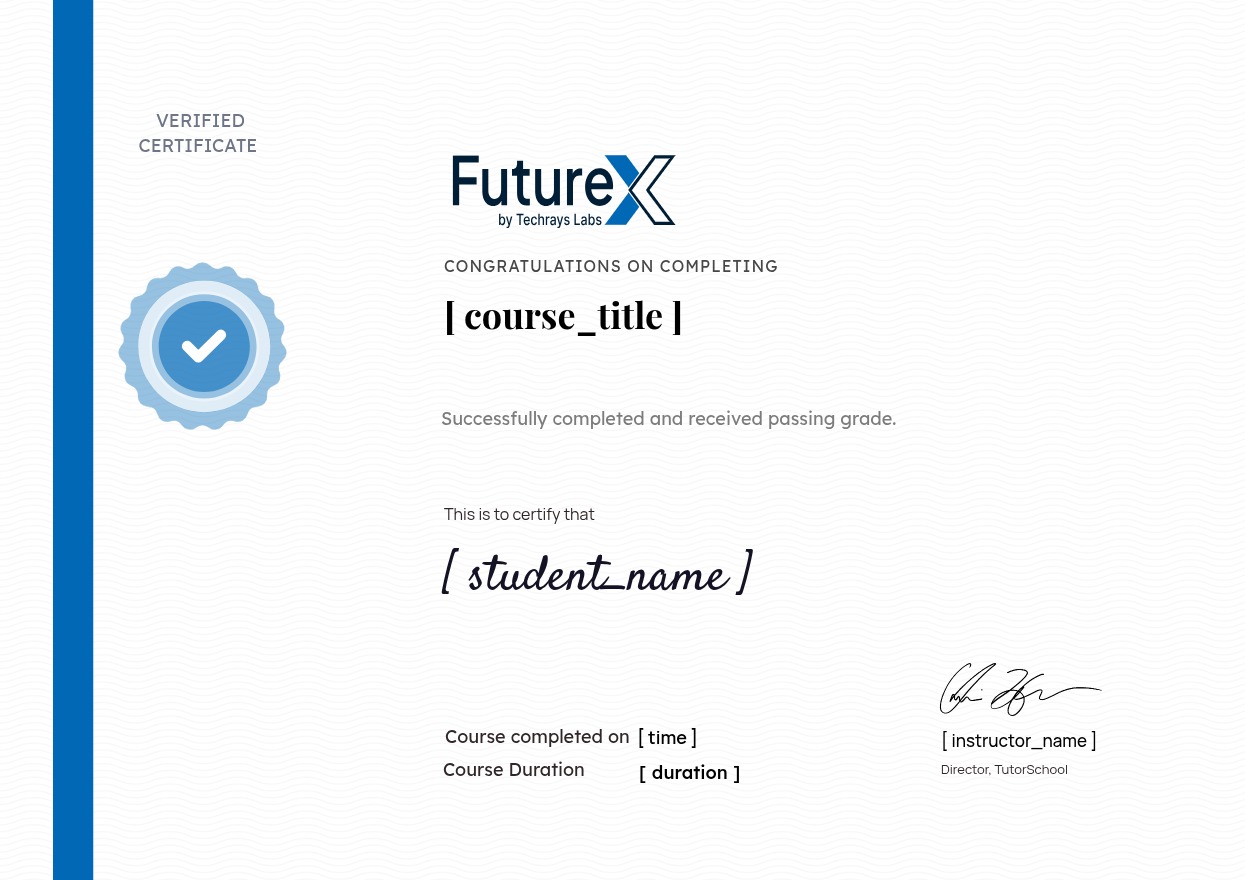

selected template

Student Ratings & Reviews

4.0
Total 1 Rating
5
0 Rating
4
1 Rating
3
0 Rating
2
0 Rating
1
0 Rating
RB
1 week ago
Good course