
If you want a UI/UX design internship, your portfolio is the first thing people look at. Not your resume. Not your grades. Your portfolio.
A hiring manager may spend less than one minute on it. So it needs to say the right things, fast. The best way to do that is with a strong case study.
This guide will show you how to build one.
What Is a Case Study?
A case study is not just pretty pictures of your design. It is the story of your work.
It shows:
- The problem you were solving
- How you thought about it
- What you tried
- What you built
- What you learned
Many students only show the final screens. That is a mistake. Hiring managers want to see how you think, not just what you made.
Part 1: Start With the Problem
Do not start your case study with “Here is my app.” Start with the problem.
Ask yourself:
- Who was this for?
- What problem did they have?
- Why did this problem matter?
Write two or three short sentences about this. Keep it simple. For example:
“Many students find it hard to track their internship deadlines. I designed an app to help them stay on track.”
That is clear. A hiring manager knows right away what you were trying to fix.
Part 2: Show Your Research
Good design starts with research, not guessing.
Show what you did to learn about the problem. This could be:
- A few user interviews
- A short survey
- Notes from watching people use a similar app
You do not need a big study. Even talking to five people is useful. Show one or two key things you learned. Keep this part short and honest.
Part 3: Show Your Thinking, Not Just the Final Design
This is the part most students skip. Do not skip it.
Show your early sketches. Show your wireframes. Show a version that did not work, and explain why you changed it.
This tells the hiring manager something important: you can think through a problem, not just draw a nice screen.
A simple way to do this:
- Show sketch or wireframe
- Write one line: “I tried this because…”
- Show what changed after feedback or testing
Part 4: Show the Final Design With Context
Now you can show your final screens. But do not just drop them in with no words.
Next to each screen, write a short note about what it does and why you made that choice. For example:
“I moved the save button to the top because users kept missing it in testing.”
This one line does more than ten pretty screens with no text.
Part 5: Talk About the Results
End your case study by talking about what happened after.
If you tested your design, what did people say? Did it get easier to use? Even small feedback counts, like “three out of five users finished the task faster.”
If you do not have real results yet, that is okay. Just say what you learned and what you would do next.
Part 6: Keep It Short
A case study should take two to five minutes to read. Not twenty.
Cut anything that does not help tell the story. Use short paragraphs. Use headings. Use simple words. A hiring manager should be able to skim it and still understand your process.
A Simple Case Study Structure You Can Use
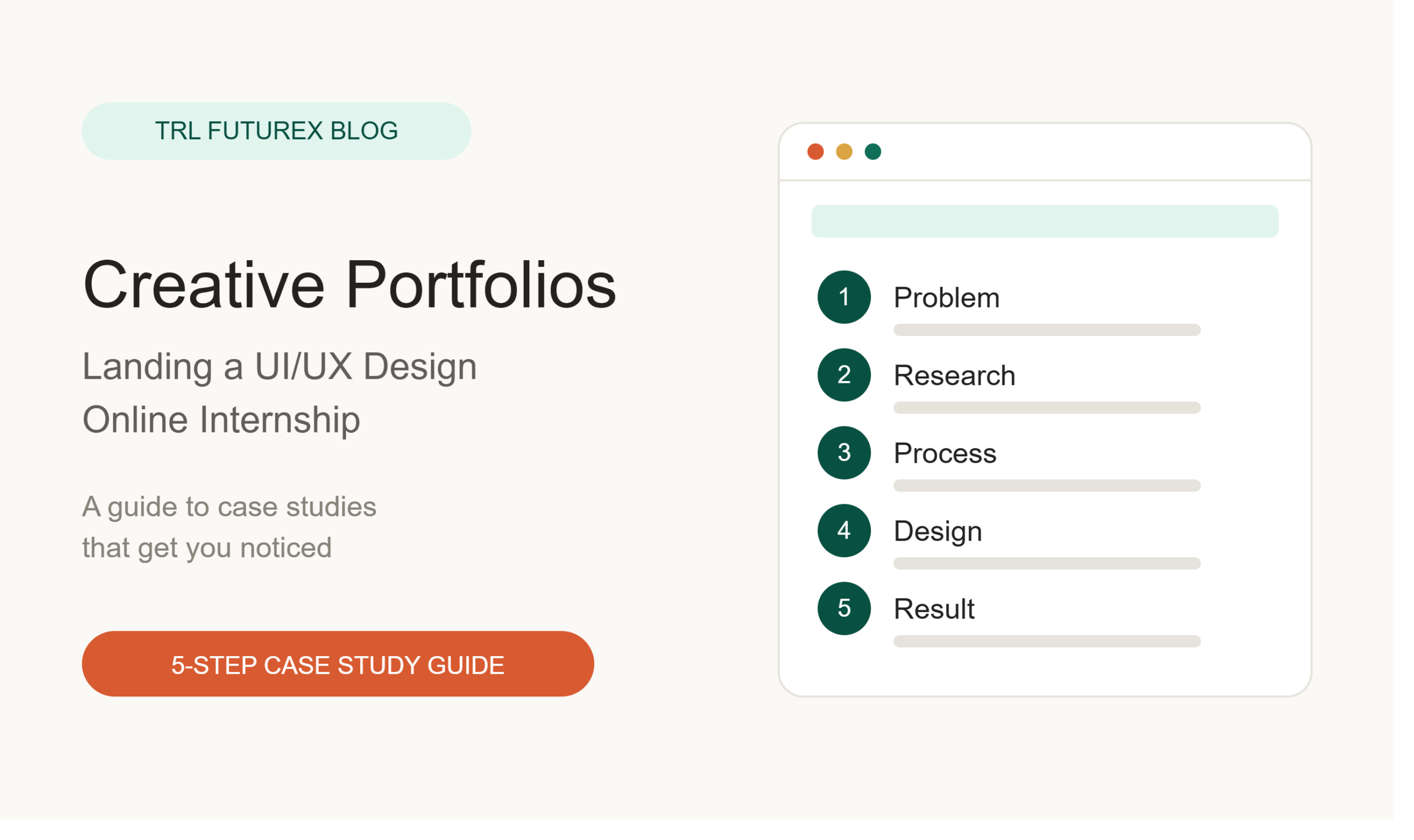
- The Problem — What were you solving, and for whom?
- The Research — What did you learn before you started designing?
- The Process — What did you try, and how did it change?
- The Final Design — What did you build, with short notes on key choices?
- The Result — What happened, or what would you test next?
Use this same structure for every project in your portfolio. It makes your work easy to follow and shows that you think in a clear, organized way.
Final Tip
Your portfolio does not need ten projects. Two or three strong case studies, built the way we described above, will do more for you than ten rushed ones.
Take your time on the story. That is what will get a hiring manager to remember you.
Looking to put these design skills to work? TRL FutureX runs a 100% online UI/UX Design internship where you can build real case studies, get mentor feedback, and earn a certificate for your college requirement. Apply here.