About Course
This 15 Days QA / Software Testing Training & Internship is a practical, industry-oriented, and beginner-friendly program designed to help learners build a strong foundation in Software Testing, Quality Assurance (QA), Manual Testing, Bug Reporting, Test Case Design, and Testing Tools used in modern software development.
The internship follows a structured and progressive learning approach, beginning with the fundamentals of software testing and gradually advancing toward real-world testing processes followed in Agile software development environments. Although the internship duration is shorter, the curriculum emphasizes practical implementation through real application testing, assignments, quizzes, bug reporting exercises, mini-projects, and a comprehensive capstone project.
The program is designed to provide both conceptual understanding and hands-on experience, enabling learners to confidently test web applications, identify software defects, prepare professional test documentation, and work effectively as an entry-level QA Engineer.
🚀 What This Internship Covers
The internship begins with the fundamentals of Software Testing and Quality Assurance, where learners understand the Software Development Life Cycle (SDLC), Software Testing Life Cycle (STLC), software defects, bug life cycle, testing principles, testing methodologies, and the role of a QA Engineer in software development.
Once the fundamentals are established, learners move into Manual Testing, where they gain practical experience in writing effective test cases, preparing test scenarios, executing test cases, reporting defects, performing functional testing, regression testing, smoke testing, sanity testing, exploratory testing, usability testing, compatibility testing, and user acceptance testing (UAT). Students also learn industry-standard bug reporting practices using defect tracking tools.
The internship then introduces learners to API Testing, Basic Database Testing, and Automation Testing Fundamentals. Students learn how to test REST APIs using Postman, verify backend data using SQL queries, understand automation testing concepts, and explore Selenium basics to understand how repetitive testing tasks can be automated in professional QA environments.
In the final phase, learners integrate everything they have learned by testing a complete real-world web application, where they prepare test plans, write comprehensive test cases, execute manual testing, identify and report defects, perform API testing, validate database records, and prepare professional QA documentation. This capstone project closely simulates the day-to-day responsibilities of a Software Quality Assurance Engineer in the IT industry.
🧠 Learning Approach
This internship focuses on practical implementation rather than theory alone. Every concept is reinforced through real-world application testing, documentation exercises, and project-based learning to ensure learners develop the analytical thinking and attention to detail required in software quality assurance.
Each module includes:
- Structured video/text lessons
- Practical testing demonstrations
- Real-world testing examples
- Hands-on testing exercises
- Module-wise quizzes
- Assignments and bug reporting activities
- Mini-projects
- A final capstone project
The learning path is sequential, meaning each module builds upon concepts learned in the previous one. Learners complete practical exercises, quizzes, and assignments before progressing to more advanced testing techniques, ensuring a strong conceptual and practical foundation.
The internship also introduces learners to industry best practices such as:
- Writing professional test cases
- Preparing test plans and test scenarios
- Defect reporting and tracking
- Root cause analysis
- Agile and Scrum testing workflows
- API testing
- Database validation
- Introduction to automation testing
- Quality assurance documentation
🏆 Skills You Will Gain
By the end of this internship, participants will be able to:
- Understand Software Development Life Cycle (SDLC) and Software Testing Life Cycle (STLC)
- Apply software testing principles and methodologies
- Design effective test cases and test scenarios
- Execute manual testing for web applications
- Perform functional, regression, smoke, sanity, and exploratory testing
- Identify, document, and report software defects professionally
- Understand the complete bug life cycle
- Test REST APIs using Postman
- Perform basic database validation using SQL
- Understand the fundamentals of Selenium automation testing
- Prepare QA documentation and testing reports
- Work on real-world software testing projects following Agile methodologies
🎯 Who This Internship is For
This internship is ideal for:
- Beginners who want to start a career in Software Testing or Quality Assurance
- Computer Science, IT, and Engineering students
- Fresh graduates preparing for QA Engineer roles
- Developers who want to improve software quality practices
- Business Analysts and Product Owners who want to understand software testing
- Professionals transitioning into Software Quality Assurance
- Anyone interested in learning software testing through practical implementation
No prior experience in software testing is required. Basic computer knowledge, logical thinking, and attention to detail are sufficient to successfully complete this internship.
💼 Internship Outcome
Upon successful completion of the 15 Days QA / Software Testing Training & Internship, learners will have practical experience in testing real-world web applications, writing professional test documentation, executing manual testing, reporting defects, validating APIs and databases, and understanding the fundamentals of automation testing.
Participants will complete a portfolio-worthy capstone project that demonstrates their ability to plan, execute, and document software testing activities following industry standards. This project can be included in resumes, portfolios, or GitHub repositories to showcase practical QA skills.
By the end of the internship, learners will be well-prepared to pursue internships and entry-level roles such as:
- QA Engineer
- Software Test Engineer
- Manual Tester
- Junior QA Analyst
- Quality Assurance Intern
- Software Testing Associate
The internship also provides a strong foundation for advancing into Automation Testing, Selenium, Cypress, Playwright, Performance Testing, Security Testing, Mobile Application Testing, and DevOps Testing Practices.
Course Content
Module 1: Software Testing Fundamentals & Manual Testing
-
Introduction to Software Testing & Quality Assurance
-
Software Testing Types & Testing Methodologies
-
Test Cases, Test Scenarios & Bug Life Cycle
-
Manual Testing of Web Applications
-
Software Testing Fundamentals
-
Comprehensive Manual Testing of an E-Commerce Web Application
Module 2: API Testing, Database Testing & Advanced Manual Testing
Module 3: Test Management, Automation Testing Basics & Real-World QA Project
Module 4: Final Capstone Project
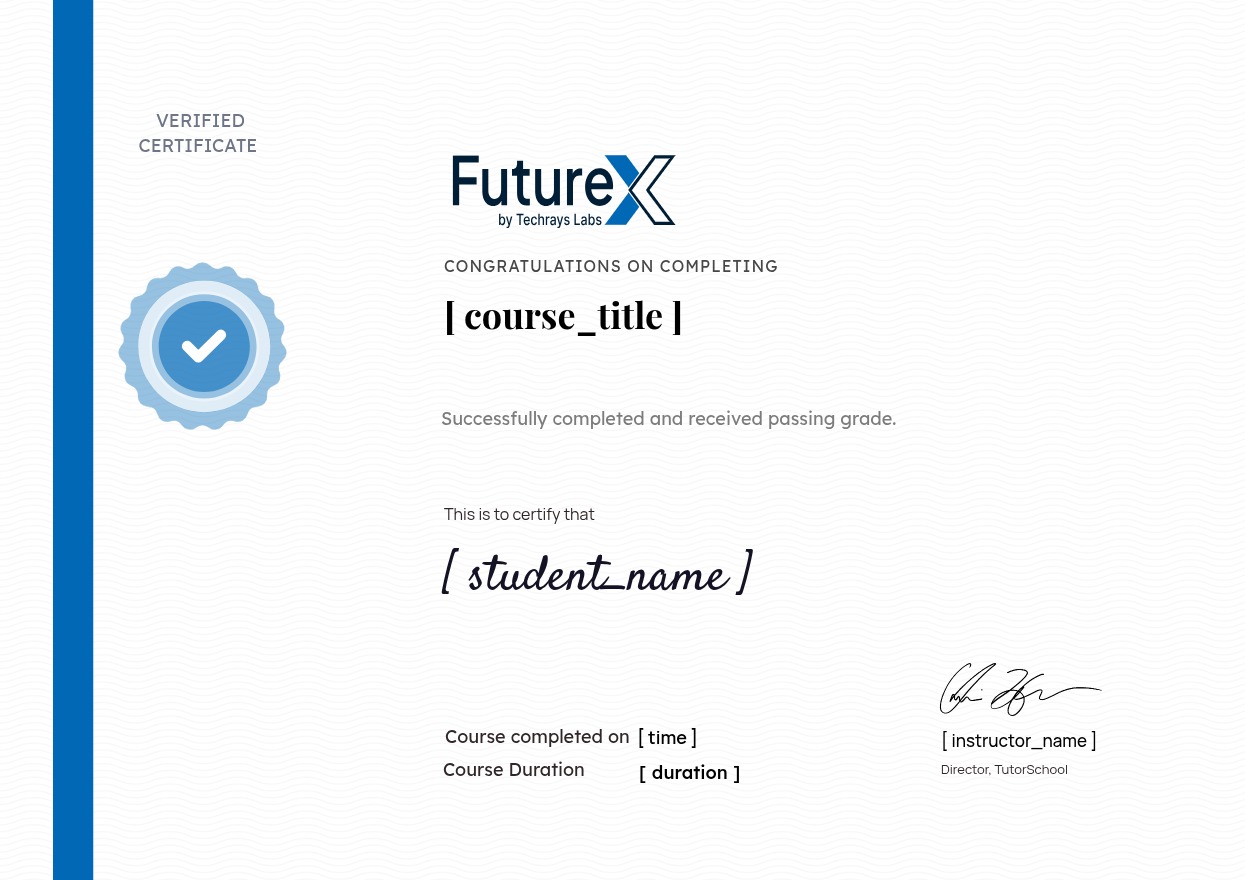
Earn a certificate
Add this certificate to your resume to demonstrate your skills & increase your chances of getting noticed.
Student Ratings & Reviews