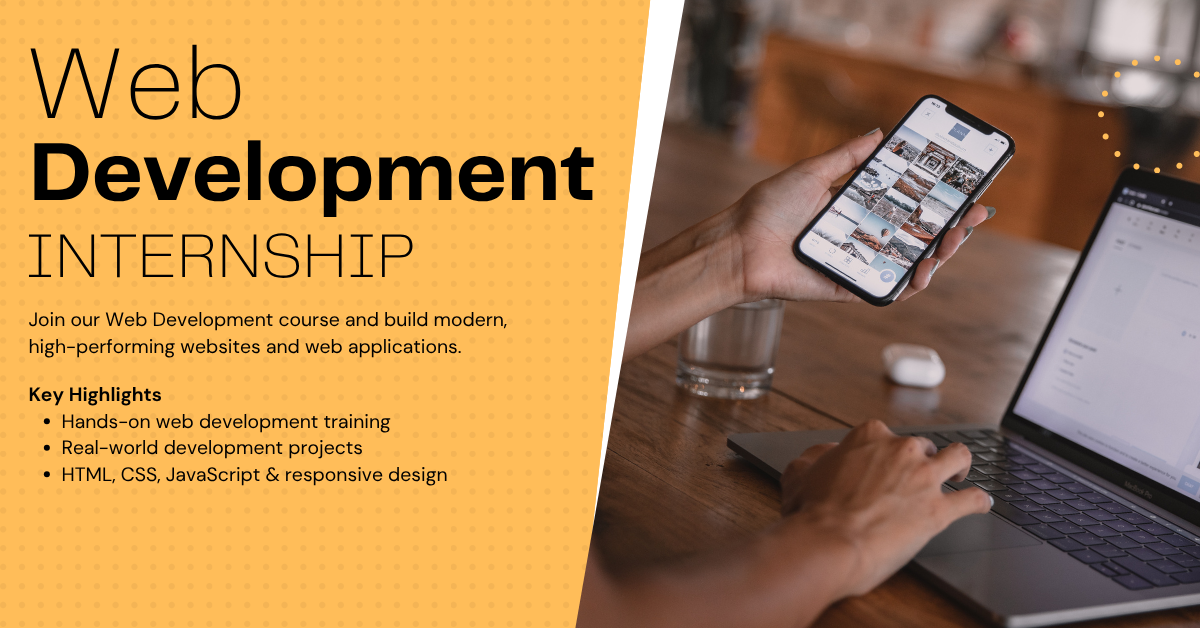
15 Days Web Development Training & Internship

Categories: Training & Internship
Wishlist Share

About Course

The 15 Days Web Development Training & Internship is a fast-paced, practical, and beginner-friendly program designed to help learners build modern, responsive, and interactive websites using the three core technologies of web development: HTML, CSS, and JavaScript.

The internship follows a structured learning approach, beginning with the fundamentals of webpage structure and gradually progressing toward responsive web design, interactive frontend development, and the creation of a complete real-world website project. Every concept is explained using practical examples, assignments, quizzes, and project-based learning to ensure students gain strong hands-on experience.

Unlike lengthy training programs, this internship focuses on the essential frontend development skills that every aspiring web developer should master in a short period. Students will learn how websites are built from scratch, styled professionally, and enhanced with dynamic user interactions using JavaScript.

Throughout the internship, learners will understand how browsers render webpages, how HTML structures content, how CSS creates visually appealing layouts, and how JavaScript makes websites interactive and user-friendly. The program also introduces responsive design principles to ensure websites work seamlessly across desktops, tablets, and mobile devices.

The final stage of the internship brings together all learned concepts into a complete portfolio-ready website project that mirrors real-world frontend development workflows used in software companies, startups, and freelance projects.


🚀 What This Internship Covers

The internship begins with the fundamentals of HTML, where learners understand how webpages are structured using semantic elements, headings, paragraphs, tables, forms, multimedia, and hyperlinks. Students learn how browsers interpret HTML documents and how proper markup improves accessibility and search engine optimization.

After mastering webpage structure, learners move into CSS, where they learn to design visually attractive websites by applying colors, typography, spacing, layouts, animations, and responsive design techniques. They gain practical experience with modern layout systems such as Flexbox and CSS Grid, enabling them to build mobile-friendly and professional user interfaces.

The program then introduces JavaScript, the programming language responsible for making websites interactive. Students learn variables, functions, conditions, loops, arrays, DOM manipulation, and event handling to create dynamic webpages capable of responding to user interactions without requiring page reloads.

As learners progress, they combine HTML, CSS, and JavaScript to develop complete frontend applications featuring responsive layouts, form validation, interactive navigation, dynamic content updates, and user-friendly interfaces.

The internship concludes with a comprehensive frontend development project where students design, build, optimize, and deploy a fully responsive website using modern development practices. Learners also gain exposure to browser developer tools, debugging techniques, website optimization, and deployment platforms such as GitHub Pages and Netlify.


🧠 Learning Approach

This internship emphasizes learning by building rather than memorizing concepts.

Each module includes:

  • Structured video/text lessons
  • Real-world coding examples
  • Hands-on coding exercises
  • Module-wise assignments
  • Practical mini-projects
  • Knowledge assessment quizzes
  • A final portfolio-ready project

The course follows a sequential learning path where learners complete each module before progressing to the next. This approach helps build a strong understanding of frontend development fundamentals while reinforcing concepts through continuous practice.

Students will also learn professional frontend development practices such as:

  • Semantic HTML
  • Responsive Web Design
  • CSS Flexbox & Grid
  • Mobile-First Development
  • DOM Manipulation
  • Event-Driven Programming
  • Clean Code Organization
  • Browser Debugging
  • UI/UX Best Practices
  • Website Performance Optimization

🏆 Skills You Will Gain

By the end of this internship, participants will be able to:

  • Understand how modern websites are built
  • Create structured webpages using HTML5
  • Design responsive layouts using CSS3
  • Build mobile-friendly websites
  • Use Flexbox and CSS Grid for layouts
  • Create interactive webpages using JavaScript
  • Manipulate webpage content using the DOM
  • Validate user input with JavaScript
  • Build complete responsive frontend websites
  • Debug and optimize frontend applications
  • Organize scalable frontend projects
  • Deploy websites using GitHub Pages or Netlify

🎯 Who This Internship is For

This internship is ideal for:

  • Beginners interested in web development
  • Students pursuing Computer Science or IT
  • Individuals preparing for frontend developer roles
  • Freelancers building websites for clients
  • UI/UX enthusiasts wanting to implement their designs
  • Anyone interested in learning modern frontend technologies

No prior programming experience is required. A basic understanding of computers and internet usage is sufficient to begin this internship.


💼 Internship Outcome

Upon successful completion of this internship, learners will have practical experience designing and developing responsive, interactive websites using HTML, CSS, and JavaScript.

Participants will also complete a professional frontend website project that can be showcased in their portfolios, GitHub repositories, or resumes, helping them demonstrate practical web development skills and improve their opportunities for internships, freelance projects, and entry-level Frontend Developer or Web Developer roles.

Show More

Course Content

Module 1: HTML & CSS Foundations
This module introduces learners to the core building blocks of every website: HTML (HyperText Markup Language) and CSS (Cascading Style Sheets). Students will learn how webpages are structured using semantic HTML elements and how CSS transforms those structures into visually attractive and responsive user interfaces. The module begins with the fundamentals of HTML, including webpage structure, headings, paragraphs, images, links, lists, tables, forms, and semantic elements. Students will understand how browsers interpret HTML documents and why semantic markup improves accessibility, maintainability, and search engine optimization (SEO). After establishing a strong HTML foundation, learners will explore CSS to style webpages using colors, typography, spacing, borders, backgrounds, and layouts. They will understand how CSS selectors work, how styles cascade, and how to organize styling efficiently using external stylesheets. The module also introduces modern layout techniques using Flexbox and basic responsive design concepts, enabling students to build webpages that adapt gracefully across desktops, tablets, and mobile devices. By the end of this module, students will be capable of designing complete multi-section webpages with clean layouts, professional styling, navigation menus, forms, and responsive components following industry-standard frontend development practices. Students will also gain practical experience using Visual Studio Code, browser developer tools, and Live Server to streamline frontend development workflows. This module emphasizes hands-on coding, semantic HTML practices, responsive UI creation, and clean code organization that form the foundation for all modern web development.

  • Introduction to HTML & CSS
  • HTML Elements, Attributes & Semantic Tags
  • HTML Forms & CSS Styling
  • Responsive Layouts with Flexbox
  • HTML & CSS Foundations Assessment
  • Responsive College Admission Portal Homepage

Module 2: JavaScript & Interactive Web Development
This module introduces learners to JavaScript, the programming language that brings websites to life by adding interactivity, dynamic content, and real-time user interactions. While HTML provides structure and CSS handles presentation, JavaScript enables webpages to respond intelligently to user actions such as clicks, typing, scrolling, and form submissions. The module begins with JavaScript fundamentals, including variables, data types, operators, conditions, loops, and functions. Students will learn how JavaScript executes inside the browser and how it interacts with HTML and CSS to create dynamic user experiences. As learners progress, they will explore the Document Object Model (DOM), which allows JavaScript to access, modify, create, and remove HTML elements without reloading the page. They will also learn event-driven programming using event listeners to respond to user interactions such as button clicks, keyboard input, and mouse events. The module further introduces arrays, objects, and form validation, enabling students to build interactive features commonly found in modern websites. Through practical coding exercises, learners will create dynamic content, validate user input, manipulate webpage elements, and improve overall user experience. By the end of this module, students will be able to build interactive webpages, perform client-side form validation, manipulate the DOM, implement event handling, and create reusable JavaScript functions following industry-standard coding practices. Students will also gain experience using browser developer tools and the JavaScript console to debug code, identify runtime errors, and understand how JavaScript executes internally. This module emphasizes practical implementation through real-world examples, preparing learners to build modern frontend applications and laying the foundation for advanced JavaScript frameworks such as React, Vue.js, and Angular.

Final Module: End-to-End Responsive Business Website Development
The Final Module brings together everything learned throughout this 15 Days Web Development Internship into a complete real-world frontend web development project. Instead of learning HTML, CSS, and JavaScript concepts separately, learners will now apply all their knowledge to build a professional, responsive, and interactive business website from scratch. In professional software companies and web development agencies, frontend developers work on complete websites by converting design requirements into fully functional user interfaces. They organize project files, build responsive layouts, implement interactive components, validate user input, optimize website performance, and finally deploy the website for public access. This capstone project follows the same industry-standard frontend development workflow. Students will create a complete multi-page responsive website using HTML5, CSS3, and JavaScript, applying semantic HTML, modern CSS layout techniques, responsive design principles, DOM manipulation, and interactive JavaScript functionality learned throughout the internship. By completing this project, learners will gain practical experience in building a production-style website and will have a portfolio-ready project suitable for internships, freelance work, GitHub portfolios, and entry-level frontend developer positions. The objective of this module is to simulate the complete frontend development workflow followed by software companies, startups, agencies, and freelance developers. Students will learn how to plan website architecture, organize project files, build reusable UI components, implement responsive layouts, and create interactive user experiences using JavaScript. The module emphasizes writing clean, maintainable, and scalable code while following industry best practices. Students will understand how HTML, CSS, and JavaScript work together to create modern websites that are visually appealing, responsive, and user-friendly. Students will also learn how to test their applications, debug common frontend issues using browser developer tools, optimize website performance, and deploy projects online using popular hosting platforms such as GitHub Pages and Netlify. By the end of this module, students will have developed a complete portfolio-ready frontend project that demonstrates their practical web development skills and can be showcased during internships, freelance work, or entry-level job interviews. This module also introduces the importance of project organization, code reusability, responsive design principles, and performance optimization, helping learners transition from beginner-level coding to professional frontend development practices.

Earn a certificate

Add this certificate to your resume to demonstrate your skills & increase your chances of getting noticed.
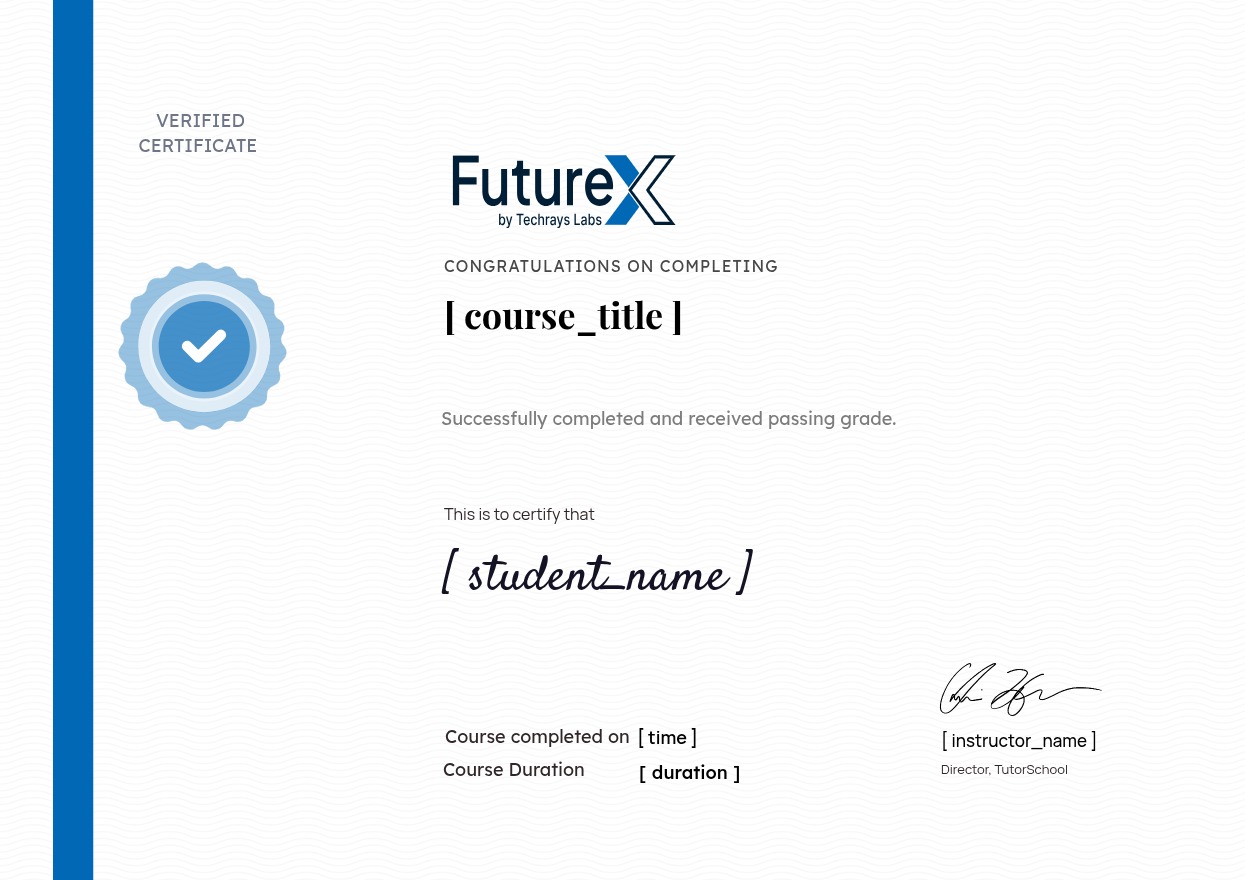
selected template

Student Ratings & Reviews

No Review Yet
No Review Yet