2 Months QA / Software Testing Training & Internship

Categories: Training & Internship
Wishlist Share

About Course

The 2-Month Q/A Software Testing Internship is a professional training program focused on manual testing, automation testing fundamentals, API validation, bug tracking systems, and structured QA workflows.

This internship simulates real software quality assurance environments where participants work on testing strategies, application validation, and collaborative Agile testing processes.

The program combines manual testing, automation basics, API testing, reporting systems, and professional QA practices into a structured implementation-focused learning experience.

🚀 What This Internship Covers

The internship starts with strengthening core Software Testing and QA concepts including:

  • SDLC & STLC
  • Testing methodologies
  • Requirement analysis
  • Test planning
  • Defect lifecycle management

Participants then move into advanced Manual Testing practices including:

  • Test case design techniques
  • Regression testing
  • Integration testing
  • Cross-browser testing
  • Mobile responsiveness validation

The program also introduces Automation Testing Fundamentals such as:

  • Selenium basics
  • Automated test scripts
  • Test execution workflows
  • Web element handling
  • Automation framework concepts

Learners also explore:

  • API testing using Postman
  • Database testing basics
  • Agile & Scrum QA workflows
  • Bug tracking with Jira

The internship includes mini-projects and real-world testing assignments.

🧠 Learning Approach

This internship follows an industry-oriented practical learning model including:

  • Real-world testing projects
  • Live application testing
  • QA reporting workflows
  • Automation practice sessions
  • Team-based collaboration
  • Continuous assessments

The focus is on building professional QA execution skills.

🏆 Skills You Will Gain

By the end of this internship, learners will be able to:

  • Perform professional manual testing
  • Create structured test plans
  • Execute automation basics
  • Perform API testing
  • Report and track bugs efficiently
  • Work in Agile QA environments
  • Understand software quality processes

🎯 Who This Internship is For

This internship is ideal for:

  • Students and freshers
  • Aspiring QA/Test Engineers
  • Software developers learning testing
  • IT professionals transitioning into QA

Basic programming knowledge is helpful but not mandatory.

💼 Internship Outcome

After completing this internship, participants will gain hands-on software testing experience and practical exposure to professional QA workflows, automation basics, and software validation systems.

Show More

Course Content

Module 1: Introduction to QA & Software Testing Fundamentals
This module builds the foundation of Software Testing and Quality Assurance concepts. Students will understand what QA is, how it differs from testing and QC, and why it is critical in software development. It introduces how software quality is maintained in real-world production systems. Learners will explore SDLC, STLC, and how testing fits into development cycles. Basic testing types and defect lifecycle will be covered in depth. By the end, students will be able to think like a QA engineer, not just a user. This module is essential for building strong testing logic in future advanced modules.

  • What is QA, QC, and Software Testing
  • SDLC & STLC (Software Lifecycle Basics)
  • Types of Software Testing
  • Bug / Defect Life Cycle
  • Check what have you learnt about QA Fundamentals Check
  • Basic Bug Tracking & Test Case Design System

Module 2: Test Case Design & Test Design Techniques
This module teaches how professional QA engineers design test cases in real projects. Students will learn systematic approaches instead of random testing. Focus is on test design techniques like Boundary Value Analysis and Equivalence Partitioning. It builds logical thinking for identifying hidden bugs. Real-world QA work depends heavily on this module, not basic testing. Students will learn how to reduce test redundancy and increase coverage. By end, they will design professional-grade test suites.

Module 3: Manual Testing Techniques & Exploratory Testing
This module focuses on real manual testing practices used in software companies. Students will learn how QA engineers actually execute testing without automation tools. It introduces exploratory testing, ad-hoc testing, and structured manual approaches. Emphasis is on thinking like a real user and breaking systems intentionally. Students will learn how to detect hidden UI, functional, and workflow issues. It also builds strong observation and analytical skills required in QA roles. By the end, learners can independently test any application without scripts.

Module 4: Automation Testing Basics (Selenium + Core Framework Thinking)
his module introduces automation testing from a real QA engineering perspective. Students will understand why automation is used and when it should NOT be used. Focus is on Selenium WebDriver basics and browser automation principles. Learners will understand framework thinking, not just script writing. It builds foundation for real industry-level QA automation roles. Students will learn how automation integrates with CI/CD pipelines. By end, they will be able to write and structure basic automation scripts.

Module 5: API Testing & Postman + Backend Validation for QA
This module focuses on API testing, which is one of the most important skills in modern QA roles. Students will understand how frontend and backend communicate using APIs. You will learn how to test APIs using Postman and basic validation techniques. It builds understanding of HTTP methods, status codes, and request-response flow. QA engineers use API testing to catch backend issues before UI testing. It reduces dependency on frontend UI for validation. By the end, students can test REST APIs independently like real QA professionals.

Final Module: Real-World QA Testing Project (End-to-End System)
This final module combines everything learned across the internship into one complete real-world QA project. Students will simulate a real QA engineer working on a production-like application. It covers manual testing, automation thinking, API validation, and defect reporting in one system. Focus is on how real QA teams plan, execute, and deliver quality assurance in companies. Students will understand project structure, test strategy, and real defect tracking flow. It prepares learners for actual job-ready QA roles. By the end, students will be able to handle end-to-end QA responsibility independently.

Earn a certificate

Add this certificate to your resume to demonstrate your skills & increase your chances of getting noticed.
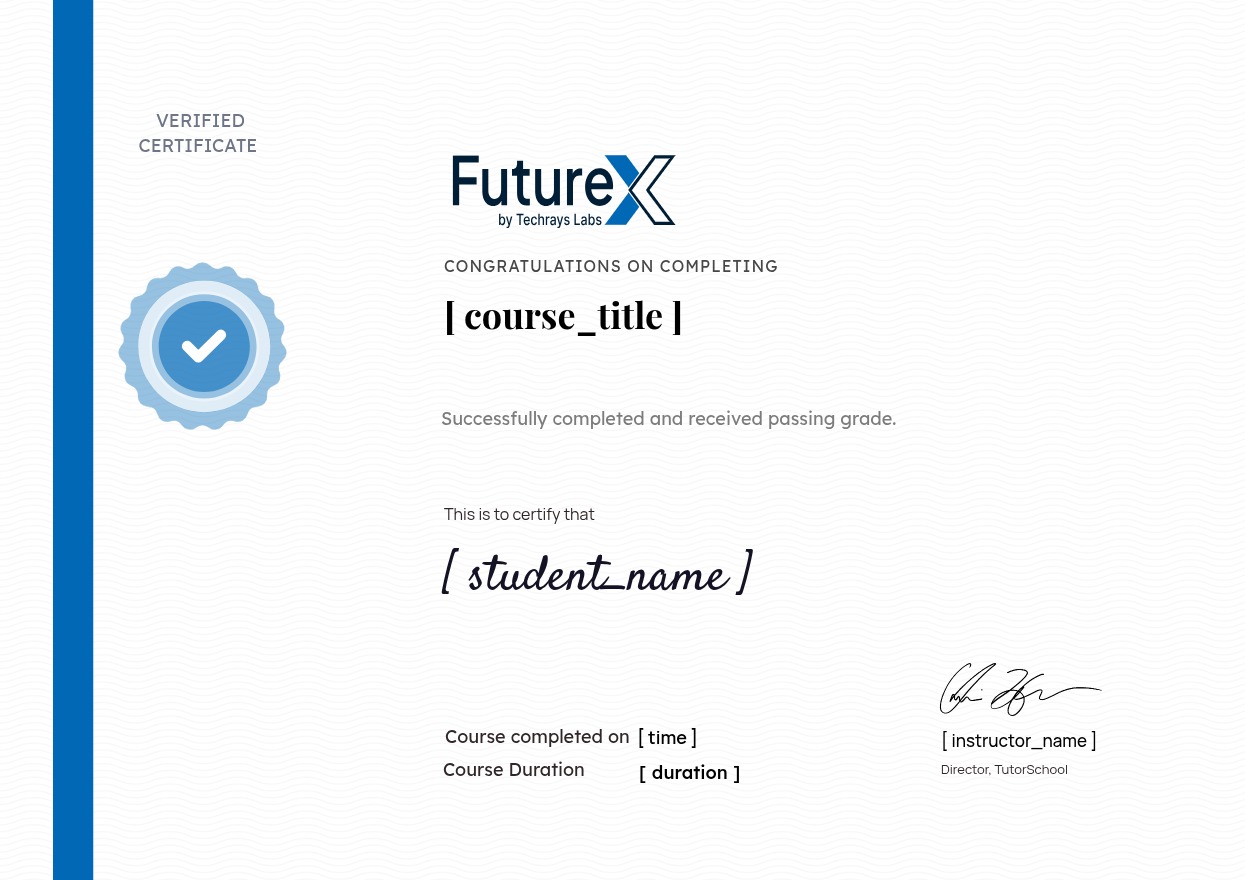
selected template

Student Ratings & Reviews

No Review Yet
No Review Yet