About Course
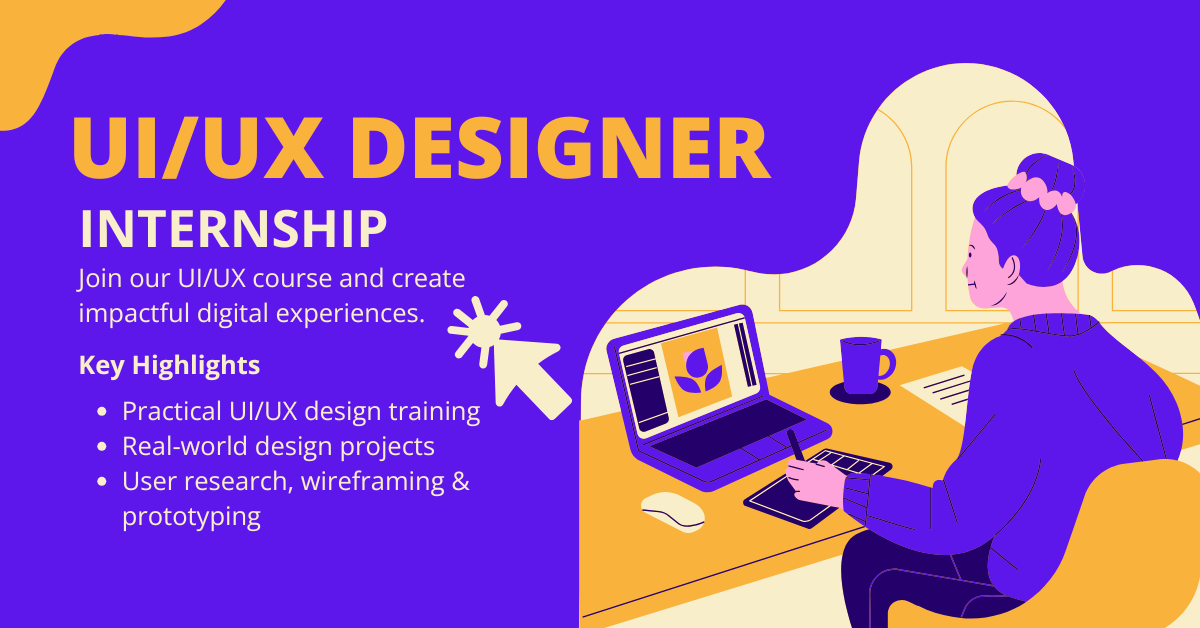
This 2-month UI/UX Designing Internship is a comprehensive and practical training program designed to help beginners become industry-ready designers with strong creative, analytical, and problem-solving skills in digital product design.
The program follows a structured and progressive learning approach, starting from the fundamentals of design and gradually advancing toward professional-level UI/UX workflows used in real-world applications. It is designed to provide both conceptual understanding and hands-on design experience through assignments, case studies, prototyping exercises, and project-based learning.
🚀 What This Internship Covers
The internship begins with the fundamentals of UI/UX design, where learners understand the core principles of user-centered design and how digital experiences are created. Students learn essential concepts such as typography, color theory, spacing, alignment, visual hierarchy, design balance, accessibility, and responsive layouts. This foundation ensures that even beginners with no prior design experience can confidently begin their UI/UX journey.
Once the basics are established, the program moves into wireframing and UX planning, where learners understand how to structure applications and websites based on user needs and behavior. Students learn user flows, information architecture, low-fidelity wireframes, and screen planning techniques to improve usability and navigation experiences.
The internship then introduces modern design tools such as Figma, enabling learners to create professional user interfaces for web and mobile applications. Participants gain practical experience designing responsive screens, reusable components, design systems, interactive prototypes, and collaborative design workflows commonly used in the industry.
As learners progress, they are introduced to UX research and design thinking methodologies. They learn how to analyze user pain points, create user personas, perform competitor analysis, and improve designs through usability-focused decision-making. This phase helps students understand how successful products are designed based on real user behavior and business requirements.
The program also covers advanced UI concepts such as mobile-first design, dashboard design, micro-interactions, design consistency, component libraries, and accessibility standards. Learners gain hands-on experience designing modern and visually appealing interfaces that are both functional and user-friendly.
In the final phase, participants apply everything they have learned by building a complete real-world UI/UX project such as an e-commerce application, portfolio website, SaaS dashboard, or mobile app interface. The project includes wireframes, high-fidelity screens, interactive prototypes, user flow planning, and design presentations, simulating real industry design processes.
🧠 Learning Approach
This internship is designed around practical implementation and continuous improvement rather than theory alone. Each module includes:
-
Structured video/text learning materials
-
Hands-on UI design exercises
-
UX case studies and real-world examples
-
Module-wise assignments and quizzes
-
Interactive prototyping tasks
-
Mini-projects for practice
-
A final portfolio-ready capstone project
The learning progression is structured sequentially, ensuring learners build strong fundamentals before moving toward advanced design concepts and professional workflows.
🏆 Skills You Will Gain
By the end of this internship, participants will be able to:
-
Understand and apply UI/UX design principles
-
Create wireframes, user flows, and information architecture
-
Design responsive web and mobile interfaces
-
Use Figma professionally for UI/UX designing
-
Build reusable design systems and components
-
Create interactive prototypes and user journeys
-
Apply typography, color theory, and layout systems effectively
-
Conduct basic UX research and usability analysis
-
Design visually appealing and user-friendly digital products
-
Build professional portfolio-ready design projects
🎯 Who This Internship is For
This program is ideal for:
-
Beginners interested in UI/UX and product design
-
Students pursuing design, computer science, or creative fields
-
Aspiring UI/UX designers seeking practical experience
-
Frontend developers wanting stronger design understanding
-
Freelancers and creators looking to improve digital design skills
-
Anyone aiming for UI/UX, product design, or web design roles
No prior design experience is required, but creativity, consistency, and regular practice are essential for successful completion.
💼 Internship Outcome
Upon completion of this internship, learners will have practical experience in designing professional digital products and user experiences. They will be capable of creating responsive and modern UI/UX designs for websites and applications while following industry-standard workflows and design practices.
Participants will also have strong portfolio-ready projects showcasing their design skills, significantly improving their opportunities for internships, freelance work, and entry-level UI/UX design roles in the industry.
Course Content
Module 1: Foundations of UI/UX Design
-
Introduction to UI vs UX
-
Design Thinking Fundamentals
-
UI Elements and Layout Principles
-
Introduction to User Flow
-
Check what have you learnt about UI/UX Basics Assessment
-
Basic Login UI + Flow System
Module 2: User Research & Personas
Module 3: Wireframing & Prototyping (Figma)
Module 4: Visual Design & Design Systems
Module 5: Usability Testing & Iteration
Final Module: Capstone Project – Complete UI/UX Case Study (End-to-End Product Design)
Earn a certificate
Add this certificate to your resume to demonstrate your skills & increase your chances of getting noticed.