3 Months QA / Software Testing Training & Internship

Categories: Training & Internship
Wishlist Share

About Course

The 3-Month Q/A Software Testing Internship is an advanced practical training program focused on manual testing, automation testing, API validation, performance testing fundamentals, and real-world software quality engineering workflows.

This internship is designed to simulate professional QA engineering environments where participants work on enterprise-level testing practices, automation workflows, debugging systems, and collaborative product validation.

The program combines manual testing, automation engineering, API testing, database validation, and QA reporting systems into a structured professional learning experience.

🚀 What This Internship Covers

The internship begins with strengthening advanced QA fundamentals including:

  • Software Testing Life Cycle
  • Requirement analysis
  • Risk-based testing
  • Test strategy planning
  • Defect management workflows

Participants then work on Advanced Manual Testing practices such as:

  • End-to-end testing
  • Functional validation
  • Compatibility testing
  • Exploratory testing
  • User acceptance testing

The program introduces Automation Testing using Selenium including:

  • Selenium WebDriver
  • Test automation frameworks
  • Data-driven testing
  • Page Object Model
  • Automated reporting

Participants also learn:

  • API Testing using Postman
  • Database testing with SQL
  • Performance testing fundamentals
  • Agile & Scrum testing workflows
  • Continuous Integration basics

The internship includes multiple real-world testing projects and collaborative QA execution.

🧠 Learning Approach

This internship follows a highly practical implementation-driven learning model including:

  • Industry-oriented QA projects
  • Live testing environments
  • Team-based collaboration
  • Automation practice
  • Code reviews
  • Defect reporting exercises
  • Continuous performance evaluations

The focus is on developing professional QA engineers with practical project exposure.

🏆 Skills You Will Gain

By the end of this internship, learners will be able to:

  • Perform advanced manual testing
  • Build automation testing scripts
  • Execute API and database testing
  • Work with QA frameworks
  • Create professional test reports
  • Understand CI/CD testing workflows
  • Participate in Agile QA teams

🎯 Who This Internship is For

This internship is ideal for:

  • Serious QA learners
  • Engineering students
  • Aspiring Automation Test Engineers
  • Software developers transitioning into QA
  • IT professionals building testing expertise

Basic programming and testing knowledge is recommended.

💼 Internship Outcome

After completing this internship, participants will gain industry-level software testing experience with practical knowledge of manual testing, automation workflows, API validation, and professional QA engineering practices.

Show More

Course Content

Module 1: Introduction to Software Testing & QA Fundamentals
This module builds the absolute foundation of Software Quality Assurance and Testing. Students will understand what software testing is, why it exists, and how it fits into the software development lifecycle. It removes the misconception that testing is just “finding bugs” and instead builds a structured mindset of quality engineering. You will learn the core principles of QA, types of testing, testing lifecycle, and real-world QA workflows used in companies. This module is critical because without it, advanced tools like Selenium, API testing, or automation frameworks make no sense. By the end of this module, students will be able to clearly differentiate between QA roles, understand SDLC vs STLC, and manually design basic test cases.

  • Introduction to Software Testing
  • Software Development Life Cycle (SDLC)
  • STLC (Software Testing Life Cycle)
  • Types of Software Testing
  • Check what have you learnt about Software Testing Fundamentals Assessment
  • Basic Manual Testing Document for E-Commerce Login System

Module 2: Test Case Design & Test Documentation
This module focuses on the core skill that separates a beginner tester from a professional QA engineer: writing structured, reusable, and execution-ready test cases. Students will learn how real QA teams design test cases, document defects, and maintain test suites in enterprise environments. You will understand how requirements are converted into test scenarios, how edge cases are identified, and how proper documentation prevents software failures in production. This module is heavily practical and used daily in real QA jobs. By the end, you will be able to independently write professional-grade test cases and defect reports used in companies.

Module 3: Manual Testing Techniques & Test Execution
This module focuses on actual execution of testing work in real QA environments. Students will move from theory and documentation into practical manual testing techniques used in companies. You will learn how testers execute test cases, observe system behavior, log defects, and validate fixes. It also covers exploratory testing and ad-hoc testing which are heavily used in real-world Agile teams. By the end of this module, you will be able to manually test any application systematically without missing critical scenarios and you will start thinking like a QA engineer instead of a user.

Module 4: Automation Testing Basics (Selenium Introduction)
This module introduces automation testing, shifting from manual execution to tool-based testing. Students will learn why automation exists, when it should be used, and how Selenium works in real QA environments. You will understand browser automation, locators, WebDriver architecture, and how test scripts are executed programmatically. This is the point where QA becomes technical and scalable. By the end of this module, you will be able to write basic Selenium scripts and understand how automation reduces repetitive testing effort in real companies.

Module 5: API Testing Fundamentals (Postman & REST Basics)
This module introduces API testing, which is a critical skill in modern QA roles. Instead of only testing UI, you will learn how to validate backend services directly. You will understand REST APIs, HTTP methods, request/response structure, and how tools like Postman are used in real companies. This is where QA starts moving beyond UI dependency and becomes more powerful and technical. By the end of this module, you will be able to test APIs independently, validate responses, and detect backend issues before they reach the UI layer.

Module 6: Database Testing & SQL for QA
This module focuses on database testing, a critical skill for QA engineers working with real-world applications. Most application bugs are not in the UI or API layer but in data storage and retrieval logic. You will learn SQL fundamentals, how databases work, how to validate backend data, and how to write queries to verify test results. This bridges the gap between frontend testing and backend data validation. By the end of this module, you will be able to independently verify database integrity and detect data-related defects in production systems.

Module 7: Test Automation Frameworks & Real Project Structure
This module moves beyond basic Selenium usage into how real automation systems are actually built in companies. Writing single scripts is useless in production; frameworks are what make automation scalable, maintainable, and reusable. You will learn framework architecture, folder structures, test organization, reporting, and best practices used in industry-level QA automation teams. By the end of this module, you will understand how real automation projects are structured and be able to build a basic framework instead of random scripts.

Module 8: End-to-End QA Automation + Manual Testing Real Project
This project focuses on implementing a complete Quality Assurance process for an E-Commerce web application using multiple testing approaches including Manual Testing, Automation Testing, API Testing, and Database Testing. The objective is to ensure that all critical e-commerce functionalities such as: user authentication, product search, shopping cart, checkout, payment processing, and order tracking work accurately, securely, and efficiently before production release. The QA process includes: creating test plans, designing test cases, executing manual and automated tests, validating APIs, verifying database integrity, tracking bugs, performing regression testing, and generating QA reports. The project also simulates real-world Agile QA workflows and CI/CD-based testing practices to improve software quality and release reliability. By completing this project, learners gain practical experience in: end-to-end software testing, defect management, API validation, database verification, automation concepts, and enterprise QA lifecycle implementation for modern web applications.

Earn a certificate

Add this certificate to your resume to demonstrate your skills & increase your chances of getting noticed.
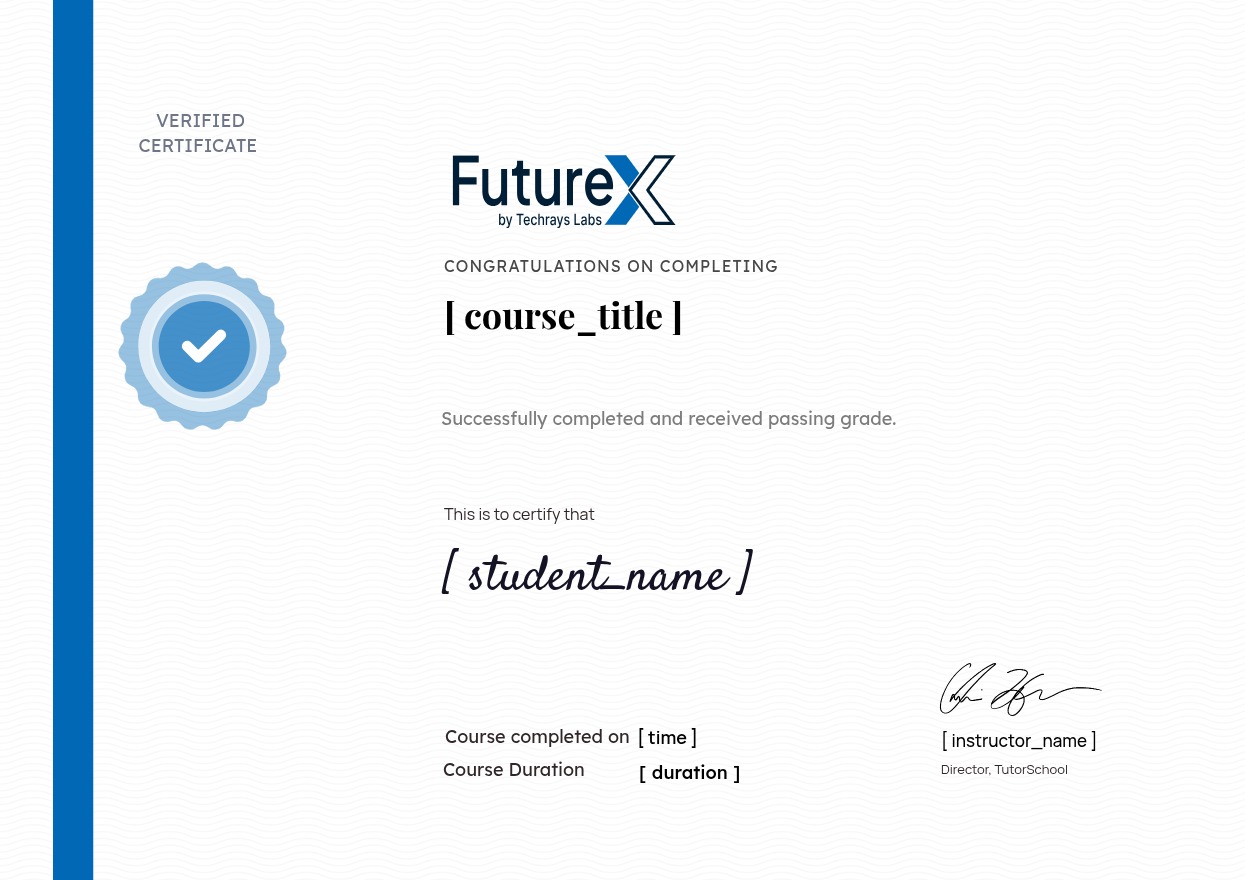
selected template

Student Ratings & Reviews

No Review Yet
No Review Yet