
6 Months SEO Training & Internship

Categories: Training & Internship
Wishlist Share

About Course

This 6-month SEO Internship is a structured, hands-on training program designed to turn beginners into job-ready SEO professionals with practical skills in search engine optimization, content strategy, and performance-driven digital marketing.

The program follows a step-by-step learning path, starting from SEO fundamentals and gradually advancing toward advanced technical SEO, content optimization, and real-world website ranking strategies. It focuses heavily on implementation, audits, and live project experience rather than just theory.

🚀 What This Internship Covers

The internship starts with the basics of Search Engine Optimization, where learners understand how search engines work, including crawling, indexing, and ranking systems. Core concepts like keywords, search intent, SERP structure, and SEO fundamentals are covered to build a strong foundation.

Next, the program moves into Keyword Research and Content Strategy, where learners work with tools and techniques to identify high-value keywords, analyze competition, and map keywords to user intent. They learn how to structure content for blogs, landing pages, and websites to improve visibility and ranking potential.

After that, focus shifts to On-Page SEO, where students learn how to optimize individual pages using title tags, meta descriptions, headers, internal linking, image optimization, URL structure, and content formatting. Practical exercises are included to optimize real web pages.

The internship then progresses into Technical SEO, covering website performance, mobile optimization, site architecture, indexing issues, sitemap optimization, robots.txt configuration, structured data, and Core Web Vitals. Learners also get exposure to Google Search Console and crawling diagnostics.

In the next phase, students work on Off-Page SEO and Link Building strategies. This includes understanding backlinks, domain authority, guest posting, outreach techniques, directory submissions, and ethical link-building practices used in real SEO campaigns.

The final stage focuses on SEO Tools and Analytics, where learners work with industry-standard tools such as Google Analytics, Google Search Console, Ahrefs, SEMrush, and other SEO tracking platforms. They learn how to measure performance, track rankings, analyze traffic, and generate SEO reports.

The internship concludes with a Real-World SEO Project, where learners optimize a complete website or blog from scratch. This includes keyword planning, on-page optimization, technical fixes, backlink strategy, and performance tracking—simulating real agency or in-house SEO work.

🧠 Learning Approach

This internship is fully practical and performance-driven. Each module includes:

  • Structured SEO lessons (text/video-based)

  • Real website optimization tasks

  • Keyword research exercises

  • On-page SEO assignments

  • Technical SEO audits

  • Link-building practice activities

  • Module-wise quizzes and assessments

  • Final capstone SEO project

Progression is sequential, meaning learners must complete tasks and evaluations before moving forward, ensuring strong practical understanding instead of passive learning.

🏆 Skills You Will Gain

By the end of this internship, participants will be able to:

  • Perform professional keyword research and analysis

  • Optimize web pages for higher search rankings

  • Apply on-page and off-page SEO techniques effectively

  • Conduct technical SEO audits and fix website issues

  • Improve website speed, indexing, and structure

  • Build ethical backlink strategies

  • Use SEO tools like Google Search Console and analytics platforms

  • Analyze traffic, rankings, and performance metrics

  • Execute complete SEO campaigns for websites

🎯 Who This Internship is For

This program is ideal for:

  • Beginners who want to start a career in digital marketing

  • Students interested in SEO and content marketing

  • Website owners who want to grow organic traffic

  • Freelancers aiming to offer SEO services

  • Aspiring SEO specialists or digital marketers

No prior SEO experience is required, but consistency and regular practice are necessary to complete the program effectively.

💼 Internship Outcome

After completing this internship, learners will be capable of handling real SEO projects independently. They will understand how to rank websites, improve organic traffic, and optimize content strategically. A complete SEO project portfolio will also be developed, which can be used for job applications, freelancing, or agency roles.

Show More

Course Content

Module 1: Introduction to SEO & How Search Engines Work
This foundational module introduces students to the world of Search Engine Optimization (SEO), which is one of the most in-demand digital marketing skills today. Students will learn what SEO is, why it matters for businesses, and how it helps websites gain visibility on search engines like Google. Understanding SEO is crucial because most online experiences begin with a search engine, and ranking higher directly impacts traffic, leads, and revenue. The module also explains how search engines actually work behind the scenes, including crawling, indexing, and ranking. Students will gain a clear mental model of how content is discovered and evaluated by search engines. This is important because without understanding this process, applying SEO techniques becomes guesswork. By the end of this module, students will understand the ecosystem of search engines, different types of SEO (On-page, Off-page, Technical), and the role of keywords. This knowledge sets the base for all advanced modules ahead. Students will also explore real-world applications such as ranking a blog, improving a business website, and analyzing search results.

  • What is SEO?
  • How Search Engines Work
  • Types of SEO (On-page, Off-page, Technical)
  • Check what have you learnt about SEO Basics
  • SEO Optimized Blog Page

Module 2: Keyword Research & Search Intent
In this module, students will dive deep into keyword research, which is the backbone of every successful SEO strategy. Keywords are the phrases users type into search engines, and understanding them allows you to create content that directly matches user needs. Without proper keyword research, even high-quality content may fail to reach the right audience. Students will learn how to discover profitable keywords, analyze search volume, competition, and keyword difficulty. This module emphasizes data-driven decision-making, which is critical in real-world SEO projects. You will also understand how to map keywords to content and build a structured SEO plan. A major focus of this module is search intent, which helps you understand why users are searching. Whether users want information, want to buy, or are comparing products—SEO strategies change based on intent. By the end of this module, students will be able to perform professional keyword research using tools, identify target keywords, and align them with user intent to improve rankings and conversions.

Module 3: On-Page SEO Optimization (Content, Tags & Structure)
This module focuses on On-Page SEO, one of the most critical aspects of ranking a website on search engines. While keyword research tells you what to target, On-Page SEO teaches you how to implement it effectively within your website content and structure. Students will learn how to optimize page elements such as titles, meta descriptions, headings, URLs, images, and internal links. These elements help search engines understand your content and improve user experience, which directly impacts rankings. This module emphasizes writing SEO-friendly content that is not only optimized for search engines but also valuable and engaging for users. Students will also understand the importance of readability, keyword placement, and content structure. By the end of this module, students will be able to create fully optimized web pages that follow industry best practices and are ready to rank on search engines.

Module 4: Technical SEO Fundamentals (Crawling, Indexing & Site Health)
This module introduces students to Technical SEO, which ensures that search engines can properly access, crawl, index, and understand your website. While content and keywords are essential, they are ineffective if search engines cannot technically process your website. Students will learn how search engines interact with websites at a deeper level, including how to control crawling behavior, manage indexing, and fix technical issues that can harm rankings. This module also covers website performance factors such as page speed, mobile-friendliness, and structured architecture. Technical SEO is critical in real-world projects because even large companies lose rankings due to poor technical implementation. Students will understand how to identify and fix common technical problems using industry tools. By the end of this module, students will be able to audit a website’s technical health, optimize crawling and indexing, and ensure a strong technical foundation for SEO success.

Module 5: Content Writing for SEO (SEO Copywriting & Content Strategy)
This module focuses on one of the most powerful aspects of SEO: Content Writing. While technical SEO ensures your website is accessible and optimized, it is high-quality content that actually ranks and attracts users. Students will learn how to create SEO-optimized content that satisfies both search engines and human readers. This includes keyword placement, readability, formatting, and writing strategies that improve engagement and ranking. The module also introduces content strategy, which involves planning, structuring, and publishing content consistently to achieve long-term SEO success. Students will learn how to build topical authority and create content that aligns with search intent. In real-world scenarios, businesses rely heavily on SEO content to generate traffic, leads, and conversions. This module equips students with the skills to write blog posts, landing pages, and web content that performs well in search engines. By the end of this module, students will be able to write professional SEO content, optimize it effectively, and build a content strategy that drives organic growth.

Module 6: Off-Page SEO & Link Building Strategies
This module focuses on Off-Page SEO, which involves activities performed outside your website to improve its authority, trust, and search engine rankings. While On-Page SEO optimizes your content, Off-Page SEO builds your website’s reputation in the digital ecosystem. Students will learn the concept of backlinks, which are one of the most powerful ranking factors in search engines. You will understand how search engines evaluate the quality, relevance, and authority of links pointing to your website. This module also explores various link-building strategies such as guest posting, directory submissions, social bookmarking, outreach, and digital PR. Students will learn ethical (white-hat) techniques as well as risky (black-hat) practices to avoid. In real-world SEO, backlinks act as votes of confidence. Websites with strong backlink profiles rank higher and gain more trust. This module equips students with practical methods to build high-quality links safely and effectively. By the end of this module, students will be able to design and execute a complete off-page SEO strategy and build authoritative backlinks for any website.

Module 7: Local SEO & Google Business Optimization
This module introduces students to Local SEO, a powerful strategy used by businesses to attract customers from a specific geographic area. Unlike general SEO, Local SEO focuses on ranking in location-based searches, such as “restaurants near me” or “SEO agency in Surat”. Students will learn how to optimize a business for local search results, including Google Business Profile (GBP) optimization, local citations, reviews, and map listings. This is extremely important for businesses like shops, service providers, and agencies that depend on local customers. The module also covers how search engines determine local rankings using factors like proximity, relevance, and prominence. Students will understand how to improve visibility in Google Maps and local search packs. In real-world scenarios, Local SEO directly impacts foot traffic, phone calls, and local leads. This module equips students with the ability to optimize any local business and generate real results. By the end of this module, students will be able to set up, optimize, and manage a complete Local SEO strategy.

Module 8: SEO Analytics & Performance Tracking
🎯 Module Overview In this module, students will learn how to measure, analyze, and improve SEO performance using industry-standard tools and metrics. SEO is not just about implementation—it’s about continuous monitoring and optimization based on data. Students will explore tools like Google Analytics and Google Search Console, which provide insights into website traffic, user behavior, keyword rankings, and technical issues. Understanding these tools is essential for making informed SEO decisions. This module also covers key performance indicators (KPIs) such as organic traffic, bounce rate, click-through rate (CTR), and conversion rate. Students will learn how to interpret this data and use it to improve SEO strategies. In real-world scenarios, businesses rely heavily on analytics to track ROI (Return on Investment) and measure the effectiveness of SEO campaigns. Without analytics, SEO becomes guesswork. By the end of this module, students will be able to track SEO performance, analyze data, identify problems, and make data-driven improvements.

Module 9: Advanced Technical SEO (Structured Data, Core Web Vitals & Index Control)
In this module, students will move into advanced technical SEO concepts that significantly impact search visibility and user experience. While earlier modules covered foundational technical aspects, this module focuses on deeper optimization techniques used by professionals. Students will learn about structured data (schema markup), which helps search engines understand content better and enables rich results like star ratings, FAQs, and product snippets. This is crucial for improving click-through rates (CTR) and visibility. The module also introduces Core Web Vitals, which are performance metrics defined by Google to measure user experience, including loading speed, interactivity, and visual stability. Additionally, students will explore advanced indexing control techniques like noindex, hreflang, pagination, and handling crawl budget efficiently. In real-world SEO, these advanced optimizations give a competitive edge and are often the difference between ranking on page 1 vs page 3. By the end of this module, students will be able to implement structured data, optimize Core Web Vitals, and manage advanced indexing strategies like an SEO professional.

Module 10: SEO Tools Mastery (Professional SEO Toolkit)
This module focuses on mastering the professional tools used in SEO workflows. In real-world SEO jobs, execution alone is not enough—professionals rely heavily on tools to research, analyze, audit, and optimize websites efficiently. Students will learn how to use industry-standard SEO tools for keyword research, backlink analysis, technical audits, competitor analysis, and rank tracking. These tools help transform raw SEO concepts into data-driven strategies. You will also understand how to interpret tool outputs correctly, because incorrect interpretation can lead to wrong SEO decisions. This module bridges the gap between theory and real-world SEO execution. By the end of this module, students will be able to confidently use SEO tools to perform audits, track performance, and create competitive SEO strategies like a professional SEO analyst.

Module 11: Complete SEO Real-World Project (End-to-End SEO Implementation)
This final module is a capstone project where students will apply everything learned throughout the SEO internship into a real-world, end-to-end SEO implementation project. Instead of learning isolated concepts, students will now simulate working as a professional SEO specialist handling a real business website. This includes keyword research, on-page SEO, technical SEO, content strategy, off-page SEO, local SEO, and performance tracking. The goal of this module is to transform theoretical knowledge into practical industry-ready skills. Students will experience how SEO projects are executed in agencies and freelance environments, including planning, execution, and reporting. By completing this module, students will have a complete SEO portfolio project, which can be used for internships, job applications, or freelance clients.

Earn a certificate

Add this certificate to your resume to demonstrate your skills & increase your chances of getting noticed.
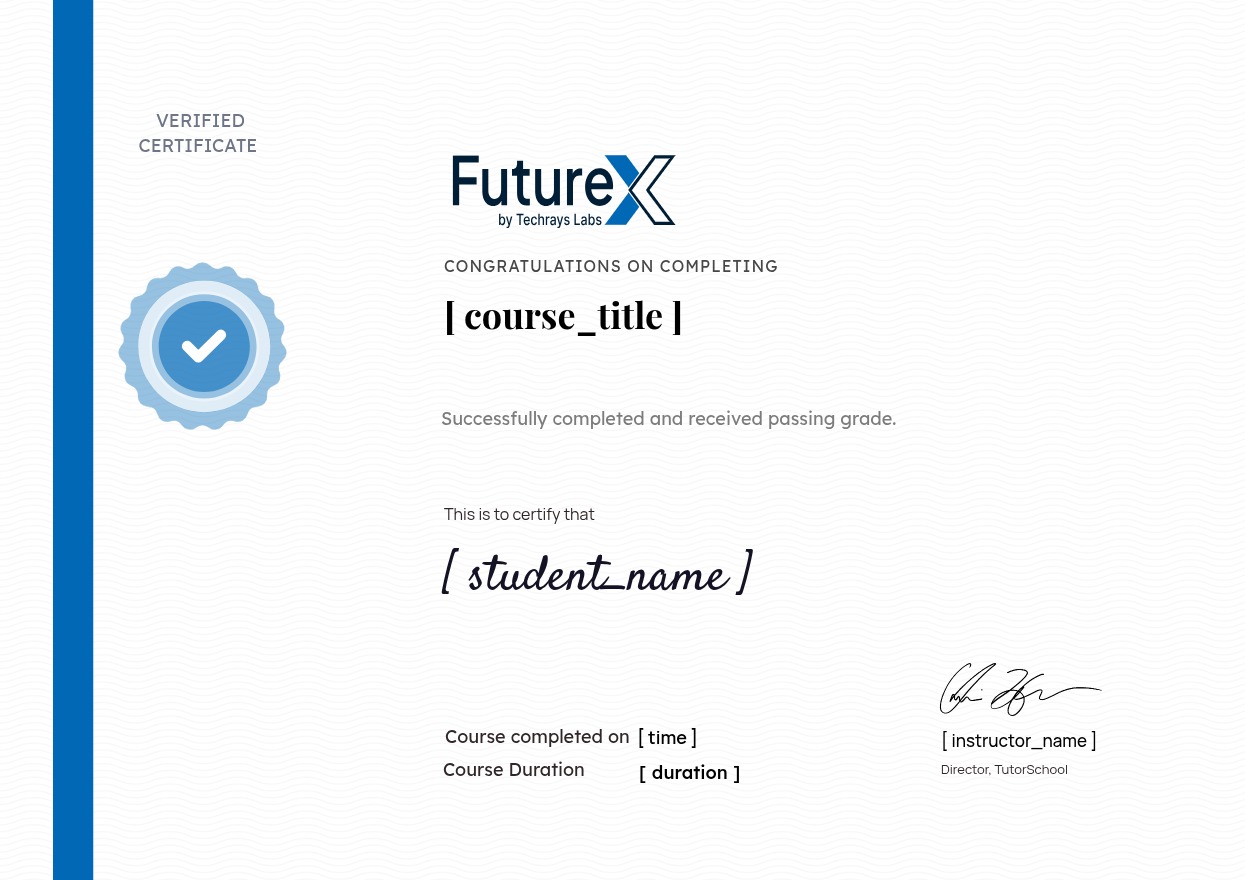
selected template

Student Ratings & Reviews

No Review Yet
No Review Yet