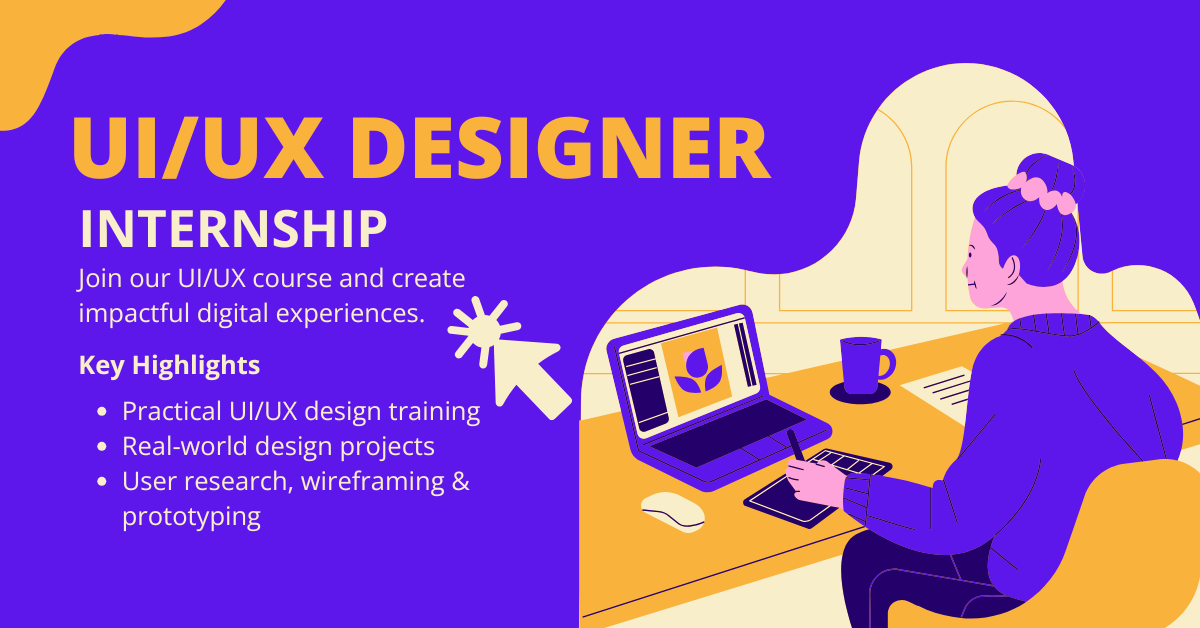
6 Months UI/UX Designing Training & Internship

Categories: Training & Internship
Wishlist Share

About Course

This 6-month UI/UX Designing Internship is a comprehensive, industry-focused training program designed to transform beginners into skilled and job-ready UI/UX designers with strong creative thinking, user-centered problem-solving, and professional product design skills.

The program follows a progressive learning approach, starting from the fundamentals of design principles and gradually advancing toward advanced UI/UX workflows, product design strategies, and real-world project development. It is designed to provide both conceptual clarity and extensive hands-on experience through design exercises, assignments, case studies, prototyping tasks, and portfolio-based learning.

🚀 What This Internship Covers

The internship begins with the fundamentals of UI/UX design, where learners understand the core concepts of user interface design, user experience design, and human-centered thinking. Students learn essential principles such as typography, color theory, spacing, visual hierarchy, alignment, contrast, accessibility, and responsive design. This strong foundation helps even beginners with no prior experience confidently begin their design journey.

Once the basics are established, the program moves into wireframing, user flow planning, and information architecture. Learners understand how users interact with digital products and how interfaces are structured to create intuitive experiences. Students learn to create low-fidelity wireframes, screen structures, navigation systems, and usability-focused layouts for websites and applications.

The internship then introduces industry-standard design tools such as Figma, where participants gain practical experience designing professional web and mobile interfaces. Learners create responsive UI screens, reusable components, auto-layout systems, design libraries, and interactive prototypes while understanding collaborative design workflows used in real product teams.

As the program progresses, students dive deeper into UX research and design thinking methodologies. They learn how to conduct user research, analyze user pain points, create user personas, map customer journeys, perform competitor analysis, and improve usability through data-driven design decisions. This phase helps learners understand how successful digital products are built around real user needs and business goals.

The internship also covers advanced UI concepts such as dashboard design, mobile-first design, accessibility standards, micro-interactions, animations, design consistency, and scalable design systems. Students learn how to create visually appealing, modern, and user-friendly interfaces that align with professional industry standards.

In the later stages, learners are introduced to product design workflows and real-world collaboration practices. They understand how designers work alongside developers, product managers, and stakeholders during the product development lifecycle. Participants also learn design handoff processes, developer collaboration techniques, and portfolio presentation skills.

The final phase of the internship focuses heavily on practical implementation through multiple real-world projects. Learners design complete digital products such as e-commerce applications, SaaS dashboards, portfolio websites, healthcare apps, educational platforms, or mobile applications. These projects include user research, wireframes, UI screens, interactive prototypes, design systems, and usability-focused solutions that simulate real industry environments.

🧠 Learning Approach

This internship is designed around practical implementation, creativity, and continuous skill development rather than theory alone. Each module includes:

  • Structured video/text learning resources

  • Guided UI/UX design sessions

  • Hands-on assignments and exercises

  • UX case studies and usability analysis

  • Interactive prototyping activities

  • Module-wise quizzes and assessments

  • Mini-projects for skill reinforcement

  • Portfolio-building tasks

  • Multiple real-world capstone projects

The learning process is strictly progressive, meaning learners must complete assignments, evaluations, and project tasks before advancing to more advanced topics. This ensures strong conceptual understanding and professional-level practical skills.

🏆 Skills You Will Gain

By the end of this internship, participants will be able to:

  • Understand and apply UI/UX design principles effectively

  • Create wireframes, user flows, and information architecture

  • Design responsive web and mobile interfaces

  • Use Figma professionally for UI/UX workflows

  • Build reusable components and scalable design systems

  • Create interactive prototypes and micro-interactions

  • Conduct UX research and usability analysis

  • Apply typography, color theory, and visual hierarchy professionally

  • Design accessible and user-friendly digital products

  • Collaborate with developers and product teams

  • Build portfolio-ready real-world UI/UX projects

  • Understand modern product design workflows used in the industry

🎯 Who This Internship is For

This program is ideal for:

  • Beginners who want to start a career in UI/UX design

  • Students pursuing design, computer science, or creative fields

  • Aspiring product and interface designers

  • Frontend developers looking to strengthen design skills

  • Freelancers interested in web and app design projects

  • Creative professionals transitioning into digital product design

  • Anyone aiming for UI/UX, product design, or web design roles in the tech industry

No prior design experience is required, but creativity, consistency, curiosity, and regular practice are essential for successful completion.

💼 Internship Outcome

Upon successful completion of this internship, learners will have practical experience in designing professional digital products using modern UI/UX workflows and industry-standard tools. They will be capable of creating user-centered interfaces, responsive designs, interactive prototypes, and scalable design systems for real-world applications.

Participants will also have multiple portfolio-ready projects showcasing their practical skills and design thinking abilities. These projects can be presented to potential employers or clients, significantly improving opportunities for internships, freelance work, and full-time UI/UX or product design roles in the technology industry.

Show More

Course Content

Module 1: Introduction to UI/UX Design & Digital Product Thinking
This module establishes the foundation of UI/UX design as a discipline and its role in modern digital products. Students will understand the difference between UI and UX, how design impacts user behavior, and why product thinking is critical in today’s digital ecosystem. You will learn how users interact with digital interfaces and why design decisions directly influence engagement, retention, and conversion. This module also introduces the basic workflow of a UI/UX designer inside a product team. By the end, learners will be able to identify good vs bad UX, understand core design principles, and explain how UI/UX fits into real-world product development.

  • What is UI and UX Design?
  • Role of a UI/UX Designer in Industry
  • Check what have you learnt about UI/UX Fundamentals Check
  • Basic Product Landing Page Concept

Module 2: Design Thinking Process & User-Centered Design
This module introduces the structured thinking framework used by professional UI/UX designers to solve real-world problems. You will learn Design Thinking, a user-centered approach that helps transform complex problems into simple, usable solutions. You will understand how designers move from problem identification to solution validation using a step-by-step process. This module is critical because almost every product company (Google, Apple, Airbnb) relies on Design Thinking for product development. By the end of this module, you will be able to analyze user problems, define clear problem statements, and propose structured design solutions.

Module 3: User Research Methods & Data Collection in UX
This module focuses on how real UX designers collect, analyze, and interpret user data before designing any product. You will learn structured research methods used in companies to avoid guesswork in design decisions. You will understand qualitative and quantitative research, how to conduct user interviews, surveys, and usability studies, and how these insights shape product design decisions. This module is critical because bad research leads to bad design, and most product failures happen due to misunderstanding users. By the end of this module, you will be able to conduct basic UX research, collect meaningful data, and convert raw feedback into actionable design insights.

Module 4: Wireframing & Information Architecture
This module teaches how to structure a digital product before visual design begins. You will learn wireframing, which is the blueprint stage of UI/UX design, and information architecture, which defines how content is organized. You will understand how designers plan layouts, navigation systems, and user flows without focusing on colors or final visuals. This stage is critical because poor structure leads to unusable products even if the UI looks good. Companies always validate structure before design execution. By the end, you will be able to create low-fidelity wireframes and design logical navigation structures for apps and websites.

Module 5: UI Design Fundamentals & Visual Hierarchy
This module focuses on how to convert wireframes into visually structured interfaces. You will learn UI design fundamentals including spacing, typography, color theory, and visual hierarchy. You will understand how users visually scan interfaces and how designers guide attention using layout techniques. This module also introduces how design decisions impact usability and conversion rates. This is where UI design begins to look “real” and functional instead of just structural. By the end, you will be able to design clean UI screens with proper hierarchy and visual balance.

Module 6: Prototyping & Interaction Design
This module focuses on turning static UI screens into interactive prototypes that simulate real user behavior. You will learn how designers build clickable flows, transitions, and user interactions before development begins. Prototyping is critical because it helps test ideas early, reduce development waste, and validate user experience before coding starts. It bridges the gap between design and development. You will also understand interaction design principles such as feedback, motion, and usability behavior patterns. By the end of this module, you will be able to create interactive prototypes that simulate real apps.

Module 7: UX Writing, Microcopy & Content Design
This module focuses on one of the most ignored but high-impact parts of product design: words inside interfaces. You will learn how UX writing improves usability, reduces friction, and guides user behavior through clear, purposeful content. UI elements are not only visual. Buttons, labels, placeholders, alerts, empty states, onboarding text, and error messages directly affect user decisions. Poor copy creates confusion. Good copy improves clarity, trust, and conversion. This module teaches how to write concise, functional, and human-centered product content that improves usability. By the end of this module, you will be able to write effective UI copy, microcopy, and product messaging for real digital interfaces.

Module 8: Design Systems, Components & UI Consistency
This module focuses on how professional teams scale UI design across large products using reusable systems. You will learn design systems, reusable components, consistency rules, and scalable UI structure. As products grow, inconsistent buttons, colors, spacing, and typography create chaos. Design systems solve this by standardizing reusable UI building blocks. This module is critical because modern product teams do not design screen-by-screen manually. They build systems that scale across teams, products, and platforms. By the end of this module, you will be able to create reusable UI components and organize a scalable design system.

Module 9: Usability Testing, Heuristics & UX Evaluation
This module focuses on validating whether a design actually works for users. Designing interfaces is not enough. A design is only successful when users can complete tasks without confusion, friction, or failure. You will learn how to test usability, identify UX problems, evaluate interfaces using industry heuristics, and improve designs based on evidence instead of assumptions. This module is critical because many visually attractive products fail due to poor usability. Real UX maturity starts when design decisions are validated through testing. By the end of this module, you will be able to run basic usability tests, evaluate UI using heuristics, and identify usability issues systematically.

Module 10: Developer Handoff, Collaboration & Design-to-Development Workflow
This module focuses on how UI/UX design moves from design files into real product development. A design is not complete when the screens look good. It is complete when developers can build it accurately without ambiguity, delays, or repeated clarification. You will learn how designers collaborate with developers, product managers, and stakeholders to ensure smooth implementation. This includes design documentation, asset handoff, design specifications, responsive behavior notes, and component behavior guidance. This module is critical because weak handoff creates broken UI, inconsistent implementation, wasted engineering time, and design debt. Strong design-to-development workflow ensures what gets built matches what was designed. By the end of this module, you will be able to prepare developer-ready design files, document behavior clearly, and collaborate effectively in a real product workflow.

Module 11: Portfolio, Case Studies & UI/UX Career Readiness
This module focuses on converting internship work into professional proof of skill. Learning design is useless if you cannot present your thinking, process, and outcomes in a way that hiring teams understand. You will learn how to build a UI/UX portfolio, write strong case studies, present design decisions, and prepare for internships, freelance work, and full-time roles. This module is where learning becomes employable. Recruiters do not hire based on pretty screens alone. They hire based on problem-solving, process clarity, reasoning, and communication. A strong portfolio proves all four. By the end of this module, you will be able to create professional case studies, present your projects clearly, and prepare for UI/UX job opportunities with industry-ready confidence.

Final Module: Capstone Project – End-to-End UI/UX Product Design
This final module is the full real-world capstone project of the internship. It combines everything learned across the program into one complete end-to-end product design workflow. You will execute a real product design process from problem discovery to final prototype and developer handoff. This is the closest simulation of real industry work and should be treated as your flagship portfolio project. The objective is not to design “screens.” The objective is to solve a real product problem with research, UX strategy, UI execution, validation, and delivery. By the end of this module, you will have one complete portfolio-grade UI/UX case study that demonstrates product thinking, UX depth, UI execution, and professional workflow readiness.

Earn a certificate

Add this certificate to your resume to demonstrate your skills & increase your chances of getting noticed.
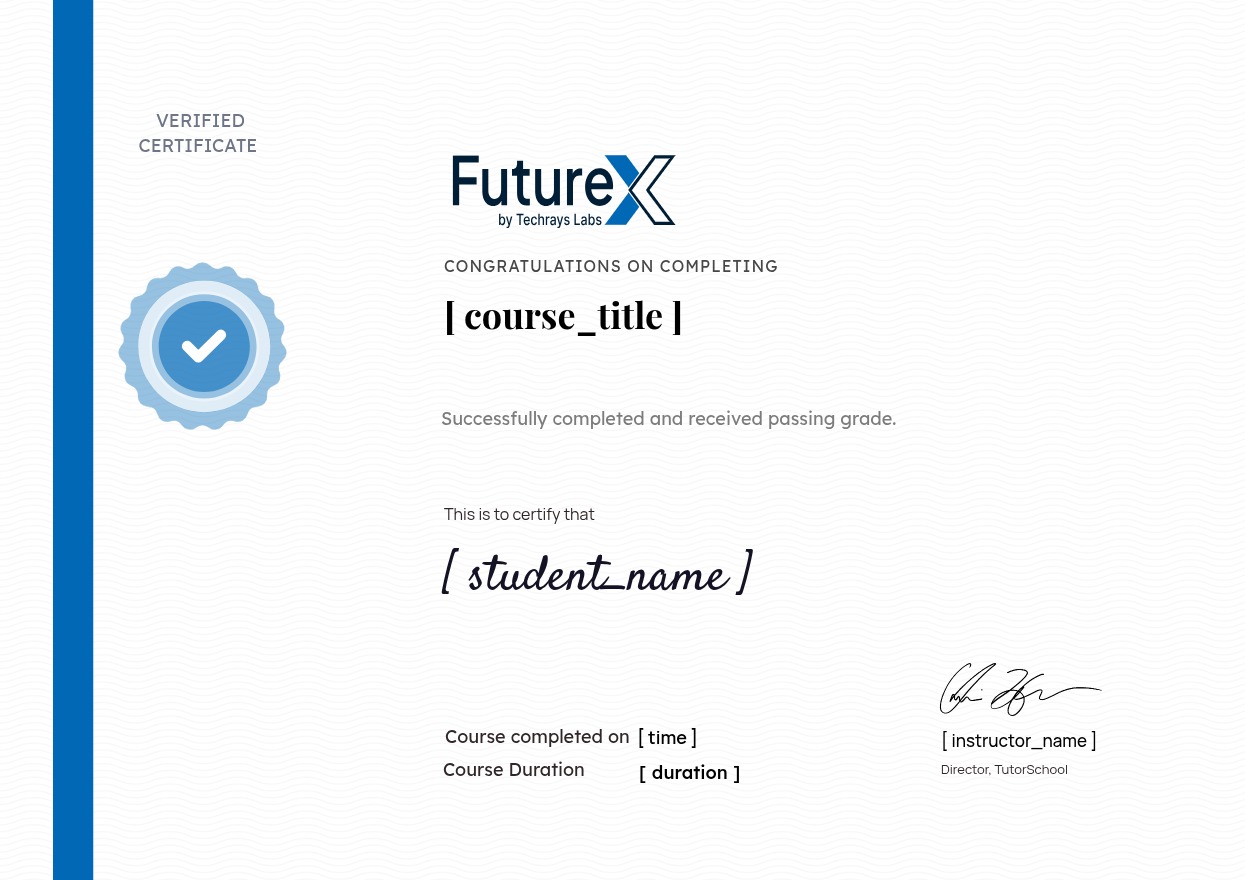
selected template

Student Ratings & Reviews

No Review Yet
No Review Yet